When an earthquake collapses multi-story buildings, elite rescue teams—USAR (Urban Search and Rescue) units certified under the UN's INSARAG framework—don't rely on just one device. Twisted concrete, steel beams, and irregular gaps block different signals depending on the material and depth. That is why they deploy a combined kit of radars, electronic "ears", inspection cameras and chemical sensors.
1. UWB and microwave radars: “wall scanners”
They are the most advanced frontier because they look for vital signs—breathing and pulse—without requiring the victim to be conscious or scream. They operate with ultra-wide pulse (UWB) or low-power microwaves that pass through debris and generate an interpretable image in seconds.
Xaver 400 and Xaver 100 (Camero)
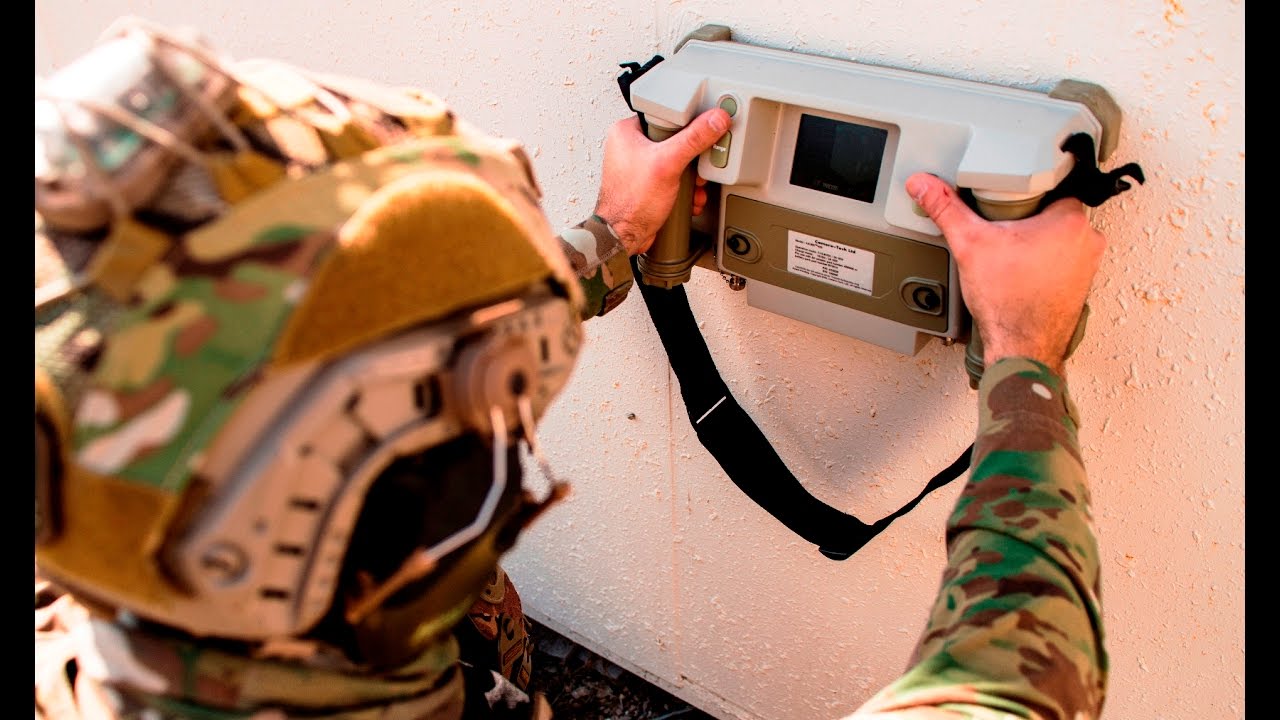
The Xaver 400, manufactured by Camero-Tech, is considered by many USAR teams to be the current gold standard in urban disasters. Generates 2D and 3D images in real time that show where people are behind a wall or under a collapsed ceiling, with distance calculation and simultaneous detection of static and moving objects. Camero documents its use in Türkiye (2023) and Mexico (2017) earthquakes within the UWB).
The Xaver 100 is the pocket version: the rescuer places it directly against the concrete for quick scanning in confined spaces (Xaver 100 tab).
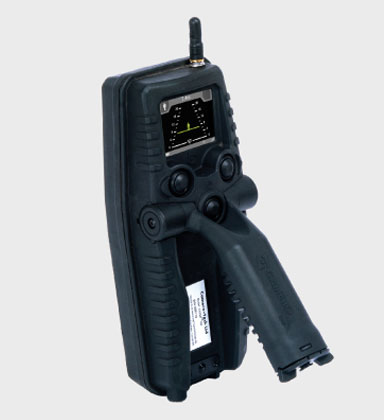
Video: demonstration of the Xaver 400
Official Camero video on the Xaver 400: real-time detection of people behind barriers. Source: Camero-Tech (YouTube)
FINDER (NASA / DHS)
FINDER (Finding Individuals for Disaster and Emergency Response) is the radar developed by NASA's Jet Propulsion Laboratory and the US Department of Homeland Security. Your advantage operational: it can be placed up to 30 meters from a mountain of rubble, it launches low-power microwaves and, in less than a minute, indicates whether there is a heart beating below. It weighs less than 10 kg, is portable and filters false positives by distinguishing human heartbeat patterns from trapped animals.
In the Nepal earthquake (2015), FINDER prototypes helped locate and rescue four men under up to 3 meters of bricks and mud (NASA JPL).
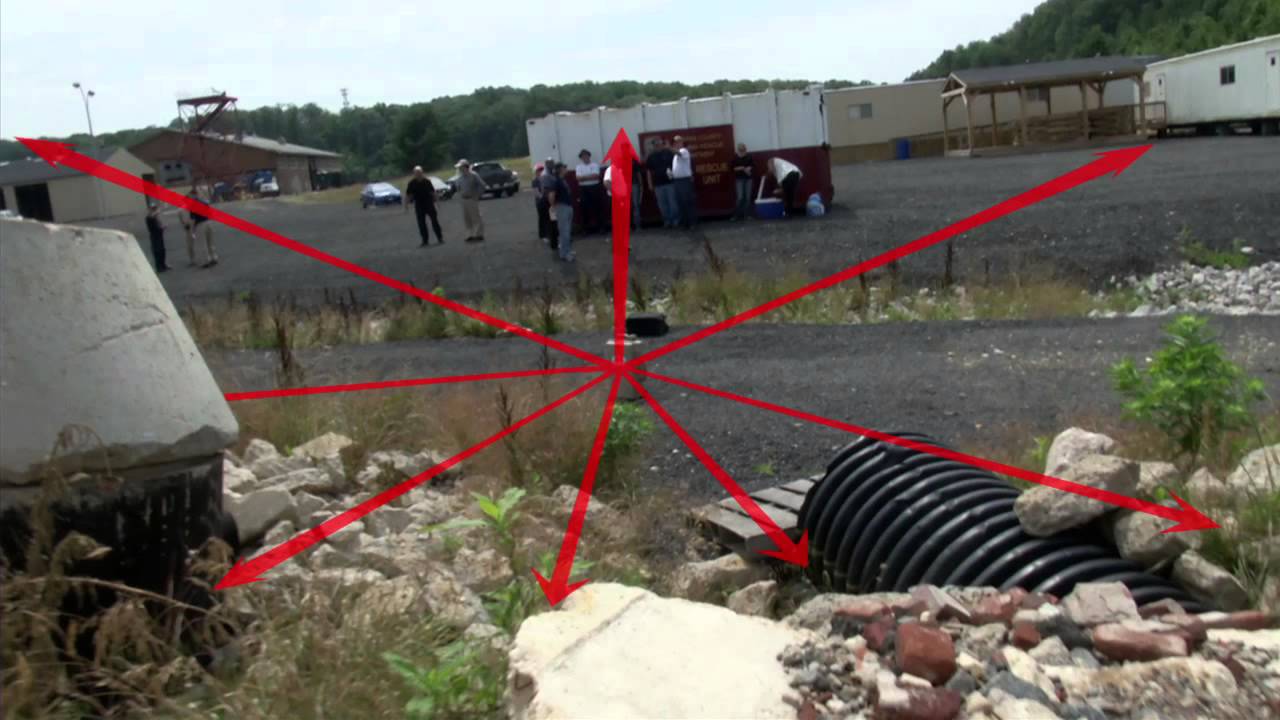
Video: FINDER detects heartbeats under rubble
Official NASA Demo: FINDER Radar Distinguishes Human Reflexes from Animals by Heart Rate and Respiration. Source: NASA Jet Propulsion Laboratory (YouTube)
2. Acoustic and seismic locators: the "electronic ears"
When the concrete is too dense or there is a lot of interlocking steel—which can deflect radar waves—seismic and acoustic sensors come in. They consist of several geophones or contact microphones spread over the collapsed structure.
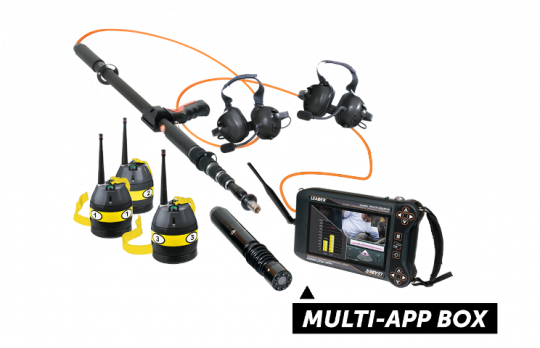
The Leader Hasty system from LEADER Group combines up to three wireless seismic sensors (range ~100 m in open field) with a MULTI-APP control box. They amplify vibrations thousands of times: a hit with a stone, a scratch on a pipe or a moan. By measuring which sensor received the wave first, they triangulate the position of the survivor. LEADER indicates that equipment with wireless sensors deploy up to three times faster than wired systems.
3. Technical search cameras: the “eyes” in the cracks
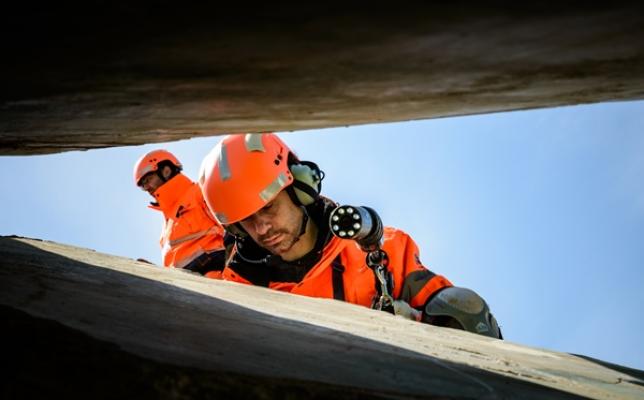
Once the radar or geophone points to a quadrant with activity, the pole or "snake eye" cameras arrive. The Leader CAM (official file) mounts an articulated camera (up to 260° vision) in a telescopic carbon fiber tube (1.1–2.4 m). It has multi-level LEDs, infrared for total darkness, optional thermal sensor and bi-directional microphone/speaker to talk to the trapped person before breaking concrete. It is introduced through cracks or drill holes; complies with INSARAG guidelines.
4. Gas probes: chemical life detectors
CO₂ (carbon dioxide) probes complement the kit when the radar fails or the victim is unconscious. They are telescopic batons with chemical sensors at the tip that are inserted into deep holes in the rubble. If the CO₂ level rises locally relative to the environment, it indicates that someone is breathing in an air bubble—even if there is no detectable sound or movement.
A field study published in Sensors (MDPI, 2018) evaluated a combined CO₂ sensor, thermal camera and microphone system in a simulated collapse scenario: the CO₂ sensor was useful for reduce the search area, while the thermal camera confirmed the position. Researchers warn that wind and airflow in open spaces can distort readings; That is why gas probes are used as a complementary layer, not as the only detector.
What is the "best" device?
There is no absolute winner: it depends on the phase of the operation.
- Rapid triage — Are there survivors in this building? To rule out or confirm life without digging blindly, the Xaver 400 or the FINDER are the most effective: they scan large volumes and detect vital signs from a distance.
- Precise location — If there are already signs of life, the combination of acoustic geophones (Leader Hasty or equivalent) and fiber optic cameras (Leader CAM) allows millimeter triangulation and visual evaluation before cutting beams.
- Unconscious victim in narrow gap — CO₂ probes can reveal breathing when radar and sound fail.
In practice, INSARAG-certified USAR teams rotate tools based on the type of debris, humidity, metal present, and ambient noise. The common objective: not to waste hours digging falsely and, when someone is alive, break as little concrete as possible to remove them without aggravating injuries.
In summary
What do elite teams use? A combined kit, not a single gadget. UWB radars (Xaver 400/100, FINDER) for vital signs. Geophones (Leader Hasty) for acoustic triangulation. Pole cameras (Leader CAM) to see and talk to the victim. CO₂ Probes as chemical backup. More context on Venezuela? Special coverage of the earthquake.
Most read
What readers are engaging with right now.
- Culture
Goose, the gay app that competes with Grindr, reaches the top 4 of Lifestyle in the App Store
- World
Cubans protest in Miami against Airlines Connections for alleged scam: they demand up to $20,000 in packages to Punta Cana
- World
Trump declares the ceasefire with Iran over, orders new attacks in Hormuz and demands cutting trade with Spain in NATO

- Culture
Harry Potter on HBO: complete guide to the series (not yet released and already renewed for T2), dates, cast and controversies

- Culture
DUK App: Aly Sánchez launches her habits app "one day at a time" with a 63-day program
- Culture
I'm Edgy and Edgy Labs: From Nebraska's Walmart to a beef tallow cream brand that sells across the US.

- Culture
The Evening of the Year VI: all the winners, fights and performances of the Ibai night in Seville

- World
The FBI is investigating the AFA for alleged fraud and money laundering: about $300 million in sponsorships and operations in the US.

- World
El Cangrejo: profile of Raúl Guillermo Rodríguez Castro, Raúl Castro's grandson between GAESA, leaked luxuries and the first interview of 2026