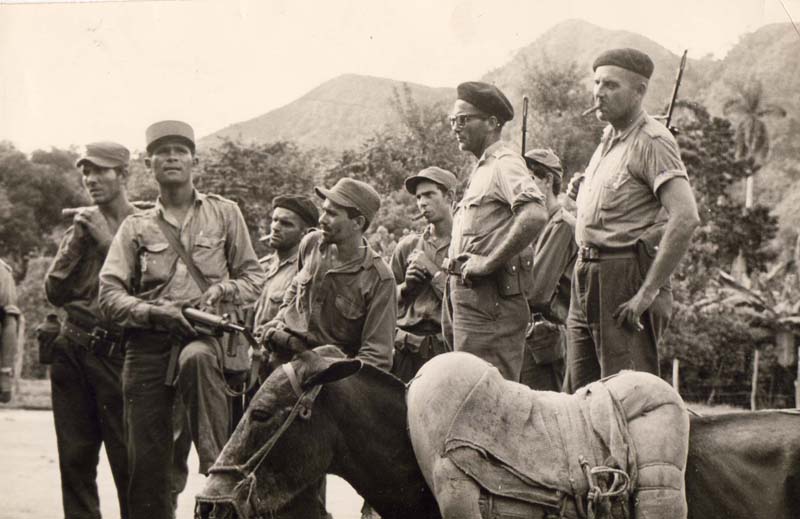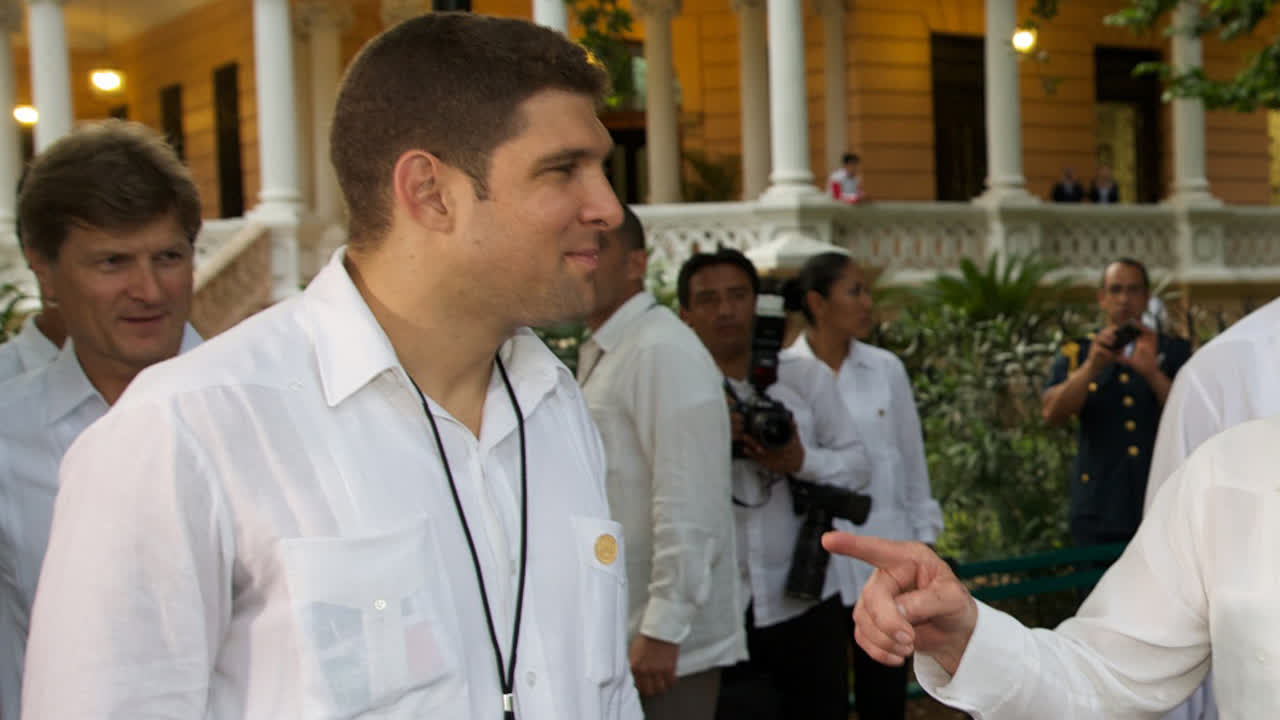
For decades he was a shadow behind Raúl Castro's shoulder: arm extended in the May Day parade, hand that intercepts anyone who gets too close to the former president, face almost always out of focus. In June 2026, Raúl Guillermo Rodríguez Castro—known in Cuba and in exile as "The Crab"— broke an almost absolute public silence. Sitting in Havana next to the Vice Minister of Foreign Trade Carlos Luis Jorge Méndez, he granted his first interview to the Emirati newspaper The National one day after the Communist Party approved 176 measurements of economic reform. It was not a biographical profile: he answered a single question. But his mere presence - grandson of the general, son of the "czar" of GAESA, head of the bodyguard and, according to sources cited by El País and Univision, a supposed informal channel with Washington—was enough to reorder the conversation about who is really negotiating the future of the island.
This profile covers what is known—and what remains in the field of attribution—about a figure that concentrates three vectors of power in today's Cuba: the Castro dynasty, State security and the business-military conglomerate GAESA. The leaks about their lifestyle contrast with the crisis that most Cubans are experiencing: blackouts, shortages and protests that MARGENEZ has documented separately. The tone is descriptive; where the evidence is indirect or anonymous, it is indicated.
Origins and family: where their power comes from
Personal data and the origin of the nickname
Raúl Guillermo Rodríguez Castro was born in Cuba around 1985, according to biographical records collected by Wikipedia and media like El País, which in May 2026 placed it around 42 years. He does not hold a publicly recognized high-profile government position, but his last name and his career in the Ministry of the Interior (MININT) place him in the regime's closest elite.
The nickname "The Crab" It is not a recent journalistic nickname. Independent media such as Cuba DNA and CiberCuba they link it to a congenital anomaly in the fingers: Versions do not agree on the details (deformity in a finger, extra finger or polydactyly), but they agree that the family used it since childhood. Some reports add subsequent aesthetic interventions. The nickname circulates in the independent Cuban press and in international media; It does not appear on official channels.
Parents: the union of the dynasty and GAESA
He is the son of Deborah Castro Espín, eldest daughter of Raúl Castro, and Major General Luis Alberto Rodríguez López-Calleja, died on July 1, 2022. López-Calleja was for years a central piece of the Castro apparatus: son-in-law of Raúl, officer of the Revolutionary Armed Forces and, above all, architect of the Business Administration Group S.A. (GAESA), who presided since 1996 until his death.
Under his command, GAESA went from being a military management structure to becoming the country's main economic conglomerate. Estimates cited by Wikipedia and journalistic investigations place its weight between 30 and 40% of national economic activity and a very high portion of retail trade. López-Calleja was, before he died, one of the names that was most mentioned—in independent analysis—as a possible replacement within the leadership. His death divided the board between formal successors and informal influences; among the latter, that of his son.
Sister, the Miramar mansion and couples and daughters
your sister Vilma Rodríguez Castro (sometimes cited as "Vilmita" in the exile press) shares the same Castro-López-Calleja lineage. In April 2019, America TeVé published a report—based on previous work by CiberCuba and Cuban Diary— about a mansion in the cast Miramar (7th avenue and 20th street, Havana) rented in Airbnb under the trade name «Casa Vida Luxury Holidays». According to these sources, the advertisement offered four bedrooms, a jacuzzi, 24-hour service and breakfast included, with a published rate of 650 dollars per night at that time.
Important: All public documentation on this property dates from 2019 and immediately following years. In October 2019, CiberCuba reported that the Airbnb profile changed the host's name to "Anabel" with residence in Spain following US sanctions on the Castro family; Sources consulted by that medium maintained that Vilma continued to operate the rental. MARGENEZ has not been able to verify in June 2026 if Vilma Rodríguez Castro is still the owner, if the property remains active on Airbnb or under what name it appears today. The following images correspond to the América TeVé report from 2019 and they do not prove the current situation of good.
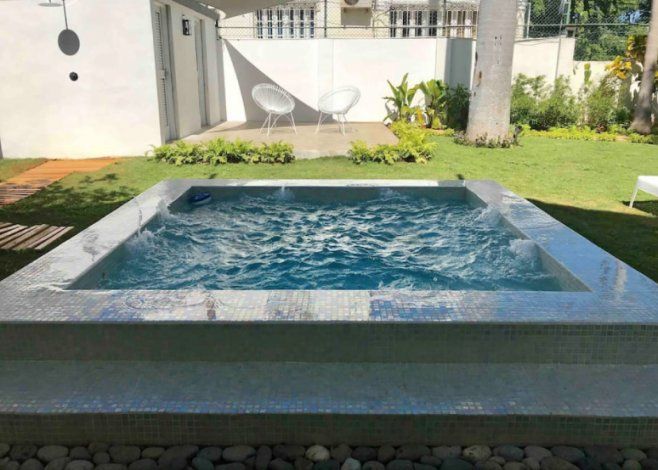
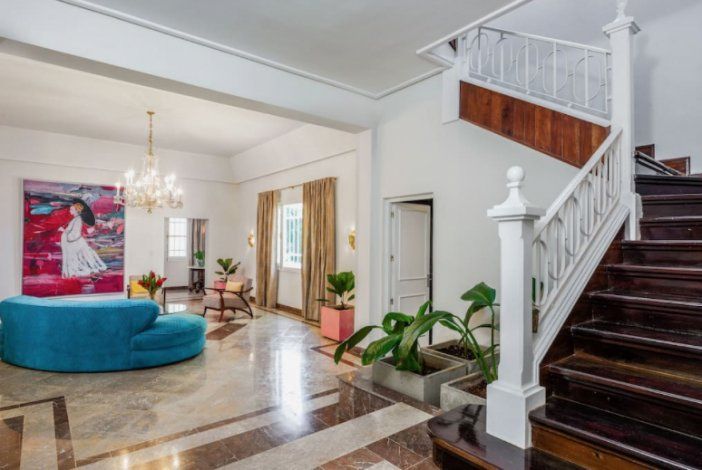
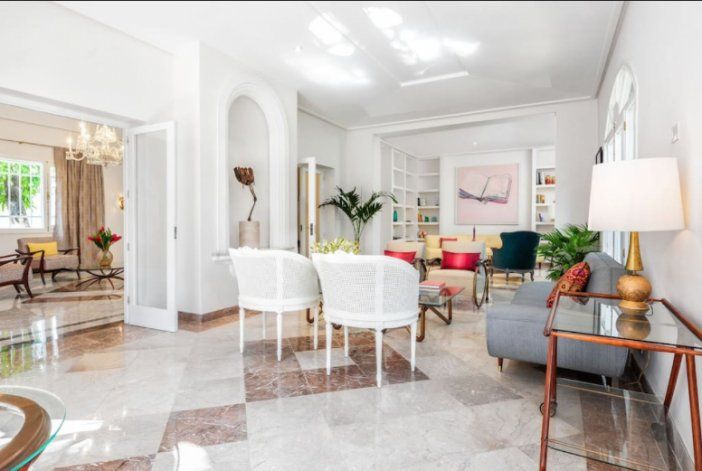
According to América TeVé (citing CiberCuba), Vilma registered as a host in June 2014 with declared residence in Panama, channel through which the platform payments would be collected. The 2019 report also mentions other properties that he would have managed (Vedado, Trinidad) and his trips as an Airbnb guest to Geneva, Paris, New York, Mexico City and Nassau. Your partner is the artist Arles del Río, according to América TeVé and CiberCuba.
On the sentimental level of "El Cangrejo", the independent sources - mainly America TeVé, Cuban Newspaper and CiberCuba—link Rodríguez Castro with Sheyla Puentes, with whom I would have had two daughters after a wedding of which leaked images circulated; with Daliene Gómez Tomás, to whom a third daughter is attributed; and, more recently, with other couples mentioned in reports (including a young woman named Sheila, from Santiago de Cuba). These relationships are not confirmed by Cuban authorities; They come from leaks and media coverage in exile.
The favorite grandson
Various media—including El País and ADN Cuba—describe it as the favorite grandson by Raúl Castro. Independent reports maintain that his maternal grandmother, Vilma Espín, was especially close to him in childhood, in a context of physical conditions that the family treated with care. Unlike his cousin Sandro Castro, grandson of Fidel and active in networks, Rodríguez Castro has maintained a non-existent digital profile: does not manage personal accounts on public platforms, according to Wikipedia and multiple journalistic profiles. Everything that is known about his private life comes from leaks, travel records investigated by the foreign press or appearances at official events.
The rise within power: escort, MININT and the link with GAESA
Head of personal security since 2016
In 2016, Raúl Castro appointed him head of the General Directorate of Personal Security (DGSP), MININT unit in charge of protecting the former president. In that position he not only filters physical access to his grandfather: those who follow Cuban politics from outside describe him as intermediary more than an autonomous decision-maker. The Cuban journalist Rolando Cartaya, cited by Wikipedia and by Havana Times, characterized him like this: "He is nothing more than an interlocutor to listen to and transmit his grandfather's orders."
His military rank has been reported as lieutenant colonel (BBC, cited by Univision) and, more recently, colonel (CiberCuba, The National and other sources from 2026). The discrepancy may reflect promotions not officially announced; MARGENEZ has not found confirmation in Cuban state media.
Influence without a business card
The paradox defines his position: He does not head ministries nor does he appear in the Constitution, but controls access to the man many analysts still consider the regime's final arbiter—Raúl Castro, aged 94 according to El País— and inherits the economic network his father built. In recent public events (PCC plenary session, Council of Ministers) he has been seen close to Miguel Díaz-Canel, which fueled speculation about a possible future political role; none of it has been presented as a formal promotion.
At the same time, media such as Axios and NBC have placed "El Cangrejo" as informal link between GAESA and Raúl Castro and as one of Washington's preferred interlocutors in exploratory conversations—along with figures such as Alejandro Castro Espín—in a context in which the formal apparatus of the PCC and the presidency would remain in the background.
Video: conversations between Washington and the Castro environment
In February 2026, NBC News collected reports on meetings between Secretary Marco Rubio and Raúl Guillermo Rodríguez Castro. Rubio himself refused to confirm them in public. Source: NBC News—YouTube
The GAESA emporium and his father's inheritance
What López-Calleja left behind
GAESA brings together dozens of companies in tourism (Gaviota), retail (TRD), logistics, construction and finance. Its origin is in Union of Military Companies from the eighties; Under López-Calleja it was consolidated as the economic arm of the FAR and the MININT. Controlling GAESA means influencing currencies, imports, hotels and a large part of the commercial circulation visible to Cubans and tourists.
When the general died in 2022, the void was not immediately filled with a family heir. In February 2023, the Brigadier General Ania Guillermina Lastres Morera was confirmed as interim executive president and, later, head of the conglomerate, according to Cuba Headlines and independent press documents. Lastres Morera—a trained economist, entire career at MINFAR and former deputy executive president of GAESA—represents institutional rather than dynastic continuity.
What is the role of “El Cangrejo” in GAESA today?
There is no public evidence that Rodríguez Castro appears on the official GAESA organizational chart. What journalistic investigations do collect is a role of representation of family interests and as a bridge between the political leadership and the economic-military elite. The joint investigation of The Press (Panama), Armando.Info, CLIP and Transparencia Venezuela documented their trips to Panama in which, on various dates, Lastres Morera was also present — including a visit to Chiriquí in September 2025 — which suggests operational coordination although it does not in itself prove direct business participation.
In July 2025, the arrest in Las Vegas of Jorge Javier Rodríguez Cabrera, former MINREX official and personal friend of "El Cangrejo", revived the question. Rodríguez Cabrera had registered the company in Nevada Big Blue LLC, dedicated to shipping and logistics to Cuba; Independent media described it as a financial channel linked to the ruling elite. The case is in the American judicial system; MARGENEZ does not reproduce unresolved accusations as proven facts.
Recent US sanctions
He May 1, 2026, President Donald Trump signed an executive order increasing pressure on the Cuban economic apparatus. The State Department sanctioned, among other entities, GAESA already Ania Guillermina Lastres Morera, for his role at the head of a conglomerate that Washington describes as central to what he calls a communist kleptocratic system. Rodríguez Castro was not included in that specific announcement — his father and other relatives appeared on previous lists — but the action reinforces scrutiny of any operator linked to the group, formal or informal.
Lifestyle and leaks: the contrast
While in Cuba prolonged blackouts and food shortages lead to pot-banging and protests - such as those registered in Havana in June 2026 - a constant stream of leaks describes an opposite universe for "El Cangrejo": yachts, private jets, Rolex, ostentatious weddings, private concerts and parties with popular artists. None of these images have been validated by state media; Many were published by América TeVé based on material that, according to the channel itself, was sent by "a member of the Castro oligarchy" upset with the internal inequality of the regime.
Video: report “The American dream of El Cangrejo” (América TeVé)
Second part of Mario J. Pentón's report on yachts, mansions and luxuries attributed to Raúl Castro's grandson. It includes the fragment from 2022 in which he is heard saying: "It seems like we are in Miami, in Cancun...". Source: America News USA — YouTube
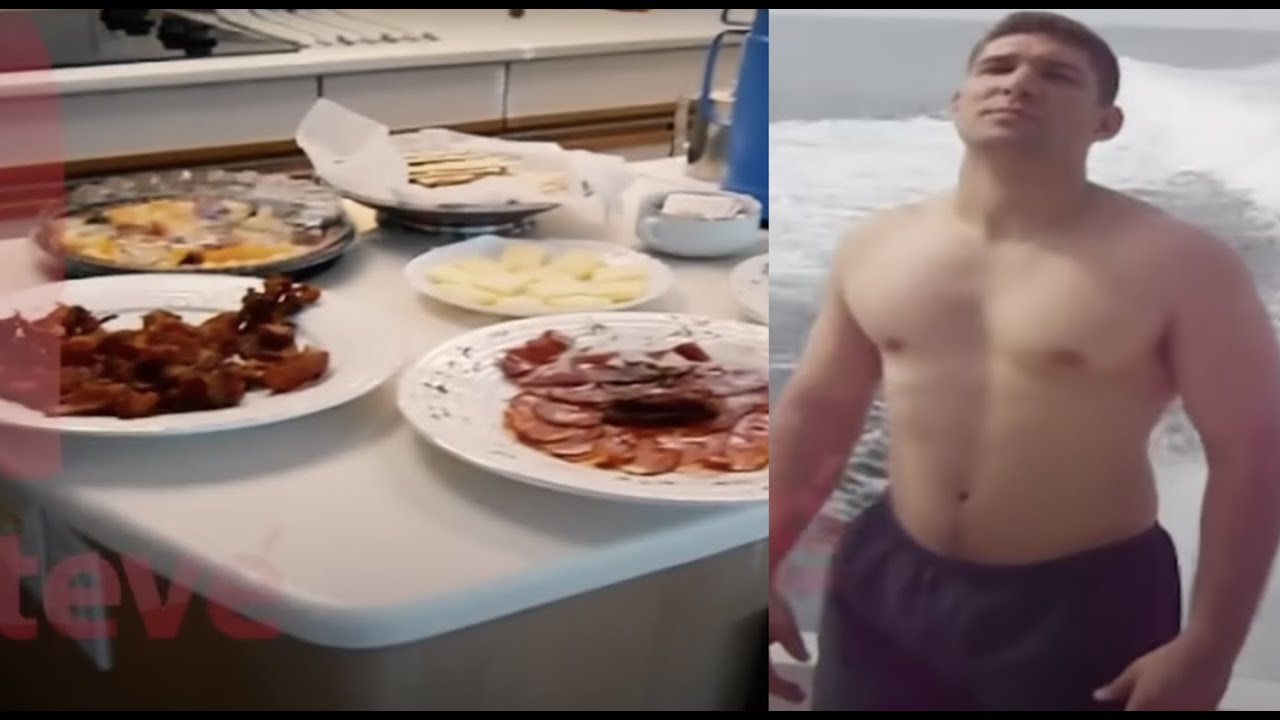
The yacht of 2022 and the viral phrase
In August 2022, CiberCuba and América TeVé published unpublished videos of a yacht ride. In one of the fragments, attributed to Rodríguez Castro himself, he is heard saying in a mocking tone: "It seems like we are in Miami, in Cancun..." —a phrase that became a reference in networks among the diaspora. In the same material, a companion describes a "super breakfast" while music by Glenn Miller plays, a detail reported by CiberCuba. The contrast with everyday reality on the island—state salaries of a few dozen dollars a month and endless lines—does not need adjectives: it is social arithmetic.
Panama, jets and properties
The investigation of The Press and partners cited 13 trips to Panama in 2024 and at least ten in 2025 (until September), many in a Dassault Falcon 900EX registered in San Marino. Some coincided with sensitive dates on the Panamanian political calendar. Sources cited by the newspaper mentioned large purchases in Chiriquí and, without full independent confirmation, possible properties in Coclé. Havana Times and CLIP emphasize that Lastres Morera appears linked to Panamanian companies with real estate assets in the capital.
In Havana, the case documented in 2019 of the mansion Casa Vida Luxury Holidays in Miramar—linked by América TeVé and CiberCuba to its sister Vilma—illustrates how a minimal fraction of the population has access to hard currency while the rest faces informal dollarization and inflation. As stated above, no recent confirmation that this rental remains active; The moral contrast in the example remains valid even if the advertisement had changed its headline or closed.
Social networks: a profile built by others
Rodriguez Castro does not maintain verifiable personal profiles on social networks. His public image is entirely mediated: official photographs of state visits (such as the one to Mexico in 2015), leaks, investigative reports and, now, the interview of The National. It is a profile opposite to that of Castro media figures such as Sandro Castro or even Mariela Castro, active on digital platforms.
Current situation and projection (2026)
The interview with The National
He June 19, 2026, The National published the first interview given by Rodríguez Castro. The format was eloquent: Méndez answered most of the questions about the 176 measurements approved on June 18 —private banking, shares in state companies, elimination of the limit of 100 workers in MSMEs, private capital in energy, participation of emigrants—; "El Cangrejo" intervened on only one occasion, with a message of "sovereign" and "very Cuban" economic openness. According to the transcript collected by CiberCuba and Cuba DNA, said that Cuba must "diversify" economy, partners and investments, "learning from international experiences."
At the bilateral level, the message to Washington was extended without political surrender. Quoted by CiberCuba: "Cuba does not represent the slightest threat to the interests and national security of the United States", and reiterated the willingness to have a “civilized” relationship “on equal terms.” But he was categorical in ruling out changes in the single-party system: to achieve a more economically open model, he stated, "We do not have nor are we willing to transform the Cuban political system". Méndez clarified that the country is not privatized, but rather private participation is expanded "in almost all sectors."
What was not asked—or was not published—is as revealing as what was said. ADN Cuba pointed out absences: political prisoners, pluralism, independent unions, judicial independence, guaranteed private property, role of GAESA, freedom of expression. The interview functioned, in this analysis, as a message to the foreign investor and the Trump administration rather than as internal accountability.
Increasing visibility and contacts with the United States
Since February 2026, multiple media outlets—Axios, NBC, El País, Univision—have reported conversations between the Secretary of State Marco Rubio and Rodríguez Castro, in the context of an energy crisis aggravated by the interruption of supplies of Venezuelan crude oil and US pressure. Rubio did not confirm specific meetings; President Díaz-Canel acknowledged on March 13 that there were exchanges with Washington. In the June interview, when asked if those conversations had borne fruit, Rodríguez Castro responded, according to CiberCuba: "I would like to be able to answer yes to that question, but the reality is that I can't".
José Raúl Gallego, researcher cited by ADN Cuba, interpreted the scene like this: the interview was "directed entirely at the United States and the American business community"; The presence of Rodríguez Castro was the sign that "the future of Cuba is negotiated, ultimately, with the Castro family." It is a reading; not an official statement from Havana or Washington.
Conclusion: real power without a showcase
Raúl Guillermo Rodríguez Castro concentrates in a single biography the tensions of the Cuba of 2026: a regime that needs capital and economic normalization, but that resists any political reform; a family elite that controls the security of the last active Castro and maintains ties with the conglomerate that his father inherited; and an exhausted society that contrasts its luxury leaks with blackouts and pot-banging.
"The Crab" is not, according to the available evidence, a minister or a proclaimed successor. It's a bit more difficult to label: bodyguard, grandson, possible messenger and representative of dynastic interests in GAESA, now emerging as the discreet face of a strategy of economic opening without democratization. The sanctions against GAESA and Lastres Morera narrow the margin; the June interview symbolically expands on this. Between both pressures, the question that remains—for Cuba and for those who negotiate with it—is whether a man without public office can offer guarantees that the entire country can verify. For now, the public response continues to come through leaks, gestures and what remains silent.
Most read
What readers are engaging with right now.
- Culture
Goose, the gay app that competes with Grindr, reaches the top 4 of Lifestyle in the App Store

- World
Cubans protest in Miami against Airlines Connections for alleged scam: they demand up to $20,000 in packages to Punta Cana
- World
Trump declares the ceasefire with Iran over, orders new attacks in Hormuz and demands cutting trade with Spain in NATO
- Culture
Harry Potter on HBO: complete guide to the series (not yet released and already renewed for T2), dates, cast and controversies

- Culture
DUK App: Aly Sánchez launches her habits app "one day at a time" with a 63-day program

- Culture
I'm Edgy and Edgy Labs: From Nebraska's Walmart to a beef tallow cream brand that sells across the US.

- Culture
The Evening of the Year VI: all the winners, fights and performances of the Ibai night in Seville
- World
The FBI is investigating the AFA for alleged fraud and money laundering: about $300 million in sponsorships and operations in the US.
- World
Cuban regime terrorist Ramiro Valdés Menéndez dies