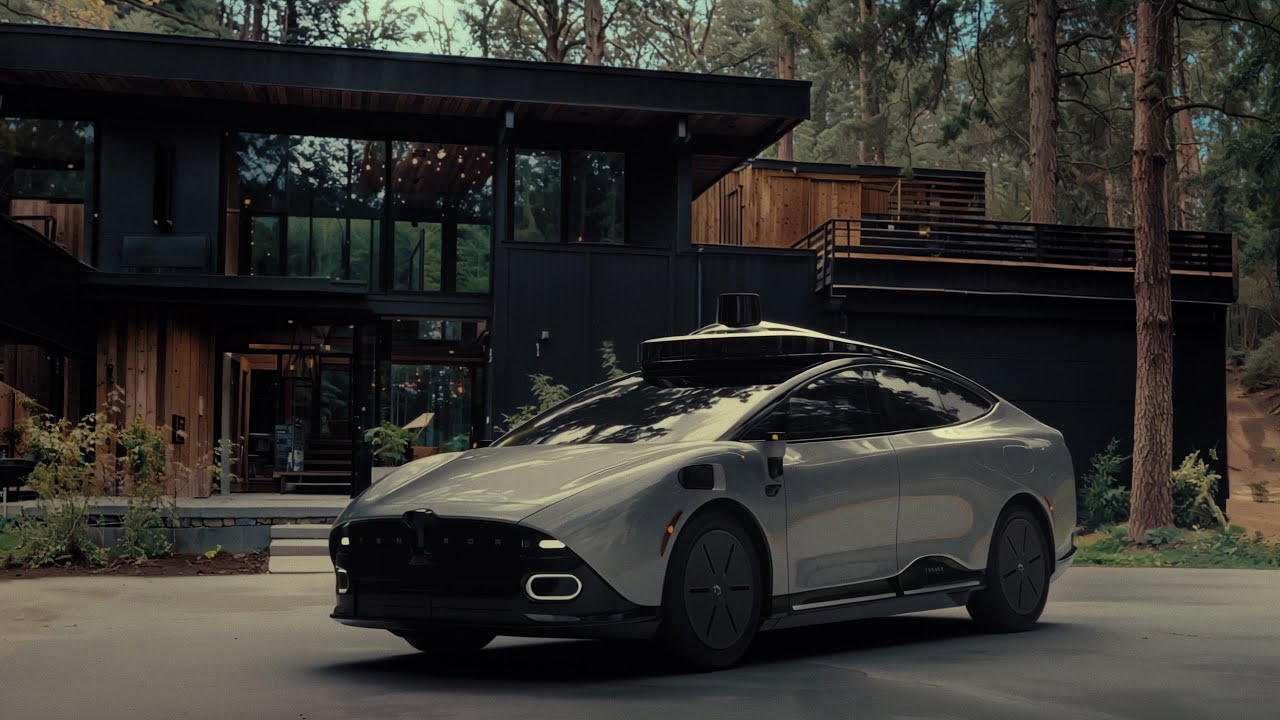
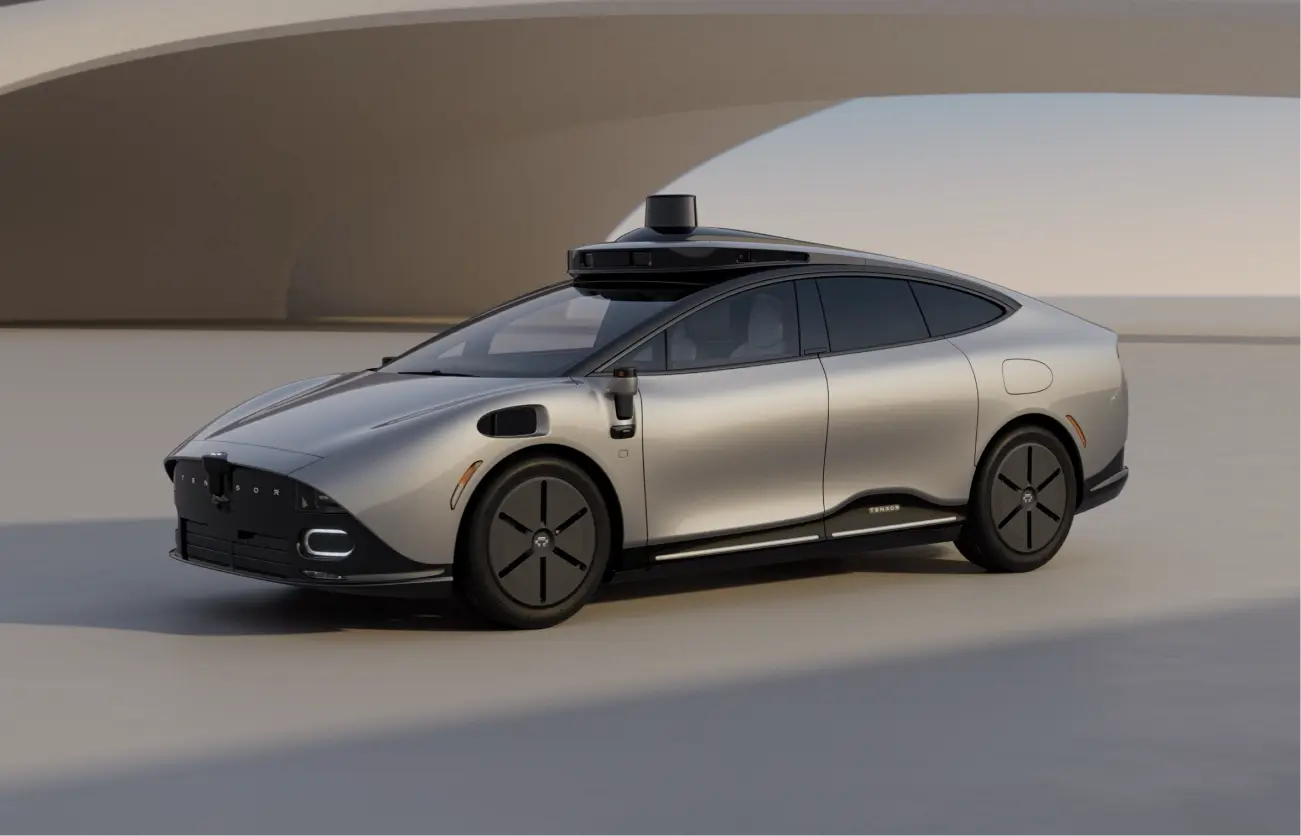
Tensor presents itself on its website as «Earth's first personal Robocar»: a luxury electric crossover designed in California for you to own, not a corporate fleet like Waymo or Cruise. It is, according to the company, the only level 4 (L4) autonomy vehicle that an individual can buy: it drives only in approved areas, parks itself and responds to voice commands — or you can take the wheel whenever you want.
A car that is also an AI agent
Tensor does not sell it as "a car with autopilot", but as a physical AI agent: it understands natural language ("pick me up from the office", "drop mom off at home and come back"), reads body language, recognizes the palm of the hand and allows summon & sendfrom the app by SMS. The four exterior Mini-LED screens (“signal screens”) communicate with pedestrians and other drivers during autonomous driving—a first for a vehicle, according to Tensor.
Video: Tensor — the first personal Robocar
Official presentation of Tensor: L4 autonomy, AI agent and “Own Your Autonomy” philosophy. Source: Auto Tensor (YouTube)
Folding steering wheel and lounge mode
The Tensor is also the first car with folding steering wheel and retractable pedals, developed with Autoliv, ZF, Bosch and other tier-1 suppliers. In L4 mode, the steering wheel disappears, the central screen slides to the driver's seat and the cabin becomes a living room - office, cinema, bedroom with camp/rest modes, depending on the brand.
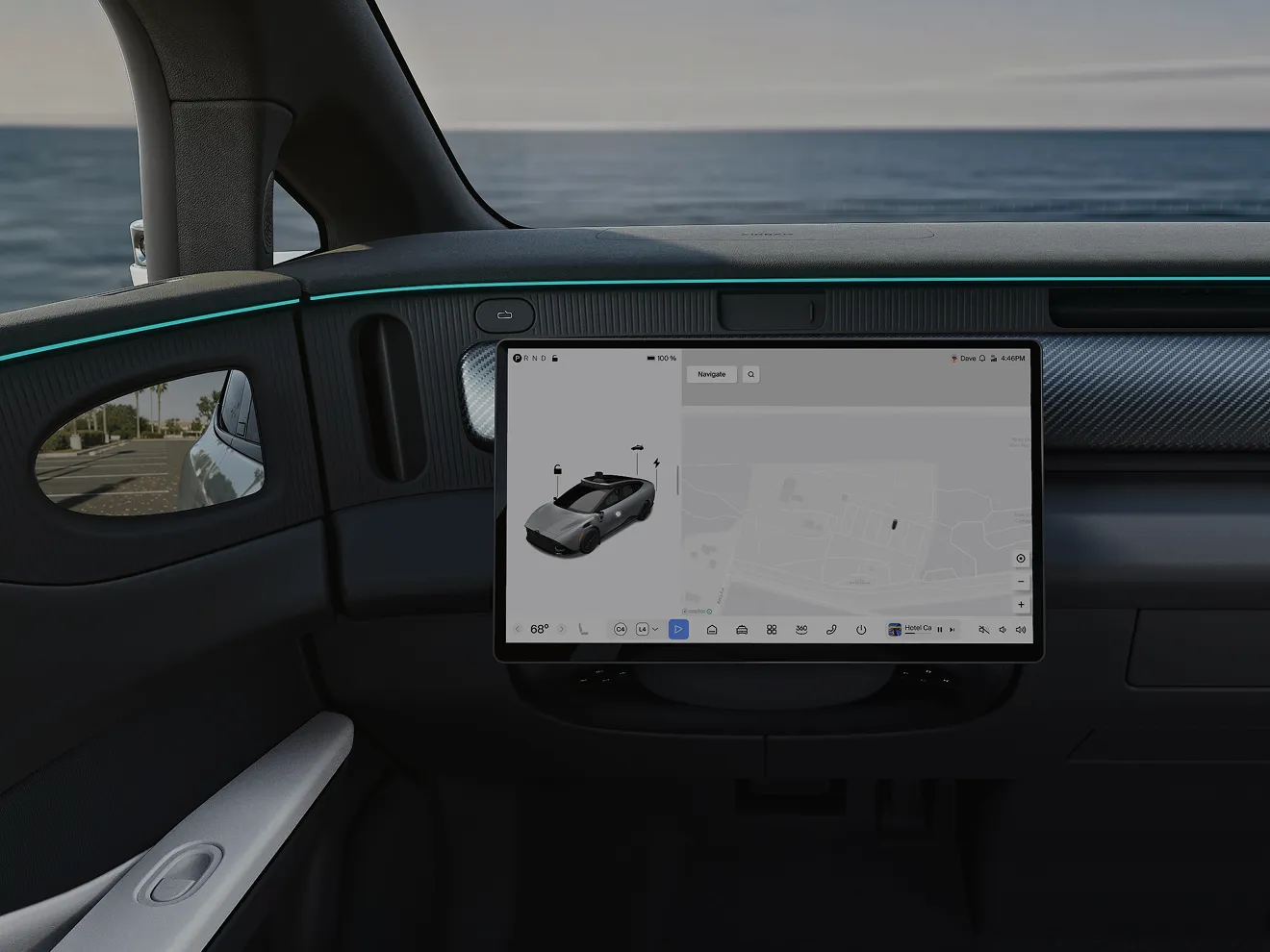
Steering and brakes are 100% by-wire with triple redundancy (Bosch ESP, redundant EPB, four-wheel steering with ZF). Tensor claims it is the world's first fully redundant electronic brake + steering system.
More than 100 multimodal sensors
The perception combines:
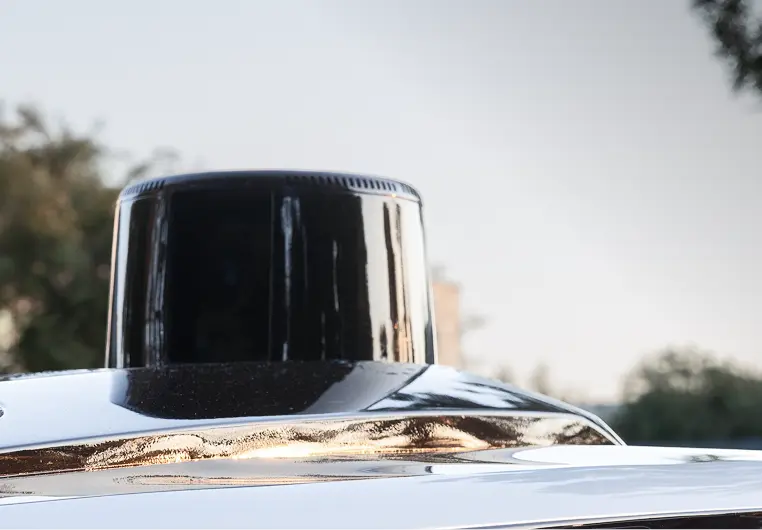
- 5 lidars, including the Halo Tensor (25.6 million beams/second) and four Sentinel blind spots
- 17 17 MP exterior cameras with under-chassis vision
- 6 Trinova radars 4D “hyper-radar” that detect fixed and moving objects at any distance
- 4 external microphone arrays for emergency sirens
- Fording sensors (depth 26.4 inches / ~67 cm) and automatic sensor cleaning (mini wipers, anti-frost)
8,000 TOPS: the on-board supercomputer
Tensor equips what it describes as the most powerful automotive supercomputer in the world: more than 8,000 TOPS with eight NVIDIA DRIVE AGX Thor SoCs (Blackwell GPU) in the primary layer, plus backup layers with processors from Texas Instruments, NXP and Renesas. Processes 53 Gbps of sensory data per second—~1,000 times the average home bandwidth—with 10 GPUs, 144 CPU cores, and triple redundancy architecture for driverless driving.
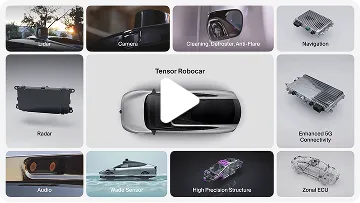
The AI stack includes human driving imitation, Transformer networks (ChatGPT style) to predict interactions, dual System 1 + System 2 architecture with visual-language model on board without relying on the cloud, and minimal risk maneuvers (MRM) if the main software fails.
Video: Tensor at CES 2026 with Amy Luca (CMO)
Amy Luca explains the dual mode, the NVIDIA supercomputer and the positioning in the luxury segment. Source: CES 2026 (YouTube)
Native design for autonomy
The Tensor is not a conventional retouched car: the body uses two die-cast parts instead of 60, aerodynamic coefficient 0.253, coach doors with AI, run-flat tires (45 mph for 1 hour after a puncture) and a 845 V / 5C charging platform (20–80% in 10 minutes). It measures 217.5 inches (5.52 m) long, 5 seats and 29 storage compartments.
Privacy: your data does not leave the car
Compared to robotaxis that record location and cameras, Tensor is committed to local privacy: end-to-end encrypted data, biometrics (palm, 3D face) in the TEE zone of a TI chip that "never leaves the vehicle", analog curtains in interior cameras/microphones and independent passenger accounts. The company states that it is "technically infeasible" to access travel history without the user's permission.
Price, production and calendar
Tensor has not published official price; Amy Luca (CMO) talks about luxury segment (MotorTrend estimates $150,000–200,000, comparable to a Mercedes-Maybach S-Class). Production is carried out by VinFast in Haiphong (Vietnam); Deliveries in Emirates planned for the second half of 2026 and in USA. USA in early 2027, pending regulation (Gulf Business).
Tensor has been conducting L4 driverless safety testing in California since 2020 (DMV certification). It also announced agreements with Lyft (fleet from 2027), GreenMobility (2,000 units in Denmark) and deployment in Abu Dhabi. Founded in 2016 in San José, with offices in Barcelona, Singapore and Dubai.
You can join the Priority List at tensor.auto to receive updates; There is still no deposit or fixed price.
In summary
What is Tensor? A privately owned Robocar L4 with integrated AI agent. What makes it different? Dual mode, folding steering wheel, 8,000 TOPS, +100 sensors and local privacy. How much does it cost? Luxury (~$200,000 according to the press); open priority list. When does it arrive? UAE finals 2026 · USA 2027.
Most read
What readers are engaging with right now.
- Culture
Goose, the gay app that competes with Grindr, reaches the top 4 of Lifestyle in the App Store

- World
Cubans protest in Miami against Airlines Connections for alleged scam: they demand up to $20,000 in packages to Punta Cana

- World
Trump declares the ceasefire with Iran over, orders new attacks in Hormuz and demands cutting trade with Spain in NATO

- Culture
Harry Potter on HBO: complete guide to the series (not yet released and already renewed for T2), dates, cast and controversies

- Culture
DUK App: Aly Sánchez launches her habits app "one day at a time" with a 63-day program
- Culture
I'm Edgy and Edgy Labs: From Nebraska's Walmart to a beef tallow cream brand that sells across the US.

- Culture
The Evening of the Year VI: all the winners, fights and performances of the Ibai night in Seville

- World
The FBI is investigating the AFA for alleged fraud and money laundering: about $300 million in sponsorships and operations in the US.

- World
El Cangrejo: profile of Raúl Guillermo Rodríguez Castro, Raúl Castro's grandson between GAESA, leaked luxuries and the first interview of 2026