Let's start with the term that frames everything: "president in charge." In charge of what and until when? If there was political will, there would already be an election date. There isn't. That word is not a technicality: it is permission to stretch power without expiration.
A staging, not an opening
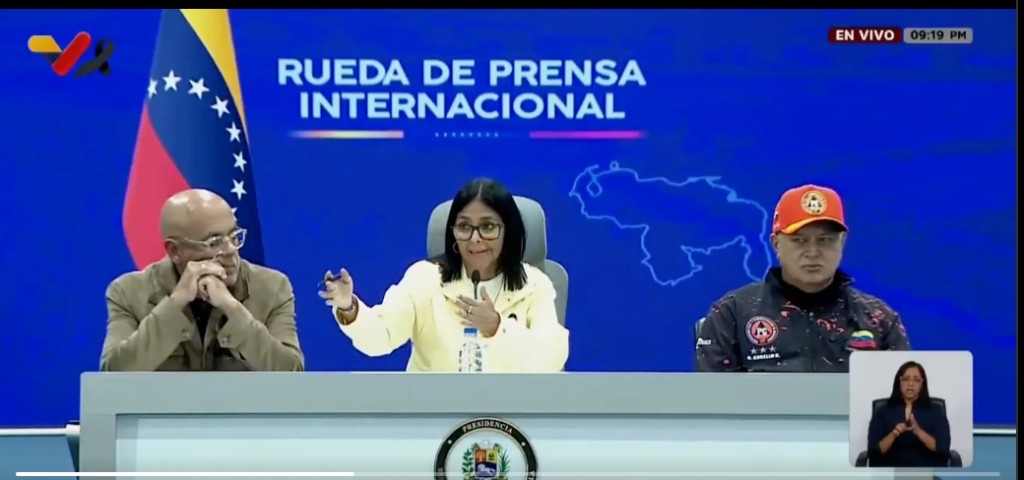
The press conference was, above all, a setup. It is not that the regime has never spoken to the press—with Hugo Chávez there were several appearances—but this comes at a different time: after events that change everything, such as Maduro's arrest, and with the world watching. The pretext was the victims of the earthquake; the objective, the image.
It should be said bluntly: Delcy won. He spoke calmly, responded without losing control, and projected normality. That is precisely the problem.
Microphones off, no real debate
At first glance it seemed like an open platform: international media, live questions, calm answers. But those who covered the event say otherwise. According to several journalists present, the problem was not that no one knew how to refute the government's responses: what prevented the counterpoint was that, when they tried to insist or counterargue, their microphone was turned off.
This is how the image of normality is constructed. Delcy responded calmly; the script was advancing; and any reply was left out of the scene, literally silenced. It was not a debate: it was a monologue decorated with plurality.
The initial questions were not the toughest that the moment called for either—elections, repression, humanitarian aid, military presence—and that already favored the ruling party. But the decisive thing, according to those who were there, was the cut of the audio when the conversation was no longer convenient for the government. In the face of evasion and contestable data, the reply existed; What did not exist was the technical permission to express it. And that choreography—white, love, peace—closed the moment when things had to be said as they are.
Wash the image with the pain of others
The real meaning of this press conference was only one: to clean up the image by taking advantage of the pain of the earthquake. But that pain was not born with the earthquake. It has been accumulating for years under a government that I consider terrorist and that started with Hugo Chávez. Therefore, more than an opening, this was a new blow for a people that has been suffering for too long.
The earthquake: the State arrived late; the people, first
What happened with the earthquake is tragic, and even more so the slowness of the official response. The State waited for the order to mobilize military and resources while the clock was ticking. There were people under the rubble for more than 24, 48 and 72 hours, and even after days survivors continued to appear. Many had believed that, with Maduro imprisoned, an opportunity for change was opening up. The reality was different.
As long as this government remains in place—in whatever form—it will continue to cost Venezuelan lives. A State that does not react to trapped bodies, many dying from asphyxiation due to lack of hands and machinery, is a State that has stopped seeing its people.
Let's be fair: no government in the world is fully prepared for a catastrophe of this magnitude. But the difference was made by the people. The poor, the ordinary people, were the ones who rescued, cured, fed and donated the most. An extraordinary human response that the Venezuelan people will not forget.
Don't let pain become a screen
What is unacceptable would be to allow the most painful moment to serve to shield the government. Venezuela needs a new beginning and decisions made by its own government: right or wrong, but legitimately its own. Without terror, without manipulation, without figures imposed from outside. The people need real change.
María Corina is not yet that change
With respect, I do not believe that María Corina Machado is, today, that change. You cannot say "they won't let me enter Venezuela" and at the same time affirm that you are with the people. To help, the first thing is to be there; enter, even if it is in silence, just as he left.
If he knew that by leaving he would hardly be able to return, then he shouldn't have left. Leadership that promises change stays to fight, no matter what. Because he who promises, delivers. That is why I believe, with respect, that he has not yet demonstrated that he is up to the task of the presidency.
If she really wants to return, she should return by any means, through any border, not on a commercial flight announcing herself as the next president with the backing of the United States. The reality is that this support has been diluted, even among Venezuelans who resist within. If you have to act, you act in silence and surprise: enter, circumvent surveillance and fight alongside the people for free and urgent elections that make way for a legitimate government, without manipulations, focused on its people and its resources.
Freedom is not expected: it is taken
Time is short. Venezuela cannot resign itself to waiting while the people become exhausted and weaker every day. When those who govern are the same ones who have caused years of pain and exploitation, the problem does not solve itself.
It's like a cancer: when the doctor sees it progressing, he doesn't negotiate, he removes it, even if recovery hurts. In the face of manipulative and skillful governments, we must be direct, without formalities: go to the bottom, without borders, and eradicate what must be eradicated if change is truly sought.
That is why I do not believe that this press conference has had real value for the people. Many saw a gesture of openness - "now they even respond to foreign media" - but the bottom line is different: calculating how to prolong power for as long as possible. If nothing changes, the regime will continue, more and more cunning: it will grant some access, it will have even fewer problems and it will repeat that it is only "following orders", that the fault is never its own. A shame.
And this is not just Venezuela
In the world, freedom is receding. That freedom that we think we have—today amplified by the Internet, where we give our opinions on everything—perhaps it is a controlled freedom, designed so that we confuse the idea they sell us with the one that would truly free us.
In times of crisis you cannot sleep: you have to act, just when power believes us weak. Each town ends up having the destiny it tolerates. Waiting for others to come and give us freedom is not freedom: it is comfort and hypocrisy. Freedom, when you really want it, is taken, with all the consequences.
Hopefully soon the people of Venezuela will take the reins and build their own government, without manipulation or outside interests. A government that is cordial with the world, but that responds, above all, to its people and its resources. Only then will there finally be a freer country.
Most read
What readers are engaging with right now.
- Culture
Goose, the gay app that competes with Grindr, reaches the top 4 of Lifestyle in the App Store
- World
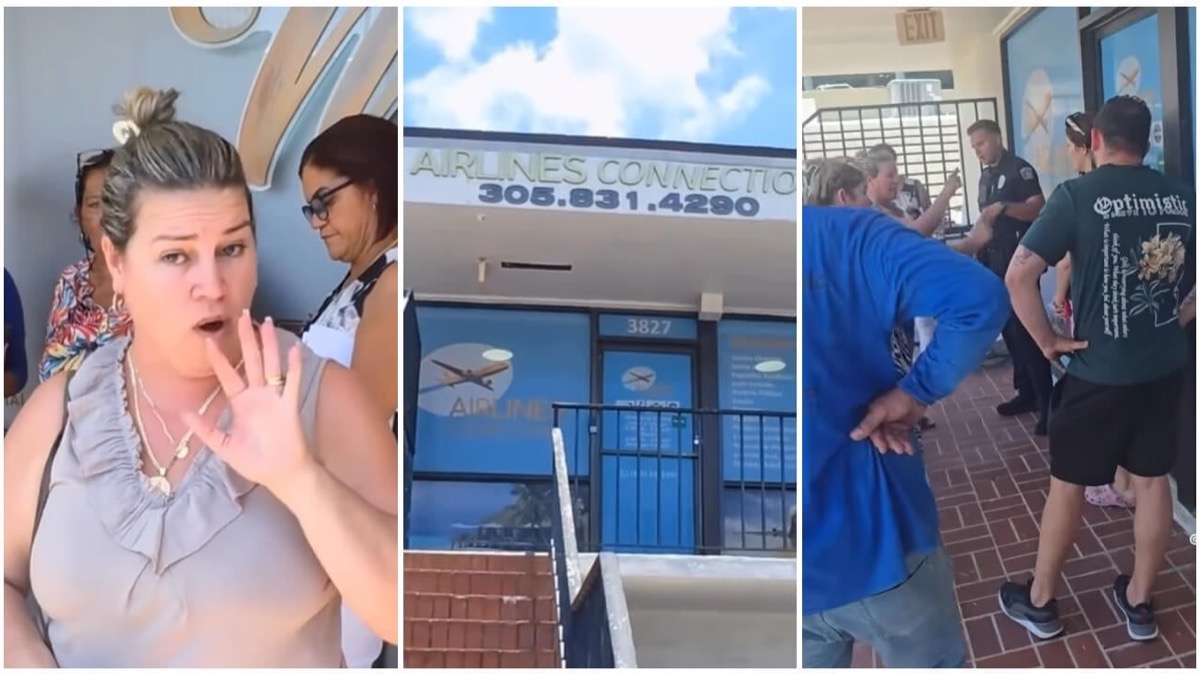
Cubans protest in Miami against Airlines Connections for alleged scam: they demand up to $20,000 in packages to Punta Cana
- World
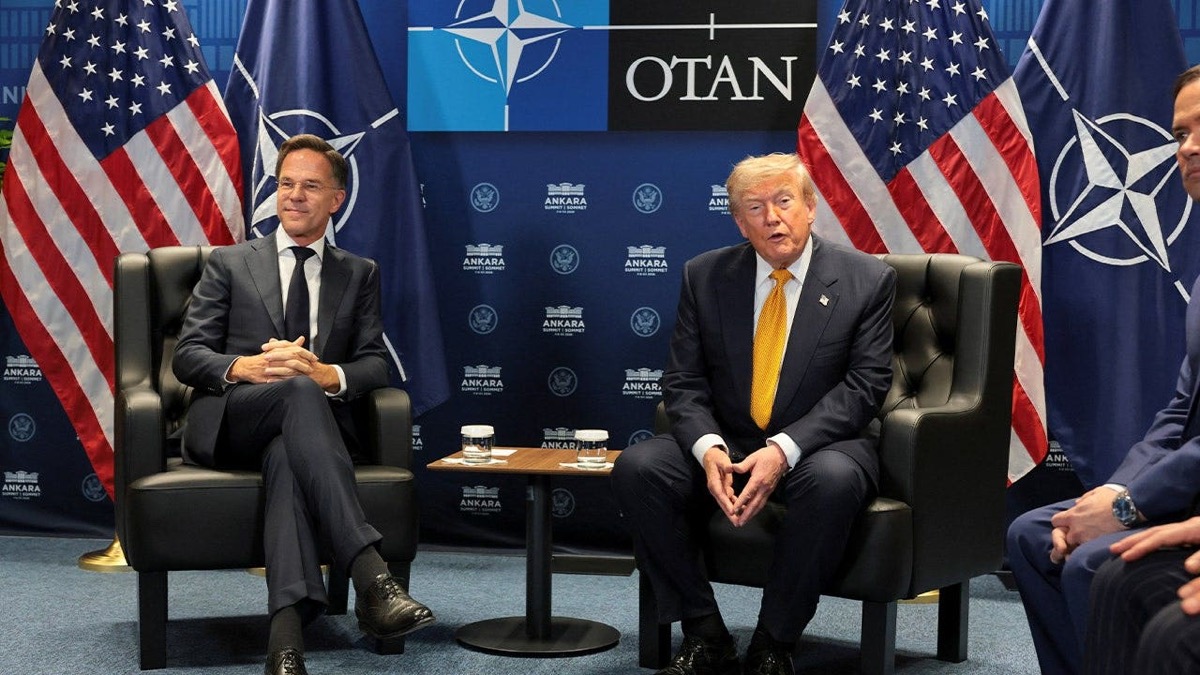
Trump declares the ceasefire with Iran over, orders new attacks in Hormuz and demands cutting trade with Spain in NATO
- Culture
Harry Potter on HBO: complete guide to the series (not yet released and already renewed for T2), dates, cast and controversies

- Culture
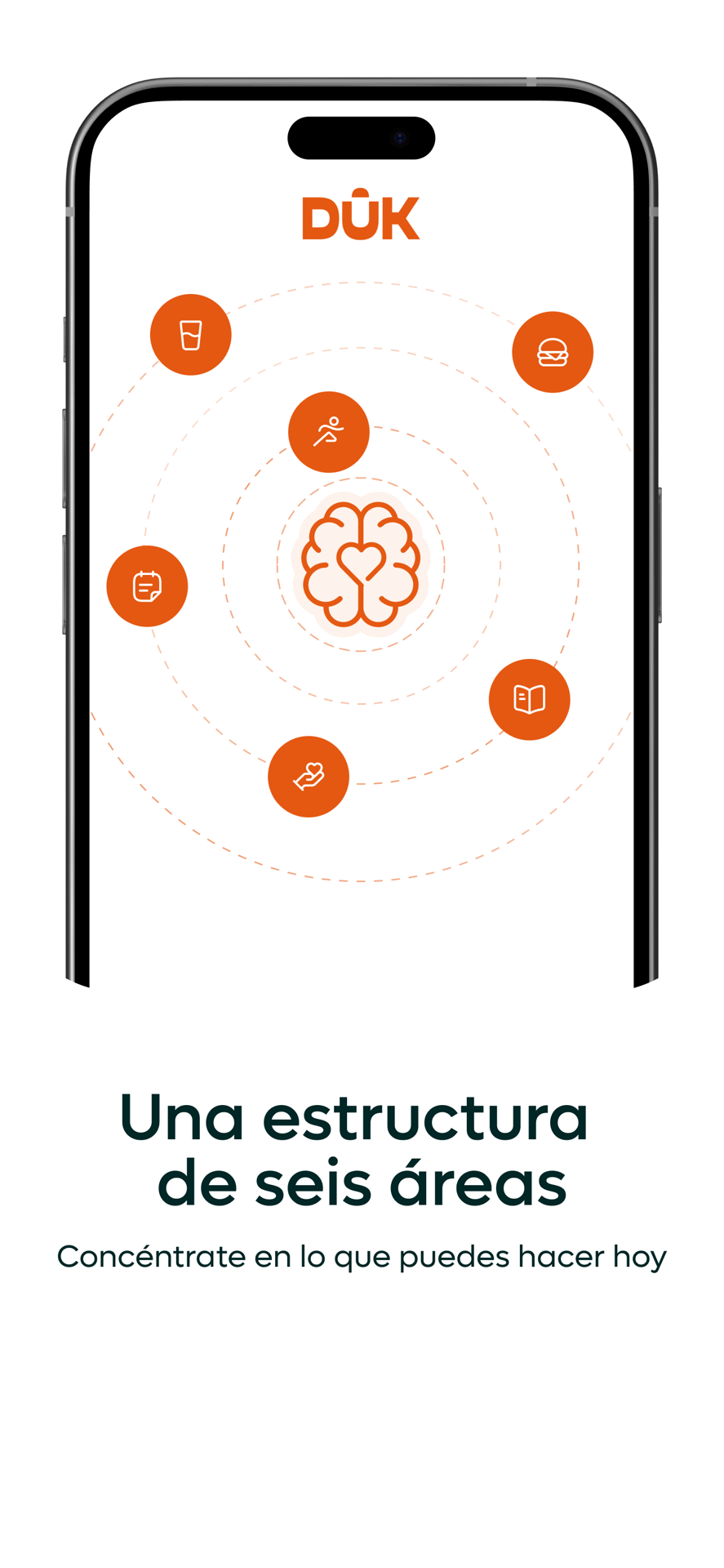
DUK App: Aly Sánchez launches her habits app "one day at a time" with a 63-day program
- Culture
I'm Edgy and Edgy Labs: From Nebraska's Walmart to a beef tallow cream brand that sells across the US.

- Culture
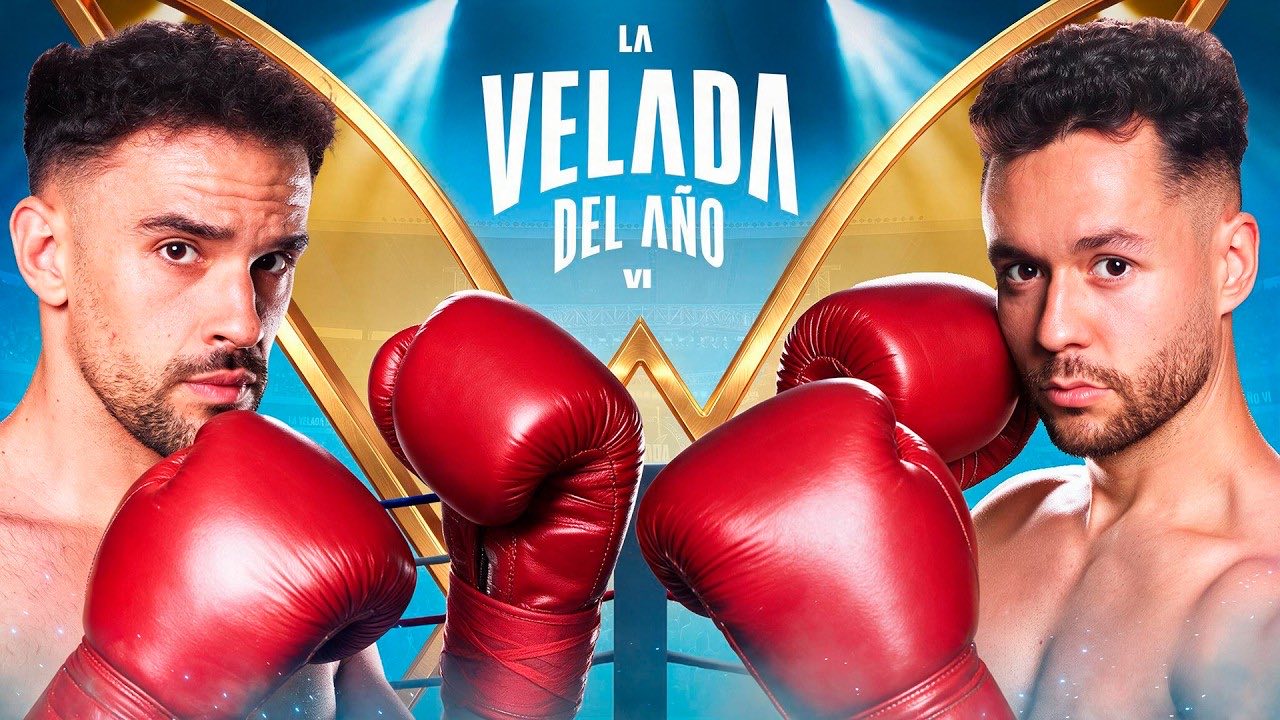
The Evening of the Year VI: all the winners, fights and performances of the Ibai night in Seville
- World
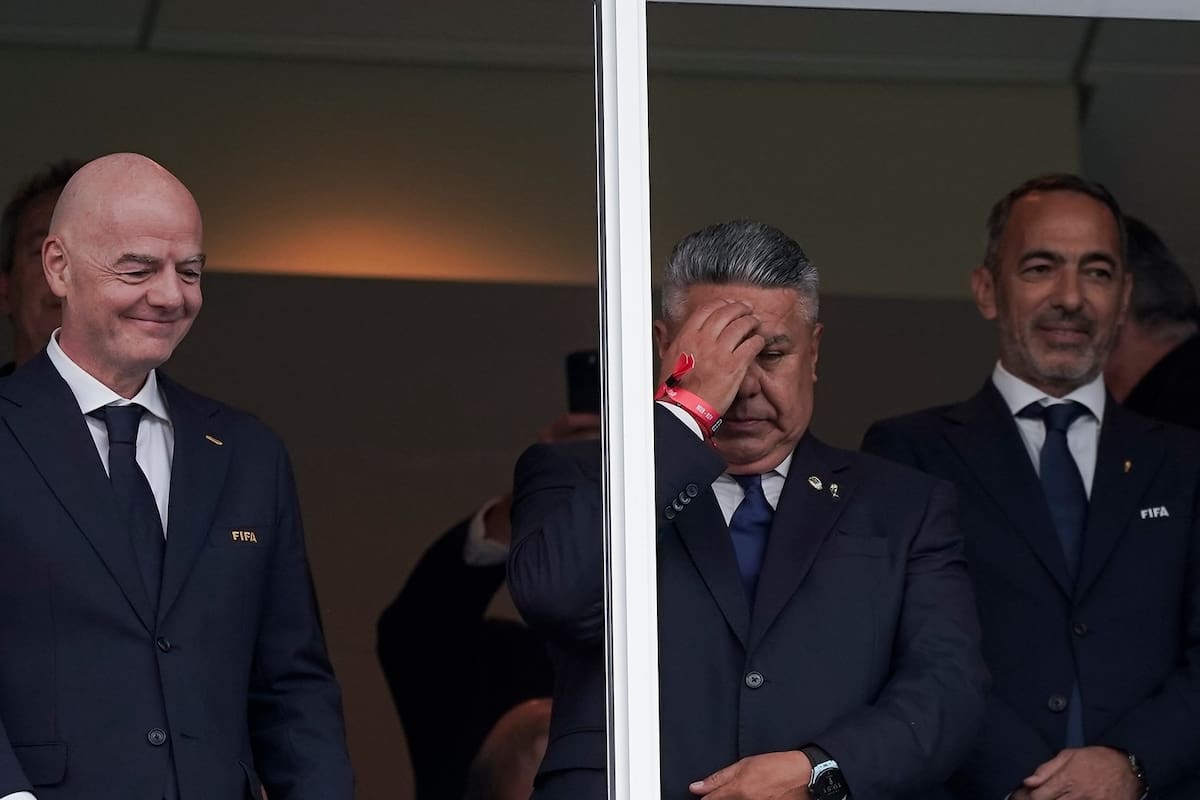
The FBI is investigating the AFA for alleged fraud and money laundering: about $300 million in sponsorships and operations in the US.
- World
El Cangrejo: profile of Raúl Guillermo Rodríguez Castro, Raúl Castro's grandson between GAESA, leaked luxuries and the first interview of 2026