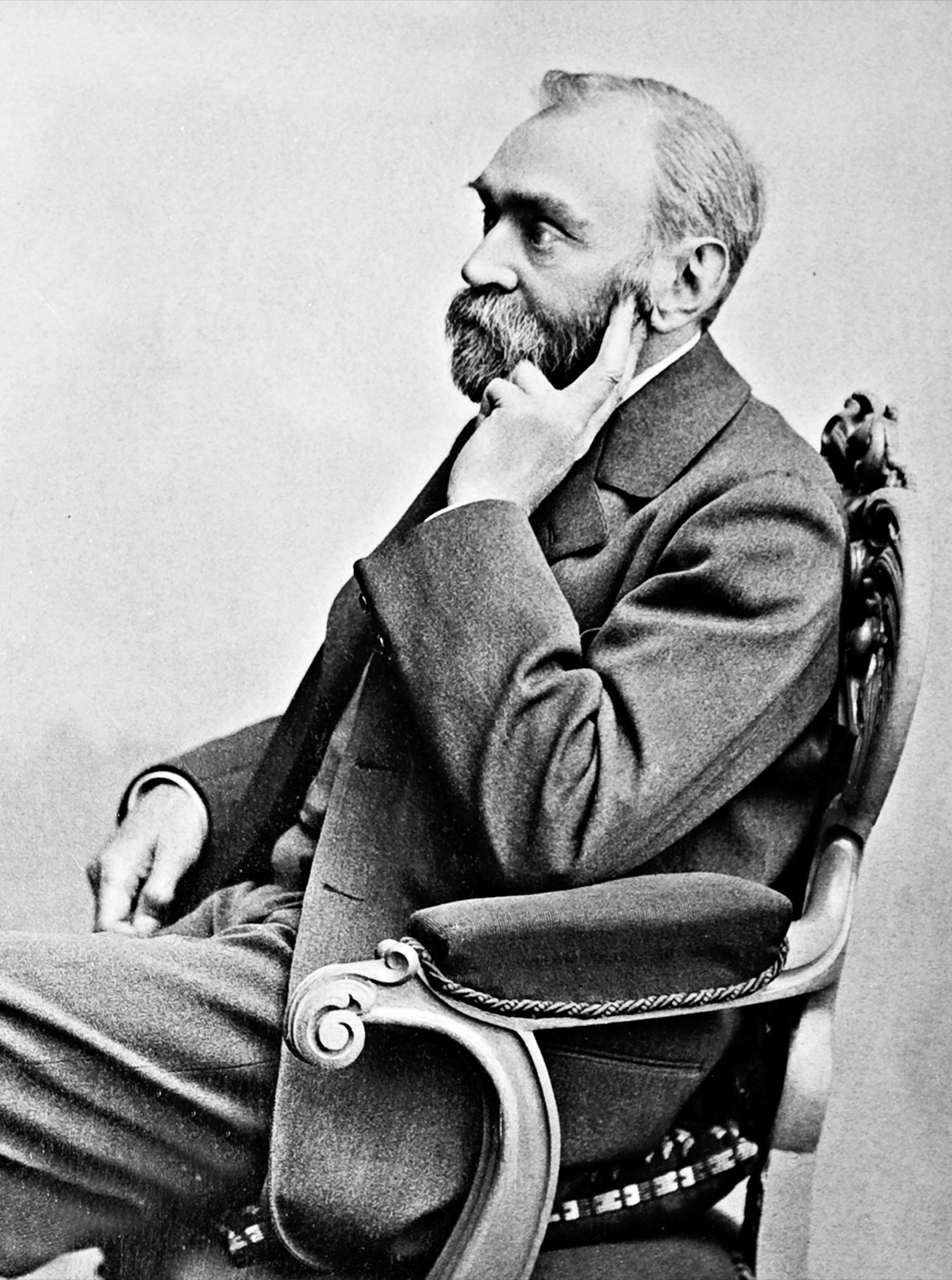
Alfred Bernhard Nobel went from being the man who made the power of nitroglycerin transportable to founding the most prestigious award on the planet. He was born in Stockholm in 1833, mastered chemistry and up to six languages, patented dynamite in 1867 and, when he died in San Remo on December 10, 1896, he left a will that converted his fortune into the Nobel Prizes. This is his story, contrasted with official sources and historical documentation.
1. Beginnings and obsession with danger
Scientific roots
Alfred Nobel was born on October 21, 1833 in Stockholm, into a family of inventors. His father, Immanuel Nobel, worked in weapons and machinery; When the family business prospered in Russia, the family settled in St. Petersburg, where Alfred received an elite private education in science, literature, and languages. According to the official biography of the Nobel Foundation and records collected in Wikipedia, mastered six languages and showed from a young age an inventive and restless mind.
After the partial bankruptcy of his father's business, Alfred returned to Sweden and devoted himself seriously to chemical research. Their objective was clear: to find an explosive more powerful than black gunpowder and, above all, controllable for mining, the construction of tunnels and canals that were transforming Europe in the midst of the industrial revolution.
Nitroglycerin
On his travels through Europe—especially in Paris—he encountered nitroglycerin, a liquid discovered in 1847 by Ascanio Sobrero with enormous explosive power, but so unstable that its own inventor considered it too dangerous for practical use. Nobel saw an opportunity in it: if he could stabilize it and detonate it reliably, he would change civil engineering forever.
In 1863 he obtained the first patent on nitroglycerin as an industrial explosive and, the following year, that of the detonator (blasting cap) that allowed the explosion to be started safely — an invention as decisive as dynamite itself, according to the chronology of NobelPrize.org.
Family tragedy
The price of the experiment was terrible. On September 3, 1864, a nitroglycerin preparation shed exploded in Heleneborg, outside Stockholm. Five people died, including his younger brother Emil. The authorities prohibited further manufacturing of nitroglycerin within the city.
Nobel did not abandon the research: he moved the experiments to a barge anchored in Lake Mälaren, far from the population, and in 1864 he managed to start mass production. This combination of personal tragedy and scientific obstinacy is one of the most cited episodes in his biography, collected both by the Nobel Foundation and by historians of the 19th century.
2. The birth of dynamite and great fortune
The invention (1867)
Nobel discovered that by mixing nitroglycerin with kieselguhr—a porous diatomaceous earth, also called diatomaceous earth—a moldable paste was obtained, much more stable than the pure liquid and easy to transport in bars. He patented it in 1867 under the name dynamite (from the Greek dynamis, "force"). It only exploded in a controlled manner by activating the detonator that he himself had perfected years before.
Dynamite coincided with the rise of the pneumatic drill and the diamond crown: together it made rock excavation, railway tunnel drilling and canal opening cheaper. The demand was immediate and global.
Massive profits
Nobel patented his invention in multiple countries and opened factories throughout Europe and America. When he died, his company maintained more than 90 explosives and weapons factories around the world, according to Wikipedia and the documentation of the Nobel Foundation. The fortune grew with mining, public works and, later, military contracts—although Nobel insisted that his products served primarily civil engineering.
Other revolutions
Throughout his life he registered 355 international patents. Among the most relevant:
- Gelignite (1875): impermeable explosive, more powerful than standard dynamite.
- Balistite (1887): smokeless propellant, predecessor of cordite, with military and ballistic applications.
- Synthetic materials, artificial rubber and experiments with artificial silk, reflection of an inventor who never stopped expanding frontiers.
The oil empire
Alfred didn't build with explosives alone. His brothers Ludvig and Robert founded Branobel in Baku (present-day Azerbaijan), a company that dominated the extraction and transportation of oil in the Caspian basin. Alfred invested in the business and participated in its expansion.
In 1878, Ludvig commissioned the Zoroaster, considered the world's first modern oil tanker: a steel ship with integrated tanks that transported kerosene across the Caspian Sea between Baku and Astrakhan, according to the historical archive of Branobel. Ludvig decided not to patent the design, which accelerated its worldwide spread. At its peak, Branobel was one of the largest oil producers on the planet.
3. The change of legacy and the will
«The merchant of death»
In 1888 his brother Ludvig died in Cannes. Several French newspapers confused the brothers and published obituaries of Alfred. Tradition—collected by HISTORY and encyclopedias such as Britannica—attributes to one of these texts the headline «Le marchand de la mort est mort» (“The merchant of death is dead") and a brutal portrait of a man who became rich by making tools of destruction.
Historians warn, however, that the obituary with that exact phrase has not been located with certainty; The newspaper Le Figaro published a critical text on April 15, 1888 and corrected it the next day. What does seem clear is that Nobel reflected for years on his posthumous reputation: he rewrote his will on several occasions and maintained contact with the pacifist movement, especially with Bertha von Suttner, future Nobel Peace Prize laureate in 1905, according to NobelPrize.org.
The donation
On November 27, 1895, at the Swedish-Norwegian Club in Paris, he signed his final will. He ordered the sale of his companies - factories, oil investments and properties - and allocated 94% of his assets, around 31.2 million Swedish crowns, to a fund that would finance annual awards "to those who, during the preceding year, have conferred the greatest benefit on humanity."
The five original categories: Physics, Chemistry, Physiology or Medicine, Literature and Peace. The Peace Prize was to be delivered in Oslo (then under union with Sweden); the others, in Stockholm. His heirs and several governments contested the will, but the executors Ragnar Sohlman and Rudolf Lilljequist managed to establish the Nobel Foundation in 1900. The first Nobel was awarded in 1901.
Video: Alfred Nobel and the Nobel Prizes
Official summary of the life of Alfred Nobel, the invention of dynamite and the origin of the prizes. Source: YouTube — Nobel Prize
4. The Nobel Prizes today
Funds do not run out
Nobel's physical fortune was liquidated and invested in "safe securities," as the will requested. Today the Nobel Foundation manages assets invested in the stock market and other assets: according to its annual report, the invested capital exceeds 4.5 billion Swedish crowns. The prizes are paid with the returns of that fund, not with the original capital — which is why the legacy remains valid more than a century later.
The six annual categories
In addition to the five categories provided by Nobel, in 1968 the Sveriges Riksbank (Sweden's central bank) created the Alfred Nobel Memorial Prize in Economic Sciences, awarded for the first time in 1969. It was not in the original will, but it is integrated into the ceremony and shares the same amount as the rest.
The monetary value
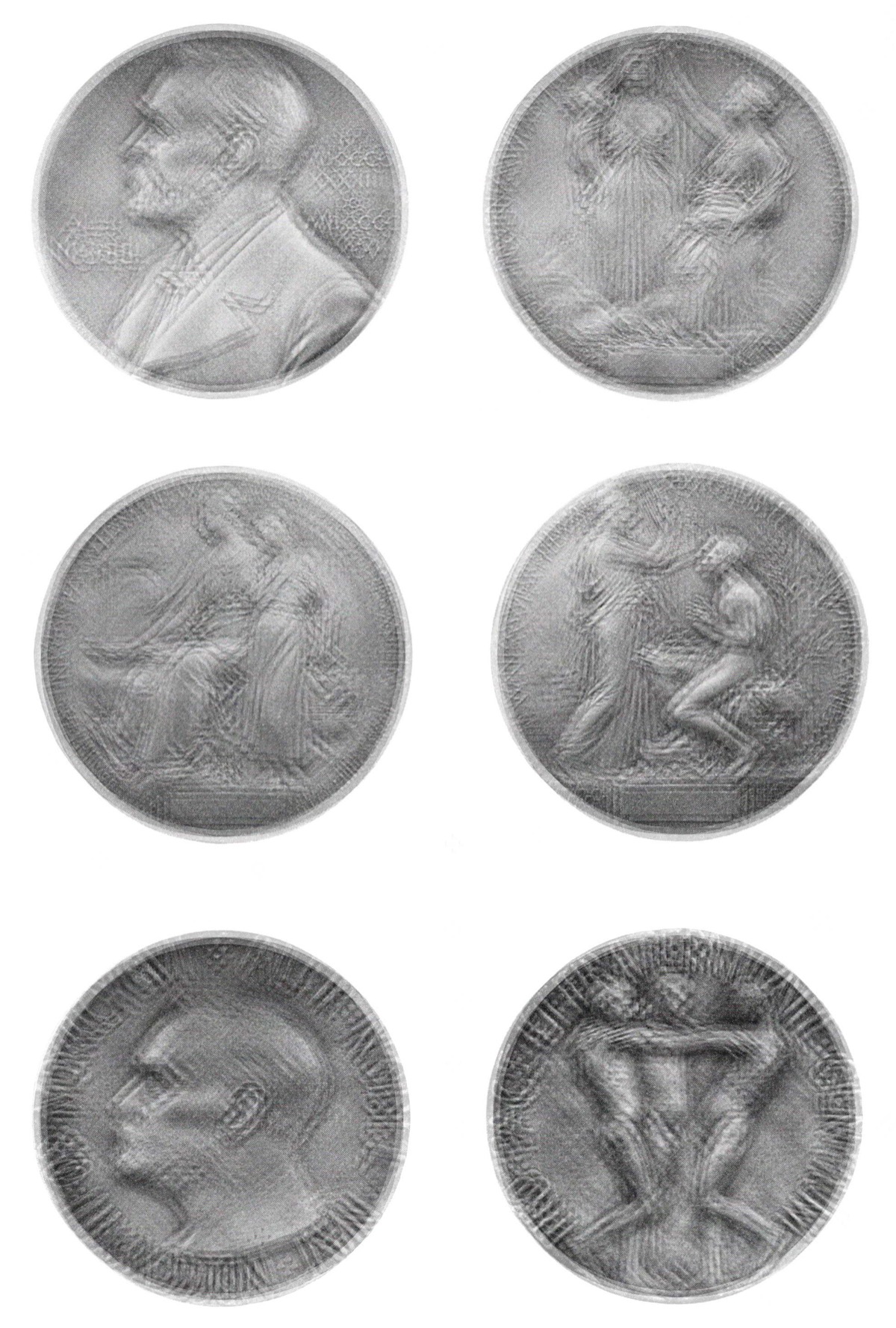
Each category receives the same amount. In 2024 and 2025, the Foundation set the entire prize at 11 million Swedish krona (approximately 1 million dollars, depending on the current exchange rate). If up to three people share an award, the amount is divided between them, according to the official prize tables.
Eternal tribute on December 10
Alfred Nobel died in San Remo (Italy) on December 10, 1896, victim of a stroke. For this reason, every year, the award ceremonies are held on December 10: at the Stockholm Concert Hall and the Stockholm City Hall for Physics, Chemistry, Medicine, Literature and Economics; and at the Oslo City Hall for the Nobel Peace Prize.
In summary
Who was it? Alfred Nobel (1833-1896), Swedish chemist and industrialist. What did he invent? The detonator (1863-1864) and dynamite (1867), among 355 patents. How did he get rich? With explosives for mining and civil engineering and with investments in oil (Branobel). Why the awards? A will from 1895 that bequeathed 94% of his fortune to recognize the greatest benefit to humanity. How do they work today? Six categories, SEK 11 million per prize, financed by an investment fund, with a gala on December 10 in Stockholm and Oslo.
Most read
What readers are engaging with right now.
- World
Cubans protest in Miami against Airlines Connections for alleged scam: they demand up to $20,000 in packages to Punta Cana

- Culture
Goose, the gay app that competes with Grindr, reaches the top 4 of Lifestyle in the App Store

- Culture
Harry Potter on HBO: complete guide to the series (not yet released and already renewed for T2), dates, cast and controversies

- World
Trump declares the ceasefire with Iran over, orders new attacks in Hormuz and demands cutting trade with Spain in NATO
- Culture
DUK App: Aly Sánchez launches her habits app "one day at a time" with a 63-day program
- Culture
I'm Edgy and Edgy Labs: From Nebraska's Walmart to a beef tallow cream brand that sells across the US.

- World
El Cangrejo: profile of Raúl Guillermo Rodríguez Castro, Raúl Castro's grandson between GAESA, leaked luxuries and the first interview of 2026
- World
The FBI is investigating the AFA for alleged fraud and money laundering: about $300 million in sponsorships and operations in the US.
- World
Cuban regime terrorist Ramiro Valdés Menéndez dies