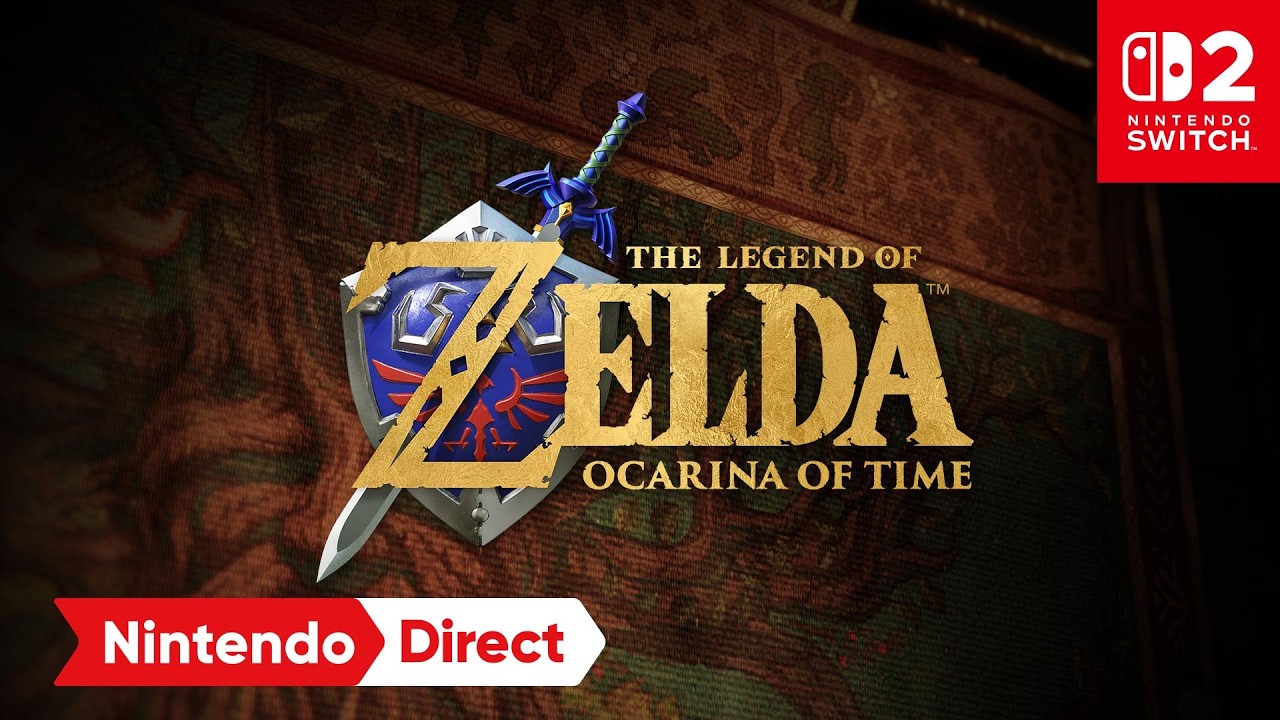
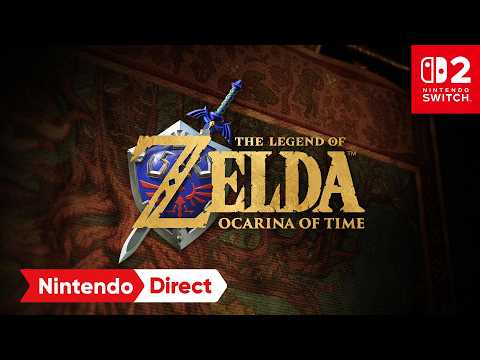
Nintendo confirmed on Monday, June 9, during the Nintendo Direct dedicated to Switch 2, that The Legend of Zelda: Ocarina of Time will be "reborn" on the new hybrid console in 2026. This is not a simple remaster or another port of the Switch Online emulator: the company presented a cinematic trailer with redone visuals, voice-over narration recovered from the start of the original game and a contemporary logo that made the scope of the project clear. In a matter of hours, the official clip surpassed two million views and led the conversation on networks, forums and live analysis.
Video: official trailer of the remake at the Nintendo Direct
Nintendo of America published the announcement with the slogan that the legend "will be reborn" on Switch 2. The video lasts less than two minutes, but it is enough to confirm artistic direction, voice-over and iconic settings. Source: Nintendo of America — YouTube
The news comes at a strategic time for Nintendo. Switch 2 debuted in June with a launch catalog focused on sequels (Mario Kart World, Donkey Kong Bananza) and top-of-the-line remakes (Star Fox 64). Putting the most cited title in the history of the medium—recurring winner on “best game of all time” lists—into the same equation is a sign that the company wants the new machine to inherit not only sales, but also the cultural weight of its N64 and GameCube classics.
What the trailer shows (and what it leaves in the air)
The clip recovers the literary introduction of Hyrule: the voice that describes the kingdom created by "beings of supreme divinity", the forest at the edge of the map and the Kokiri with their fairies. Link appears as the boy without a fairy companion, asleep under the Great Deku Tree. Later we see his hand waking up with the Triforce shining in his palm - one of the most recognizable symbols of the saga - and shots of the forest with realistic lighting, leaves in the foreground and cinematic depth of field.
The visual style deliberately moves away from the watercolor look of Breath of the Wild and Tears of the Kingdom. Several specialized media compare it with an evolution of the stylized realism of Twilight Princess, although with greater definition and more expressive facial animation. Nintendo did not show combat, dungeons, Z-targeting or interface: the trailer is purely emotional, designed to activate the emotional memory of someone who played in 1998 and to intrigue those who only know the modern saga.
«The Nintendo 64 classic returns for a new generation in 2026, reborn exclusively for Nintendo Switch 2.»
Not the first remake: the ghost of the 3DS
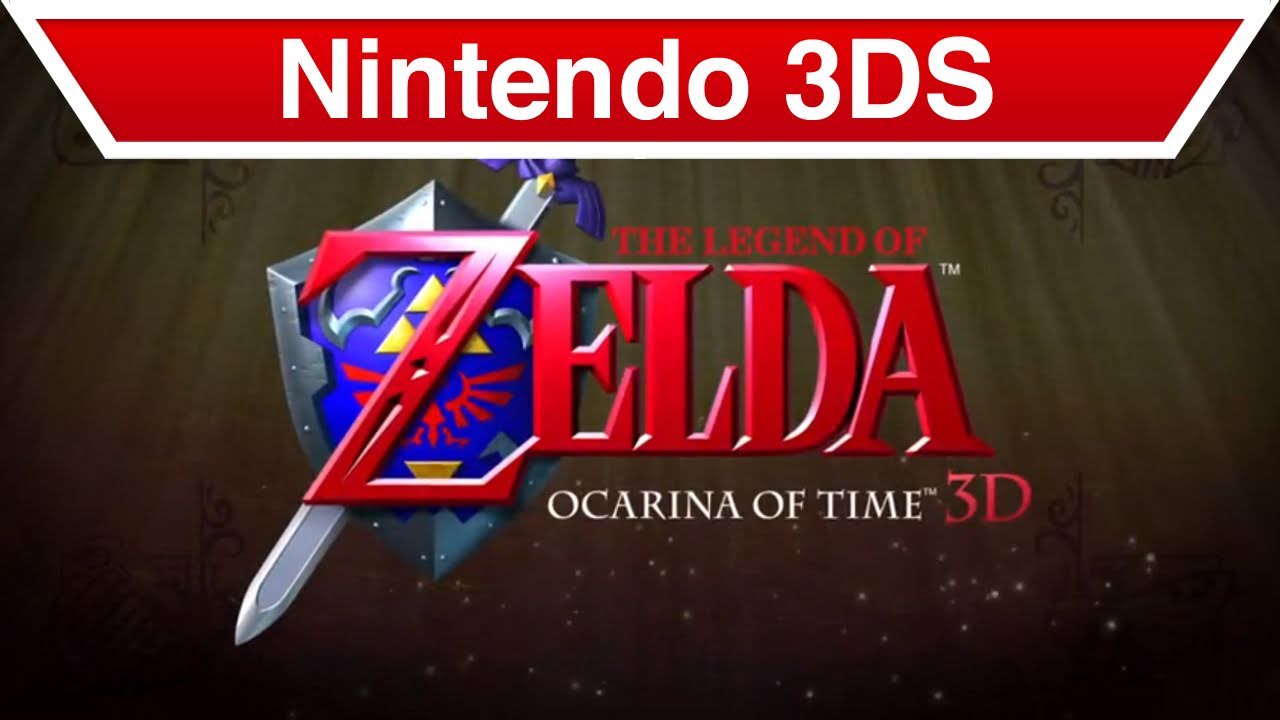
In 2011, Grezzo and Nintendo had already remade Ocarina of Time for Nintendo 3DS with renewed textures, stereoscopic support and the Master Quest mode. That version was hailed as the gold standard of the "faithful remake": same designs, same cameras, same puzzles, but sharper. The Switch 2 project seems to go one step further: it is not limited to polishing polygons from 1998, but rather reconstructs scenes with AAA trailer animation and framing.
Nintendo did not confirm in the Direct which studio is leading development. Grezzo, also responsible for the remakes of Link's Awakening on Switch, is the obvious candidate in the press's bets, but without an official statement any attribution remains speculation. What is certain: this will be the second full-scope remake of the game, not a direct port of the virtual console.
Video: the 2011 remake for Nintendo 3DS
The 2011 trailer shows the "faithful but sharper" approach that dominated the 3DS generation. The one for Switch 2 points to a deeper visual reimagination. Source: Nintendo of America — Ocarina of Time 3D (2011)
Why fans are so excited
Ocarina of Time is not just nostalgia: it is the game that defined Zelda's transition to 3D, with the targeting system, the ocarina as a musical interface, two intertwined timelines and a soundtrack by Koji Kondo that continues to play in symphony concerts. For years, the community asked on Change.org, Reddit and directly from Nintendo for a remake at the level of Link's Awakening (2019) or the PlayStation and Xbox titles that remake classics with a blockbuster budget.
Leaks prior to the Direct—including images of alleged Link menus and models circulating on forums—fueled skepticism. That the announcement came with an official logo, eShop page and trailer on the Nintendo of America channel deactivated much of the "fake leak fatigue." On X and TikTok, N64/3DS/Switch 2 comparison clips multiplied in hours; reactors highlighted the hand with the Triforce and the quality of the initial forest as proof that the project has real visual ambition.
Faithful to the original or total reimagination?
A nuance generated debate in the days after the Direct. The game's listing in the Nintendo store even described the title as a "full remake" with visuals redone from top to bottom; hours later, the text was softened to a more generic formulation, as documented IGN and Insider Gaming. This back-and-forth fueled the question that most divides the fanbase: will the remake preserve the geometries and puzzles of the N64 or will it take advantage of the hardware to redesign dungeons, controls and narrative rhythm?
Nintendo also did not clarify whether it will include Master Quest, current voices, optional voice acting or accessibility improvements. The deliberate absence of gameplay keeps speculation alive until a second trailer, which traditionally arrives a few months before launch. What the trailer does confirm is an epic-fantastic tone and respect for mythology: there are no signs of a "reboot" disconnected from the canon, as occurred with the jump to cel-shading in The Wind Waker.
Launch in 2026 and context of Switch 2
The official Nintendo website in the United States lists the game as "Coming 2026" without month or quarter. The strategy replicates that of the company's other blockbusters: early announcement to anchor the catalog of the second half of the Switch 2 cycle and compete for media attention in a year full of large multiplatform launches. The title will be exclusive to Switch 2; There was no mention of compatibility with the original Switch or a PC release.
The immediate precedent is the remake of Star Fox 64 that accompanied the release of the console: Nintendo showed that it is willing to invest in remaking its N64 icons with a launch budget. Putting Ocarina of Time in the same generation sends a clear message to hesitant buyers: the Switch 2 not only runs new sequels, but it may be the definitive way to revisit the classic library.
For millions of players who discovered Zelda with Breath of the Wild, this remake will be the gateway to the previous mythology: the origin of adult Link, the Ocarina of Time, Sheik and the battle against Ganondorf in Hyrule Castle. For those who experienced the premiere in 1998, it is the promise of returning to Kokiri Forest with graphics that finally live up to the emotional memory. Nintendo has yet to demonstrate gameplay; but with an official trailer, an open eShop and a date on the horizon, Ocarina of Time has ceased to be a rumor and has become the remake that the fanbase had been clamoring for for years.
Most read
What readers are engaging with right now.
- Culture
Goose, the gay app that competes with Grindr, reaches the top 4 of Lifestyle in the App Store

- World
Cubans protest in Miami against Airlines Connections for alleged scam: they demand up to $20,000 in packages to Punta Cana

- World
Trump declares the ceasefire with Iran over, orders new attacks in Hormuz and demands cutting trade with Spain in NATO

- Culture
Harry Potter on HBO: complete guide to the series (not yet released and already renewed for T2), dates, cast and controversies
- Culture
DUK App: Aly Sánchez launches her habits app "one day at a time" with a 63-day program

- Culture
I'm Edgy and Edgy Labs: From Nebraska's Walmart to a beef tallow cream brand that sells across the US.

- Culture
The Evening of the Year VI: all the winners, fights and performances of the Ibai night in Seville

- World
The FBI is investigating the AFA for alleged fraud and money laundering: about $300 million in sponsorships and operations in the US.
- World
El Cangrejo: profile of Raúl Guillermo Rodríguez Castro, Raúl Castro's grandson between GAESA, leaked luxuries and the first interview of 2026