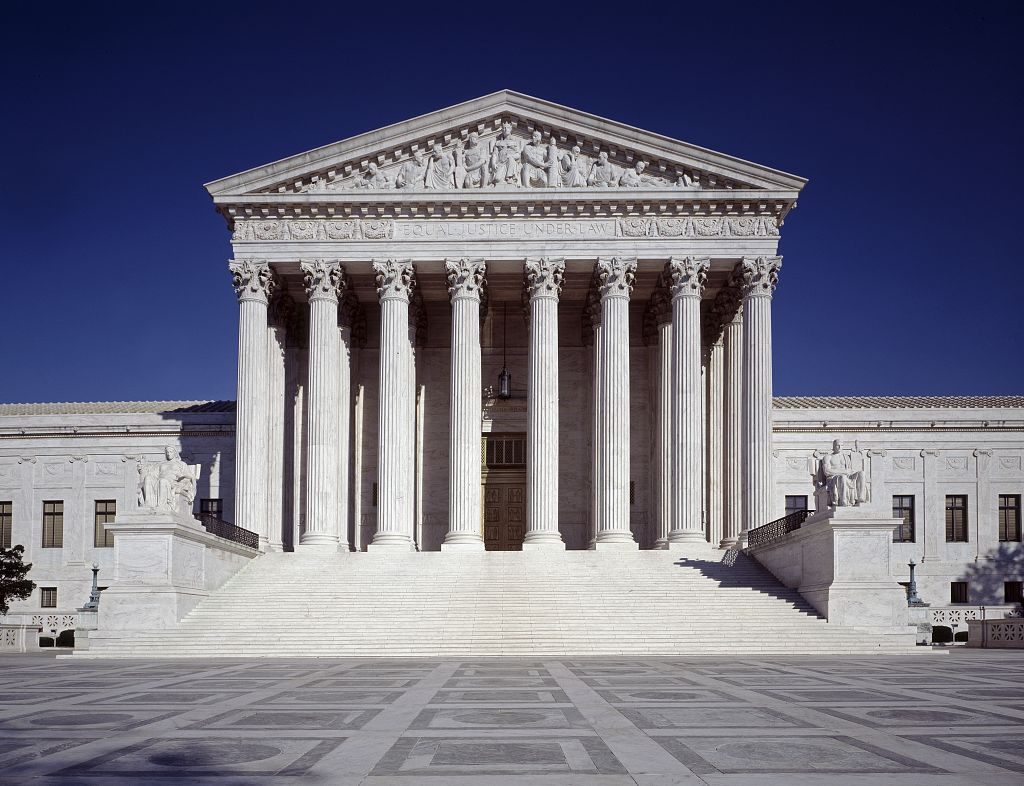
With a vote of 6 to 3, the Supreme Court of the United States ruled this Tuesday that the Helms-Burton Act—formally, the Cuban Liberty and Democratic Solidarity Act of 1996—by itself eliminates the sovereign immunity of Cuban state companies in lawsuits over properties confiscated after the 1959 revolution. The decision allows The lawsuit by Exxon Mobil against Corporación CIMEX and other Cuban entities continues to advance in US federal courts, as reported by SCOTUS Wire and confirmed media such as Reuters and Just The News.
The ruling resolves a years-long legal dispute: whether whoever sues under Title III of Helms-Burton must also fit into one of the exceptions of the Foreign Sovereign Immunities Act (FSIA) of 1976. The majority answered no: Congress had already decided in 1996 that Cuban agencies and instrumentalities could be sued directly for "trafficking" in goods expropriated.
What properties Exxon claims and why CIMEX matters
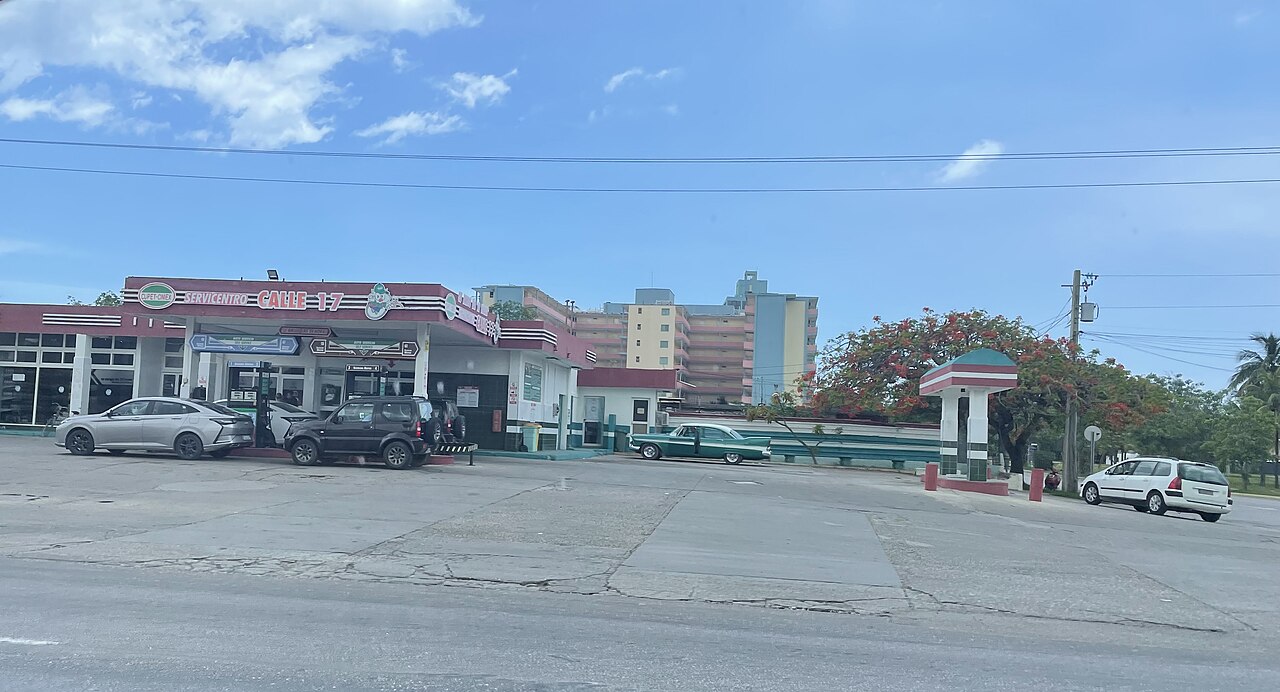
Exxon Mobil is the successor to Standard Oil, which operated in Cuba since the beginning of the 20th century. According to the lawsuit filed in 2019 and collected by Miami Herald and Reuters, the Cuban government nationalized in 1960 a refinery in the Bay of Havana (then Belot, today Ñico López Refinery), terminals, plants and 117 service stations then valued at around 72 million dollars. These assets passed into the hands of CUPET and CIMEX, state conglomerates that continue to exploit them.
Exxon filed the complaint on May 2, 2019, the same day that the semiannual suspension of Title III that several presidents had maintained expired. The Donald Trump administration let that suspension expire; Then Secretary of State Michael Pompeo declared that "the detente with the regime has failed." The company asks to recover about 280 million dollars, according to Reuters.
Kavanaugh's majority: Congress has already decided
Justice Brett Kavanaugh wrote the majority opinion, supported by President John Roberts and Justices Clarence Thomas, Samuel Alito, Neil Gorsuch and Amy Coney Barrett, according to Just The News. Kavanaugh maintained that, read as a whole, the Helms-Burton Act leaves "clearly discernible" Congress's intention to lift the jurisdictional immunity of Cuban instrumentalities in lawsuits under Title III, without also requiring an exception from the FSIA.
In oral arguments on February 23, Ratner had summarized Exxon's thesis: the 1996 Congress sought to exert "crushing diplomatic and economic pressure" on Havana, and that included allowing lawsuits against Cuban instrumentalities. Deputy Attorney General Curtis E. Gannon, representing the federal government, supported that reading in court.
"In a 6-3 vote, the Supreme Court rules that the Helms-Burton Act itself strips Cuban state-owned companies of sovereign immunity, allowing Exxon's billion-dollar lawsuit over property seized after Castro's 1960 nationalizations to proceed in U.S. courts."
Kagan's dissent and the divided vote
Justice Elena Kagan dissented, supported by Sonia Sotomayor and Ketanji Brown Jackson. According to press briefs, Kagan argued that creating a right to sue and abrogating sovereign immunity are “analytically distinct” issues: Title III opens the procedural door, but does not necessarily completely eliminate FSIA protections without more explicit language from Congress.
The ideological distribution reflects the usual conservative-liberal line of the current court: the six judges appointed by Republican presidents formed the majority; the three Democratic appointees dissented.
What changes in practice — and what doesn't
The Court did not render a ruling on the merits nor did it order immediate payments. Reversed a D.C. Circuit ruling. of 2024 that had allowed CIMEX to invoke sovereign immunity and returned the case to lower courts to continue the debate on liability and damages, according to E&E News.
Still, the decision removes one of the most serious obstacles Exxon faced and may bolster dozens of other lawsuits filed under Helms-Burton between 2019 and 2020, when Trump revived Title III after decades of presidential suspensions. Until then, presidents of both parties had frozen the right to litigate every six months to avoid diplomatic clashes with allies—Canada, Spain and the European Union, among others—with investments in Cuba.
| Date | Milestone |
|---|---|
| 1960 | Cuba nationalizes Belot refinery, terminals and Standard Oil stations without compensation |
| 1996 | Congress approves Helms-Burton; Title III authorizes lawsuits for "trafficking" of confiscated assets |
| May 2, 2019 | Trump lets Title III suspension expire; Exxon files suit the same day |
| 2024 | The D.C. Circuit (split panel) allows CIMEX to invoke sovereign immunity under FSIA |
| Feb 23, 2026 | Oral arguments before the Supreme Court (24-699) |
| Jun 23, 2026 | Ruling 6-3: Helms-Burton abrogates immunity; case referred to lower courts |
Reaction in Cuba and diplomatic context
At the time of writing, the Cuban government did not issue an official statement regarding the ruling. In 2019, when Exxon filed the complaint, CUPET and CIMEX did not immediately respond to requests for comment from Reuters. Havana has historically described Title III as illegitimate extraterritoriality and a threat to foreign investments on the island.
For the Cuban diaspora and sectors of the embargo in Miami, the verdict reinforces Washington's most aggressive legal tool against revolutionary assets. For Europe and Canada, which maintain "blocking" laws against the application of Helms-Burton in their territories, the ruling could reignite trade tensions if enforceable sentences against companies with ties to Cuba proliferate.
The next chapter will be judicial, not immediately diplomatic: district and appeals judges will have to decide whether CIMEX and CUPET "trafficked" in the expropriated property within the meaning of Title III and, if applicable, how much they must pay. Exxon, meanwhile, adds a procedural victory that had been waiting for years since the first Trump administration reactivated a dormant law for more than two decades.
Sources
- SCOTUS Wire — Helms-Burton/Exxon Ruling (Jun 23, 2026)
- Just The News — Supreme Court issues decision on Helms-Burton Act
- SCOTUSblog — Exxon Mobil Corp. v. Cimex Corporation, S.A. (24-699)
- Supreme Court of the United States — Oral argument audio (24-699)
- Reuters — Exxon Mobil sues Cuba for $280 million (May 2019)
- E&E News by POLITICO — Supreme Court clears path for Exxon
- Miami Herald — Exxon Mobil files lawsuit against Cuban companies (May 2019)
- Library of Congress—U.S. Supreme Court building (Highsmith Archive)
- Wikimedia Commons — Cupet-Cimex Calle 17
Most read
What readers are engaging with right now.
- Culture
Goose, the gay app that competes with Grindr, reaches the top 4 of Lifestyle in the App Store

- World
Cubans protest in Miami against Airlines Connections for alleged scam: they demand up to $20,000 in packages to Punta Cana

- World
Trump declares the ceasefire with Iran over, orders new attacks in Hormuz and demands cutting trade with Spain in NATO

- Culture
Harry Potter on HBO: complete guide to the series (not yet released and already renewed for T2), dates, cast and controversies

- Culture
DUK App: Aly Sánchez launches her habits app "one day at a time" with a 63-day program

- Culture
I'm Edgy and Edgy Labs: From Nebraska's Walmart to a beef tallow cream brand that sells across the US.

- Culture
The Evening of the Year VI: all the winners, fights and performances of the Ibai night in Seville

- World
The FBI is investigating the AFA for alleged fraud and money laundering: about $300 million in sponsorships and operations in the US.

- World
El Cangrejo: profile of Raúl Guillermo Rodríguez Castro, Raúl Castro's grandson between GAESA, leaked luxuries and the first interview of 2026