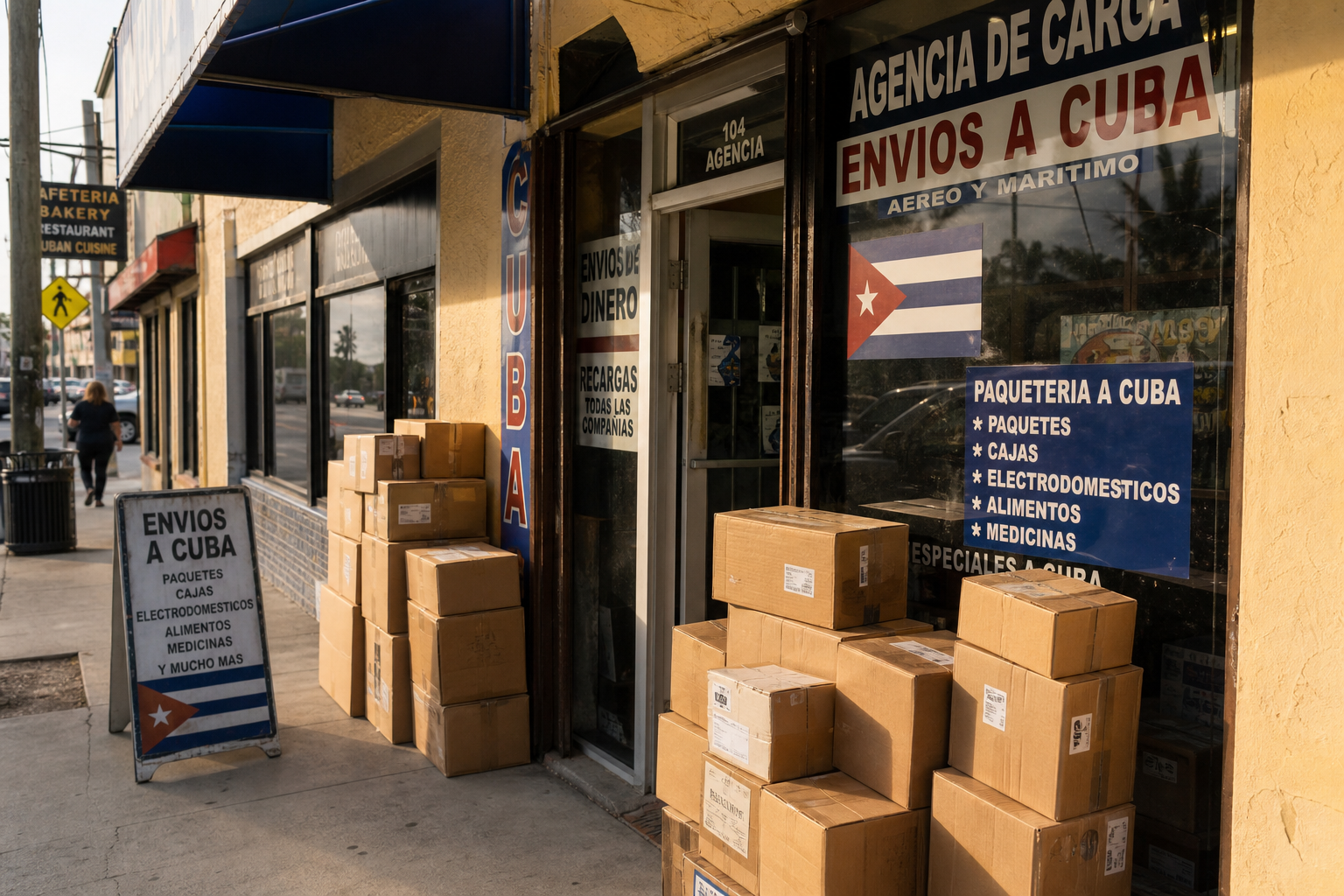
On Calle Ocho and in Hialeah, the lines in front of shipping agencies are not tourism: they are survival economy. While Cuba is going through blackouts of up to 22 hours, shortages of medicines and inflation that multiplies the state salary, millions of families in Florida continue filling boxes with powdered milk, beans, batteries and solar panels to send them to the island. According to the Cuban Ministry of Transportation, freight forwarders processed more than three million shipments in 2024—700,000 more than the previous year—and about 70% came from the United States, as published by the official organ Granma.
There is no official ranking of the most popular agencies in the Miami–Cuba corridor: there are dozens of private LLCs without public financial statements. This research by MARGENEZ reconstructs the top 10 by market relevance—physical presence in South Florida, national coverage in Cuba, mentions in the media and verifiable corporate data—and explains how much the sector moves, where they are based and why the collapse of domestic supply turns these companies into the easiest channel to help a family member from the US.
Video: the crisis in Cuba that triggers shipments from abroad
Report on the shortage of basic foods in Cuba: context of why the diaspora prioritizes shipments of powdered milk, medicines and non-perishable groceries. Source: TV Azteca — YouTube
A market of billions, not millions
It is necessary to separate three flows that are often mixed: physical parcels (boxes by sea or air), cash remittances and e-commerce with delivery in Cuba (online purchases of food and appliances). All three grew with the crisis, but only some have audited figures.
- Parcel: 3+ million shipments in 2024 in Cuba; Palco operated ~850 containers per year for parcels alone and exceeded 15 million dollars in foreign exchange earnings (plan: 5.9 M), according to Granma. Correos de Cuba received between 40,000 and 50,000 shipments monthly.
- Remittances: the Havana Consulting Group estimated 1,972 million USD in 2023 (−3.3% vs. 2022); Other sources place the annual range between 1,800 and 2,100 million from the US.
- Diaspora: Pew Research counted 2.9 million people of Cuban origin in the US. in 2024; 61% live in Florida and 1.2 million in the Miami area.
If approximately 70% of the 3 million shipments leave the US (~2.1 million) and the average freight ticket is around $80–$200 (15–40 pounds at $1.69–4/pound plus fixed charges), parcel transportation alone could move between $170 and $420 million a year — not counting the value of the products in stores like Katapulk or Supermarket23. No private agency publishes consolidated income; The only documented financial data of a digital actor is that of Katapulk: more than 8 million dollars in gross income in 2021, according to records cited by CubaNet.
Top 10: the most relevant agencies and platforms
Methodological note: there is no government index or representative survey. This list is ordered by combination of branches in Florida, coverage in Cuba, volume perceived in the press and length of time in the market. The prices quoted come from the official websites in June 2026 and may vary with promotions.
1. Cubamax Travel — the giant of Hialeah
Founded in 2001 in Hialeah, Cubamax operates more than 13 branches in Florida (Hialeah, Miami, Orlando, Tampa, Homestead, Miramar) and offers travel, packages and remittances. Its headquarters are at 4380 W 12th Ave, Hialeah. In December 2025, the Central Bank of Cuba authorized Cubamax Travel Inc. to channel remittances and deliver cash in national currency or foreign currency —license published in the Official Gazette, according to El Nuevo Herald and DW. In February 2026, due to the fuel crisis on the island, it suspended home deliveries and limited shipments to one package per customer, according to CiberCuba and Diario Libre.
2. DimeCuba — parcel and purchases in a single ecosystem
DimeCuba concentrates offices in 3705 W 20th Ave, Hialeah and Tampa. It advertises sea shipments from $0.99 per pound and air shipments from $2.99, with home delivery in all provinces except the Isle of Youth. It also integrates purchases from Amazon, Walmart and Shein with delivery in Cuba. It is one of the agencies most mentioned by users in Miami, according to Directorio Cubano.
3. VaCuba — six decades of experience
VaCuba dates back to 1962 and claims to have served more than 500,000 customers and transported 100 million pounds to Cuba (unaudited corporate figures). It maintains about 10 offices in South Florida; the main one is at 2994 NW 7th St, Miami. It operates under OFAC licenses and works with Cuban networks such as Cubapack, according to its corporate profile.
4. Cuballama — 1.5 million declared clients
Cuballama presents itself as the “number 1 company providing services to Cuba” with 1.5 million clients. Stores in Hialeah (1197 W 49th St), Miami (8731 SW 24th St) and Houston; warehouse at 1669 NW 79th Ave, Doral. It offers parcels from $1.69/pound via sea with terms of several weeks depending on the province.
5. Katapulk — the marketplace that scales in containers
Owned by businessman Hugo Cancio, Katapulk combines an online store, home delivery in 24–72 hours and B2B logistics. The Miami Herald reported that the company would ship about 130 containers per month to Cuba (30–35 with vehicles). In 2024 he signed with Western Union for remittances. Its 2021 gross income exceeded 8 million USD, according to CubaNet research. Independent reports debate its relationship with the Cuban state sector.
6. Supermarket23 — the controversial “Amazon”
Registered in Florida in 2016 (2000 NW 135th Ave, Miami; FEIN 81-2037471), Supermarket23 sells more than 1,000 products with payment in Visa/Mastercard. Investigations by CubaNet and El Nuevo Herald they link her to commercial networks in Cuba; In February 2026 it suspended new orders due to the fuel crisis, according to América TeVe.
7. Crowley Cuba Express — maritime infrastructure
It is not a neighborhood agency, but it moves a large part of the physical volume. Crowley operates four monthly departures from Port Everglades to the port of Mariel, with a warehouse at 10205 NW 108th Ave, Medley. Miscellaneous Rate: $1.69/pound (10 lb minimum). Home delivery on the island takes 3–6 weeks after arrival in Mariel, via partners such as Cubapack.
8. Tuanigo — pickup throughout the US
Tuanigo is committed to picking up packages anywhere in the United States and delivering them door to door in Cuba. Sea ~25 business days; air ~15 days; Rates from $4/pound according to their website.
9. Abe Express — free pickup in Miami
Abe Express stands out for free pickup in Miami, food combos and express air shipping. Smaller but visible agency in the local ecosystem.
10. CTEnvios — Hialeah with tracking
CTEnvios, in Hialeah, offers sea and air shipments with tracking and service via WhatsApp. Less public volume data, but consolidated presence in sector comparisons.
Where they live: Florida is everything
The map is clear: Hialeah (163,898 Cubans, 74% of the municipal population, according to ACS data cited by Neilsberg) concentrates Cubamax, DimeCuba, Cuballama and CTEnvios. Doral and Medley are home to warehouses (Cuballama, Crowley). Tampa and Orlando extend branches of Cubamax and DimeCuba. Houston has Cuballama presence. Outside of Florida, national pickup from Tuanigo, Katapulk and DimeCuba (app) allows you to ship from other states without traveling to Miami.
Why they earn so much: Cuban crisis + forced intermediation
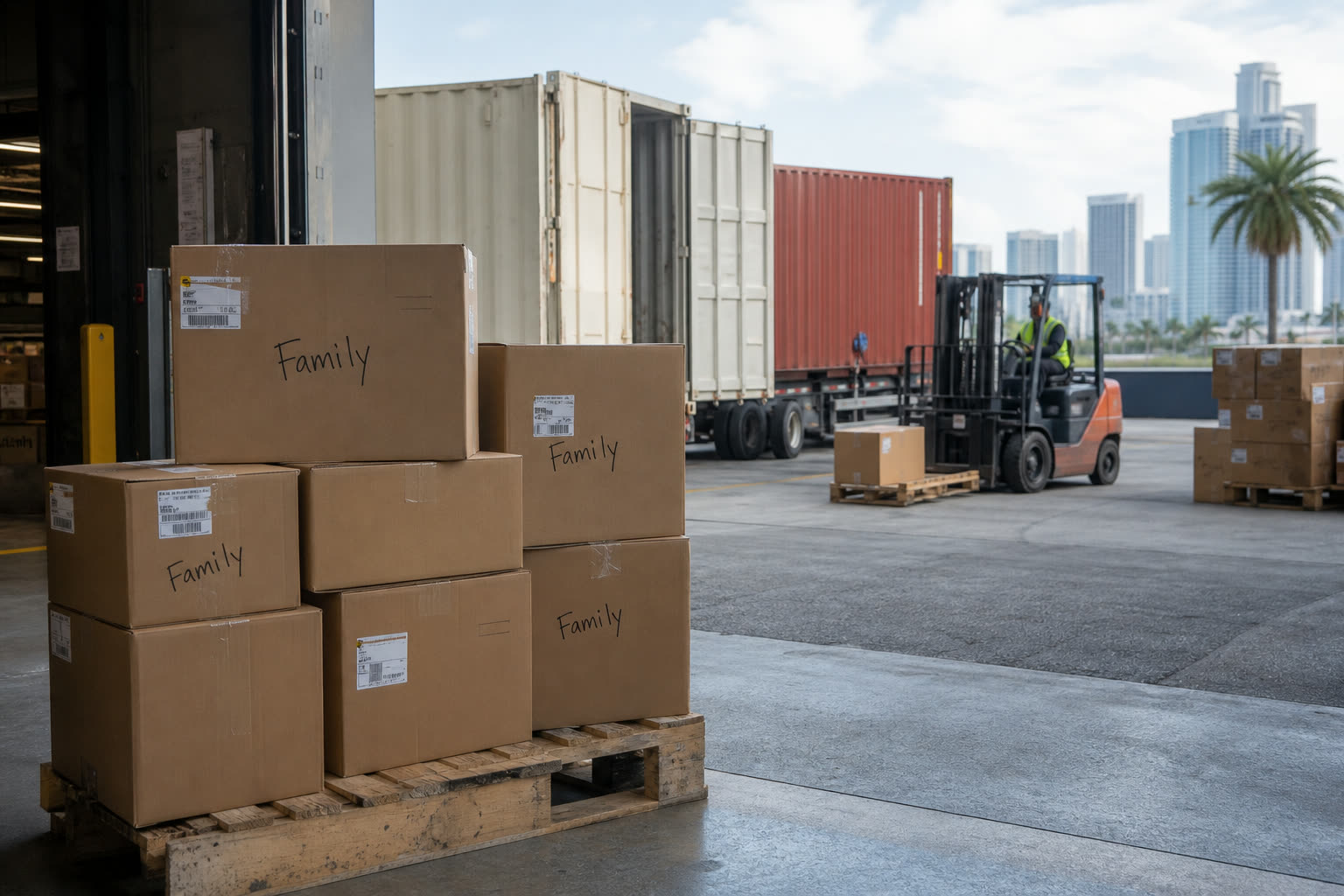
Agencies do not invent demand: it is fueled by structural shortages and blackouts. CiberCuba documented that the Diaspora now sends charcoal stoves, rechargeable batteries and solar panels in addition to groceries. Univision WLTV described lines at South Florida agencies with boxes of milk, coffee and generators.
The revenue model has several layers:
- Freight per pound and flat charges ($20–25 per box) on traditional parcel shipping.
- Retail margin in online stores where the product already includes a premium compared to the US.
- Cross services: recharges, calls, trips, immigration procedures.
- Logistics scale: filling containers to Mariel reduces unit cost and increases margin.
- Last mile monopoly in Cuba: without Palco/Cubapack/Correos, the box does not arrive; This does not reduce demand, it only lengthens deadlines and allows charging for "urgent" modalities.
The project Cuba Capacity Building (Columbia Law) summarizes that what began with informal "mules" evolved into operations with air and maritime transport, purchases in Amazon/Shein/Temu and delivery to MSMEs on the island.
"Despite the fact that the lack of fuel makes the distribution of shipments difficult, Cuban residents in Florida continue to take packages to authorized companies."
Legal framework in the US: what allows shipping
Family shipments operate under embargo exemptions. The 31 CFR § 515.570 authorizes family remittances without a quarterly limit starting in 2022. Donation packages are covered by the EAR's GFT license (15 CFR § 740.12): must be sent free of charge to the recipient (shipping costs are paid by the sender in the US), with value limits by category. Agencies must comply with OFAC and not serve prohibited officials.
On the island, Customs Decree-Law 108 tightened controls and adds uncertainty to travelers and packages, according to Diario Las Américas. The fuel crisis of 2026 forced operational cuts that confirm the logistical dependence on the Cuban side.
Controversy: humanitarian aid or oxygen to the regime?
The sector divides the diaspora. Those who defend shipping distinguish between government and families; Critics point out that stores like Supermarket23 or state products funnel foreign currency into the device. CubaNet and El Nuevo Herald have documented platform links with Cuban entities. In the article they should be presented as journalistic investigations, not as judicial verdicts. What is undeniable is demographic: with almost 70% of the Cuban population affected by remittances or family help (according to analyzes cited by CiberCuba), Miami agencies are emotional and economic infrastructure — with or without official ranking.
What to check before sending (June 2026)
- Confirm if the agency delivers to home or only at collection points (varied in February 2026).
- Verify coverage in the province of the recipient; several firms limited shipments outside Havana.
- Prioritize non-perishable foods, medicines and energy equipment—what is most in demand today.
- Pack with weight and content permitted by Cuban customs and OFAC.
- Save tracking and insurance; Deadlines in provinces can exceed 45 days.
Most read
What readers are engaging with right now.
- Culture
Goose, the gay app that competes with Grindr, reaches the top 4 of Lifestyle in the App Store

- World
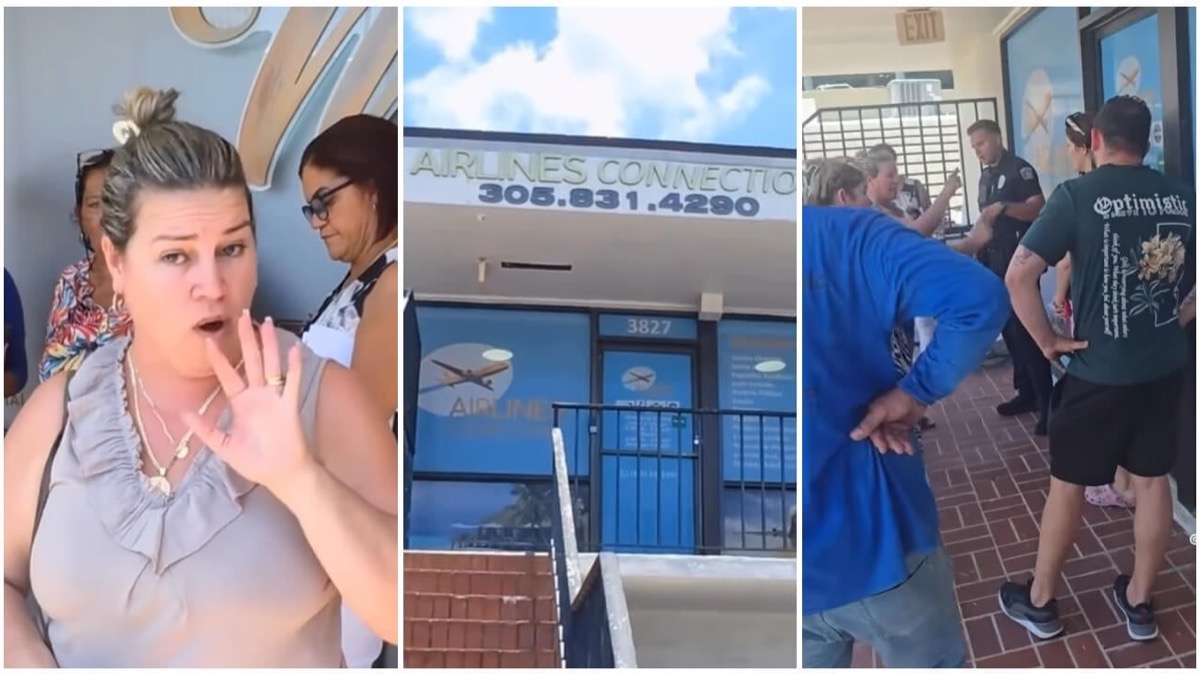
Cubans protest in Miami against Airlines Connections for alleged scam: they demand up to $20,000 in packages to Punta Cana
- World
Trump declares the ceasefire with Iran over, orders new attacks in Hormuz and demands cutting trade with Spain in NATO

- Culture
Harry Potter on HBO: complete guide to the series (not yet released and already renewed for T2), dates, cast and controversies

- Culture
DUK App: Aly Sánchez launches her habits app "one day at a time" with a 63-day program
- Culture
I'm Edgy and Edgy Labs: From Nebraska's Walmart to a beef tallow cream brand that sells across the US.

- Culture
The Evening of the Year VI: all the winners, fights and performances of the Ibai night in Seville

- World
The FBI is investigating the AFA for alleged fraud and money laundering: about $300 million in sponsorships and operations in the US.

- World
El Cangrejo: profile of Raúl Guillermo Rodríguez Castro, Raúl Castro's grandson between GAESA, leaked luxuries and the first interview of 2026