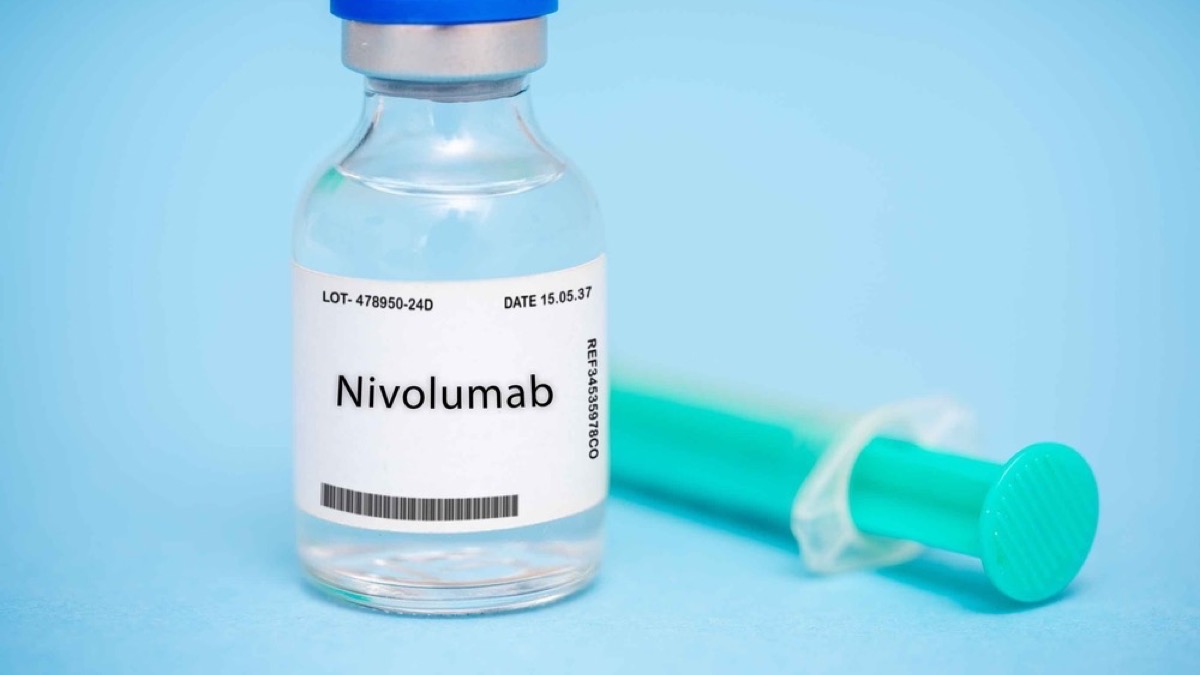
A message circulates on networks that summarizes the news like this: in the United Kingdom an injection called nivolumab is used, an immunotherapeutic drug that is administered in 3 to 5 minutes and would be highly effective in combating up to 15 types of cancer — skin, intestine, bladder, kidneys, stomach, lung, head, esophagus and neck. The statement agrees essentially with official British sources, but omits important nuances. Here we verify what is confirmed, what the viral exaggerates and what any reader should know before sharing it.
«The injection that is being used in the United Kingdom to combat this disease is called Nivolumab. It is an immunotherapeutic drug that can be administered in just 3 to 5 minutes. It will be highly effective in helping to fight up to 15 types of cancer."
Quick verdict: yes it's real, but it's not what it seems at first glance
Is there nivolumab on the NHS? Yes. Is there a 3–5 minute injection? Yes, since approval by the MHRA on April 30, 2025. Does it apply to 15 types of cancer? The NHS England and the British regulator describe it this way. Is it a miracle cure or a newly invented drug? No: it is the same immunotherapy that was already used intravenously, with a new subcutaneous presentation that is faster to administer.
What is nivolumab (Opdivo)
Nivolumab is the active ingredient; In pharmacies it is marketed as Opdivo, from Bristol Myers Squibb. It belongs to immune checkpoint inhibitors: it binds to the PD-1 protein on T lymphocytes and prevents tumor cells from “turning off” the immune response, so that the system itself can attack the cancer. It is not a classic chemotherapy or a vaccine; It is immunotherapy.
The drug is not new in 2025: the FDA approved it for the first time in 2014 (advanced melanoma) and the EMA in 2015. In the United Kingdom it was already prescribed as an intravenous infusion. What changed in April 2025 is the subcutaneous dosage form (under the skin), co-formulated with recombinant hyaluronidase to improve absorption, according to Oncology Today.
Video: what is Opdivo (nivolumab) as immunotherapy
Educational review of the mechanism of nivolumab (Opdivo) as a PD-1 inhibitor in oncology. Source: Oncology Associates — YouTube
The 3–5 minute injection: what the MHRA approved
The official statement from the Medicines and Healthcare products Regulatory Agency confirms that the subcutaneous version can be administered in 3–5 minutes, versus to intravenous infusions of 30 or 60 minutes every two to four weeks, depending on the type of tumor and the dosing schedule.
The approval was based on the phase III CheckMate-67T trial in metastatic clear cell renal cell carcinoma: the injection showed comparable levels of the drug in blood (pharmacokinetics) and a safety profile and tumor response similar to the IV formulation, according to the MHRA itself and Bristol Myers Squibb.

The 15 types of cancer: verified list
Both the MHRA and the NHS England and media such as The Guardian cites 15 adult oncology indications already previously approved for IV nivolumab and now also for the injection. The official list includes, among others:
- Skin (melanoma)
- Lung
- Intestine (colorectal)
- Kidney
- Bladder
- Stomach
- Oesophagus
- Head and neck
- Liver
The viral message that mentions skin, intestine, bladder, kidneys, stomach, lung, head, esophagus and neck coincides with regulatory sources. What the post does not say: each indication has strict clinical criteria (stage, biomarkers, previous lines of treatment). A diagnosis of “lung cancer” is not enough to automatically receive nivolumab.
How many people is it for in practice?
NHS England estimates that around 1,200 people a month in England could benefit from the injection, and The Guardian speaks of up to 15,000 patients a year in the full rollout scenario. That is relevant, but it does not mean that all patients with those 15 cancers receive the drug: only those who already meet the oncological requirements for nivolumab and whose medical team chooses the subcutaneous route.
According to iNews, nivolumab IV infusion remained available across the UK, but at the time of the announcement it was unclear whether Scotland, Wales and Northern Ireland would immediately adopt the injectable formulation like England — the viral usually says “United Kingdom” in bulk when the initial rollout was NHS England, the first in Europe to offer it systematically.
What exaggerates or distorts the viral message
- «Fight 15 cancers» sounds like a broad cure. In reality, nivolumab helps in specific subgroups; In many cases it prolongs survival or induces durable responses, but it does not work in all patients and it does not replace surgery, chemotherapy or other lines when the oncologist indicates them.
- "High effectiveness" is imprecise. The evidence comparing IV vs subcutaneous demonstrates equivalence, not a major therapeutic leap. The main innovation is logistics and patient experience.
- «Injection against this disease» can be interpreted as a preventive vaccine. It is not: it is oncological treatment for people with advanced cancer or in specific contexts already approved.
- The patient continues to go to the hospital every two to four weeks; he just spends less time in the infusion chair and in subsequent observation.
- Like all immunotherapy, it can cause serious adverse effects (colitis, hepatitis, pneumonitis, endocrinopathies) that require medical monitoring.
Cost and agreement with the NHS
NHS England negotiated with Bristol Myers Squibb so that the switch to the injection does not entail additional costs to the public service, according to the official statement. That explains the political push: more patients treated on the same budget and with fewer staff hours in day units.
In summary
Is nivolumab injection real in the UK? Yes, approved and deployed by NHS England from April 2025. 3–5 minutes? Confirmed by MHRA. 15 types of cancer? Yes, in the existing indications for Opdivo. Is it a universal cure or a discovery fresh from the laboratory? No: it is an improvement in the way of administering an immunotherapeutic known for more than a decade, for patients selected by their oncologist. Sharing the news is okay; Presenting it as an “injection that kills 15 cancers” is not.
Update (24 July 2026): Verification based on MHRA (GOV.UK), NHS England, The Guardian, Oncology Today and review in PMC. Always consult a health professional for clinical decisions.
Most read
What readers are engaging with right now.
- World
Cubans protest in Miami against Airlines Connections for alleged scam: they demand up to $20,000 in packages to Punta Cana
- Culture
Goose, the gay app that competes with Grindr, reaches the top 4 of Lifestyle in the App Store

- Culture
Harry Potter on HBO: complete guide to the series (not yet released and already renewed for T2), dates, cast and controversies

- World
Trump declares the ceasefire with Iran over, orders new attacks in Hormuz and demands cutting trade with Spain in NATO

- Culture
DUK App: Aly Sánchez launches her habits app "one day at a time" with a 63-day program

- Culture
I'm Edgy and Edgy Labs: From Nebraska's Walmart to a beef tallow cream brand that sells across the US.
- World
El Cangrejo: profile of Raúl Guillermo Rodríguez Castro, Raúl Castro's grandson between GAESA, leaked luxuries and the first interview of 2026
- World
The FBI is investigating the AFA for alleged fraud and money laundering: about $300 million in sponsorships and operations in the US.

- World
Cuban regime terrorist Ramiro Valdés Menéndez dies