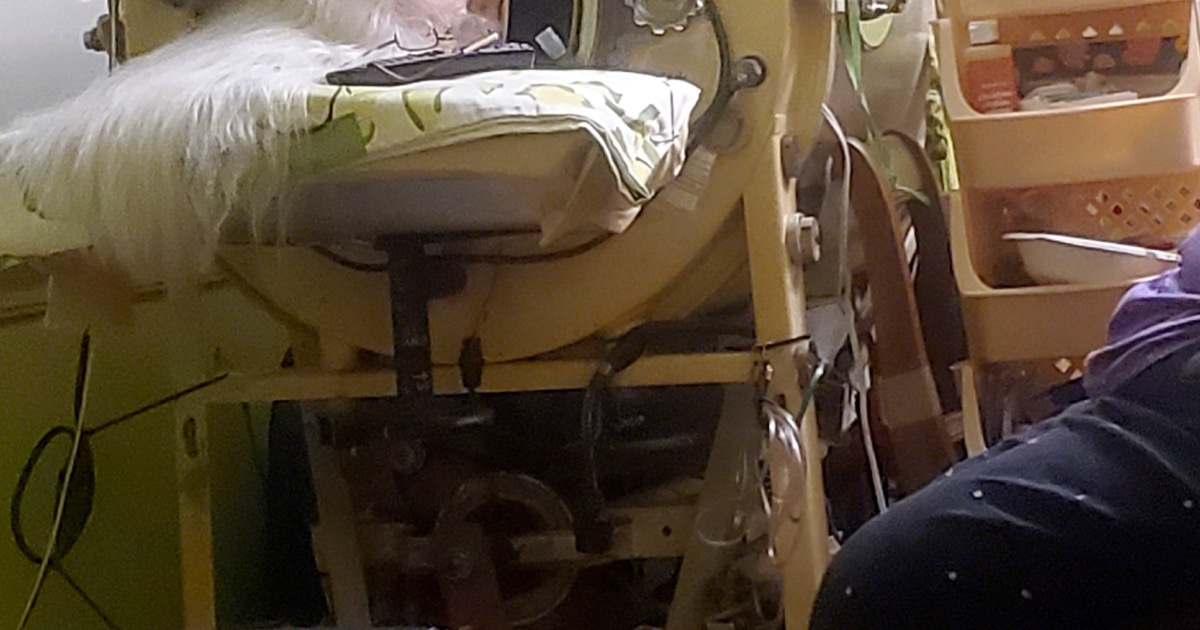
A message from AF Post on (iron lung). The agencies Associated Press and KFOR confirm that she died on June 26, 2026 in Shawnee, Oklahoma, at 78 years. Weeks before she had asked for public help to repair the machine that had kept her alive since she was five.
Video: «The Last Iron Lung» — KFOR final interview
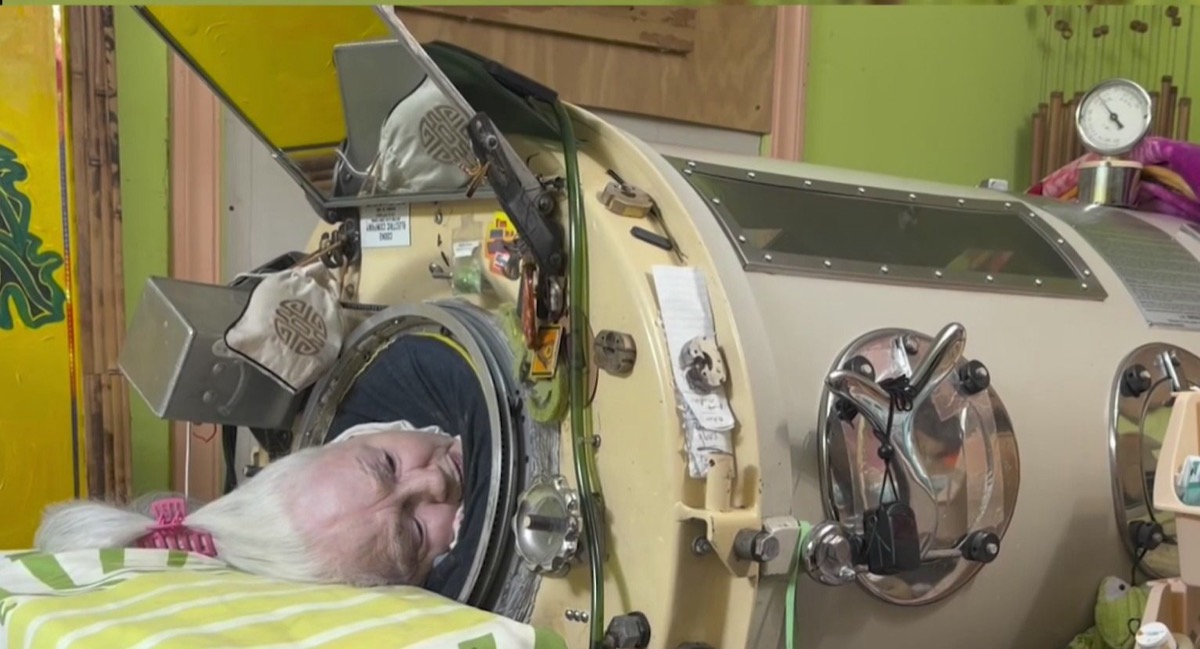
Martha Lillard opened her home in Shawnee three weeks before she died to ask for help with repairs to her iron lung. Source: YouTube — KFOR Oklahoma's News 4
«It is no longer necessary»: the end of an era
Her sister Cindy McVey told the AP that Martha died from the consequences of long-term COVID-19. The death certificate mentions chronic pulmonary failure and post-polio syndrome. Martha wrote her own obituary — mentioning long COVID — and McVey later added the exact date of death.
In recent years, mother and daughter desperately searched for someone capable of repairing the respirator, one of several Martha used throughout her life. "But since it was the last one, we don't need it anymore," McVey tearfully told the AP. AF Post's viral tweet summarizes that anguish: he died without finding someone to fix the machine.
1953: polio on its fifth birthday
Martha contracted polio in 1953, the same year she turned five — two years before Jonas Salk's vaccine was declared safe and effective. "I woke up, it was sunny, I tried to sit up and my neck was killing me," he recalled to KFOR in the interview before his death. «I couldn't breathe. He couldn't move his arms or legs. "I was completely paralyzed."
He spent six months in the hospital. The iron lung—a metal cylinder with bellows that alternates pressure to force air in and out of the lungs—saved his life. At first he lived inside most of the day; He eventually learned to walk again, although his right arm was paralyzed. His grandfather modified the tank so he could open the hatch from the inside.
He went to primary school two hours a day and the rest with a tutor. At Shawnee High School he participated by telephone, with an intercom in the classrooms. He got to drive and travel with his family; His father called hotels to check if the doors were wide enough for the respirator.
Why he rejected modern fans
Although there are smaller respirators—positive pressure, masks, portable systems—Martha insisted for decades that the iron lung was “the most efficient, the best and the most comfortable,” as she said in the episode «My Iron Lung» by Radio Diaries (NPR, 2021).
«Sometimes when I come in, I say, "Thank you." It's wonderful. It's what has kept me here."
— Martha Lillard, Radio Diaries / NPR
After the death of Paul Alexander of Texas in March 2024—until then the other known user of the device—Martha was the last person in the country who still relied on the iron lung on a regular basis.
COVID, confinement and 24 hours in the cylinder
Before the pandemic, Martha slept in the iron lung and lived relatively independently: she cooked and took care of herself, according to KFOR. He had less than 25% lung capacity. COVID-19 infected her twice; For the last five years he could not leave the house. In the last two years he was in the iron lung almost 24 hours a day; for the past eight months, full-time, KFOR reports.
Breakdowns were frequent. In the 90s the device began to fail; Martha called hospitals and museums until she bought a second-hand one in Utah. An ice storm cut off the power and the emergency generator did not start; she had to call 911. Last year a tornado knocked out power to her home and her husband did mouth-to-mouth resuscitation until help arrived.
Pieces from the 40s and no technician
"Some pieces are from '40s Chevys, and they are difficult to locate," McVey told KFOR. They had a spare engine, but no one who knew how to install it. Martha invited local television precisely because she needed hands that understood the mechanics of a low-tech respirator in a world that no longer makes one — the last one was produced in the late 1960s.
He died eight days after that interview. For the first time in 73 years, according to KFOR, she was removed from the void and rested outside the iron lung.
Legacy: vaccines, memory and an obsolete machine
Polio was eradicated in the US in 1979, but post-polio syndrome and cases like Martha's are reminders of what the virus left behind. She described herself in her obituary as a Humane Society volunteer and beagle lover; He wrote poems and songs.
KGOU, Oklahoma's public broadcaster, summarizes the contrast: a country that forgot iron lungs while a woman in Shawnee continued sleeping every night—and in the end every hour—within one. His story, previously told on NPR and now on national front pages, closes a chapter of 20th century medicine that technology was not able to completely replace for those who chose it as the only refuge to breathe.
Most read
What readers are engaging with right now.
- Culture
Goose, the gay app that competes with Grindr, reaches the top 4 of Lifestyle in the App Store

- World
Cubans protest in Miami against Airlines Connections for alleged scam: they demand up to $20,000 in packages to Punta Cana

- World
Trump declares the ceasefire with Iran over, orders new attacks in Hormuz and demands cutting trade with Spain in NATO

- Culture
Harry Potter on HBO: complete guide to the series (not yet released and already renewed for T2), dates, cast and controversies

- Culture
DUK App: Aly Sánchez launches her habits app "one day at a time" with a 63-day program
- Culture
I'm Edgy and Edgy Labs: From Nebraska's Walmart to a beef tallow cream brand that sells across the US.

- Culture
The Evening of the Year VI: all the winners, fights and performances of the Ibai night in Seville

- World
The FBI is investigating the AFA for alleged fraud and money laundering: about $300 million in sponsorships and operations in the US.

- World
El Cangrejo: profile of Raúl Guillermo Rodríguez Castro, Raúl Castro's grandson between GAESA, leaked luxuries and the first interview of 2026