If you've ever had an old link stop working, an article disappear from the internet, or you wanted to see what a website was like in 2005, you probably ended up at the Internet Archive. In archive.org the Wayback Machine (historical internet archive), Open Library (digital book lending), public domain films, recorded concerts, retro software and academic collections coexist. It's free cultural infrastructure—and in 2026 it's at the center of a clash between preservation, copyright, and the rise of artificial intelligence.
1. What is the Internet Archive
The Internet Archive is a non-profit digital library founded in 1996 by Brewster Kahle. Its mission is to offer "universal access to knowledge": saving copies of digital material before it disappears and making it available to the public legally or under exceptions such as fair use and the public domain.
It is not a search engine like Google or a pirated Netflix. It is an archive with rules of use, teams of librarians and technologists, and decades of agreements (and conflicts) with publishers. The physical headquarters is in San Francisco; The servers host petabytes of data accessible from any browser.
2. Wayback Machine: time travel on the web
The Wayback Machine (web.archive.org) is the best-known tool. You enter a URL—for example nytimes.com—and see screenshots saved on different dates. Serves for:
- Recover fallen pages or broken links
- Check how a site's layout or text has changed
- Investigate journalism, political campaigns or past misinformation
- Cite sources that are no longer online

In 2025 the archive surpassed the milestone of one billion pages preserved, according to the Internet Archive itself. Thousands of news sites that the crawler saved no longer exist on the living web; Without that support, much of the digital journalism of recent decades would have been lost.
How to use it: go to web.archive.org, paste the URL and choose a date on the calendar. You can also install the official extension to save pages with one click or add web.archive.org/web/*/ in front of an address in the browser bar (classic trick for advanced users).
Archive.org Core Services
| Service | URL | What is it for |
|---|---|---|
| Wayback Machine | web.archive.org | See old versions of any website |
| Open Library | openlibrary.org | Search for books and request a digital loan (14 days) |
| Moving Image | archive.org/details/movies | Public domain films and videos |
| Live Music Archive | archive.org/details/etree | Concerts authorized by artists |
| Software Library | archive.org/details/software | MS-DOS, Windows 3.x, historical games |
| Save Page Now | web.archive.org/save | Archive a URL instantly (with account) |
All sections are free; some features require an archive.org account.
Video: the Internet Archive at its headquarters in San Francisco
Report on Brewster Kahle's mission and the physical archive in an old church in Richmond (San Francisco). Source: YouTube — The San Francisco Standard (also on archive.org)
3. Open Library: read and borrow
Open Library is the Internet Archive's book catalog. It works like a collaborative library: millions of bibliographic records and, for many titles, a 14-day digital loan (one user at a time per copy, like in a physical library).
You need a free account at archive.org. The reader works in the browser; There are also apps and integration with compatible devices. Open Library has been the subject of lawsuits by publishers (the famous case against the controlled lending of e-books); The service remains operational but with restrictions according to territory and title.
4. Movies, music, software and more
On the cover of archive.org you will see sections such as:
- Moving Image — Classic cinema, documentaries, historical newsreels, public domain cinema and user uploads with clear licenses
- Live Music Archive — Concerts by artists who authorize recordings (jam band community, etc.)
- Audio — Audiobooks, archived podcasts, historical recordings
- Software — MS-DOS, Windows 3.x, abandonware games for preservation purposes
- Texts — Scanned books, old magazines, government documents
- TV News — News fragments for research (special project with reproduction restrictions)
Everything can be searched by keyword, collection or date. Much material is in the public domain or licensed under a Creative Commons license; others require an account or only allow streaming viewing without massive download.
5. Account, uploads and donations
You can browse without registering, but a free account unlocks Open Library loans, favorites lists, uploading your own files (if you respect rights and policies), and the “Save Page Now” button on the Wayback Machine.
The Internet Archive is financed by donations, grants and institutional collaborations. There is no mandatory subscription; The recurring message on the web is that every dollar helps keep petabytes online.
6. Why the media blocks the file in 2026
Here is the conflict of the moment. Since late 2025, dozens of major publishers—The New York Times, The Guardian, USA Today, Condé Nast and others—and more than 340 local media outlets in the United States have limited or blocked the archive.org_bot crawler, according to analysis by Nieman Journalism Lab.
The stated reason: fear that AI companies will use the Internet Archive as a “back door” to train models with copyrighted journalism. No media has publicly confirmed that an AI has massively extracted its content from the Wayback Machine, but the preventive block has been extended.
Mark Graham, director of the Wayback Machine, has said that the file is «collateral damage» in the war between publishers and AI companies. The Internet Archive insists that it does not allow mass downloads of the entire archive, that reproduction passes through a slow "thin tube" and that its terms limit use to research and consultation. At the request of some publishers, they have disabled functions that list many URLs from the same domain.
In June 2026, the Internet Archive itself launched the «Keep the News in the Wayback Machine» campaign, with an open letter from Fight for the Future to get the media back to allow preservation. The argument: without an independent archive, today's journalism may not be verifiable in 30 years.
| File posture | Editorial concern |
|---|---|
| Preserve the public registry of the website | Paid content reused without a license |
| Slow crawling, no massive open API | AI bots that imitate file crawlers |
| Thousands of news sites now gone from the living web | Blocking of archive.org_bot in robots.txt |
| Collaboration with Poynter and IRE to form newsrooms | Previous demands (e.g. Open Library) |
7. What is it for on a daily basis?
- Journalists and students — Verify quotes, recover deleted communications, compare versions of the same article
- Developers — Consult old documentation for retired APIs or libraries
- Cinema and culture — Watch legal classic movies, authorized concerts, scanned magazines
- Genealogy and local history — Municipal websites, newspaper archives and archived forums
- Any user — Check if an “offer” or viral news really existed years ago
8. Legal and ethical limits
The Internet Archive is not a piracy repository. Uploading or distributing copyrighted material without permission violates its rules and the law. Open Library operates under a controlled lending model that continues to be disputed in court. The Wayback Machine honors exclusions in robots.txt when sites enable them—precisely what many media outlets have done in 2026.
Using the archive for research, citation and preservation is its purpose; Using it to republish other people's works without rights is not. If a site blocks the crawler, your new articles will no longer be archived automatically.
In summary
archive.org is one of the largest open libraries in the world: Wayback Machine for internet memory, Open Library for reading, and huge collections of audio, video and historical software. In 2026, its future as a news archive is threatened by the AI-publishing clash, but it remains an essential tool for those who investigate, learn, or simply do not want the web to erase itself.
Start by saving a page you care about with Save Page Now, explore a public domain movie, or borrow a book from Open Library. If you care about preservation, the Save the Archive campaign collects signatures so that the media does not cut off access to the tracker.
Most read
What readers are engaging with right now.
- Culture
Goose, the gay app that competes with Grindr, reaches the top 4 of Lifestyle in the App Store
- World
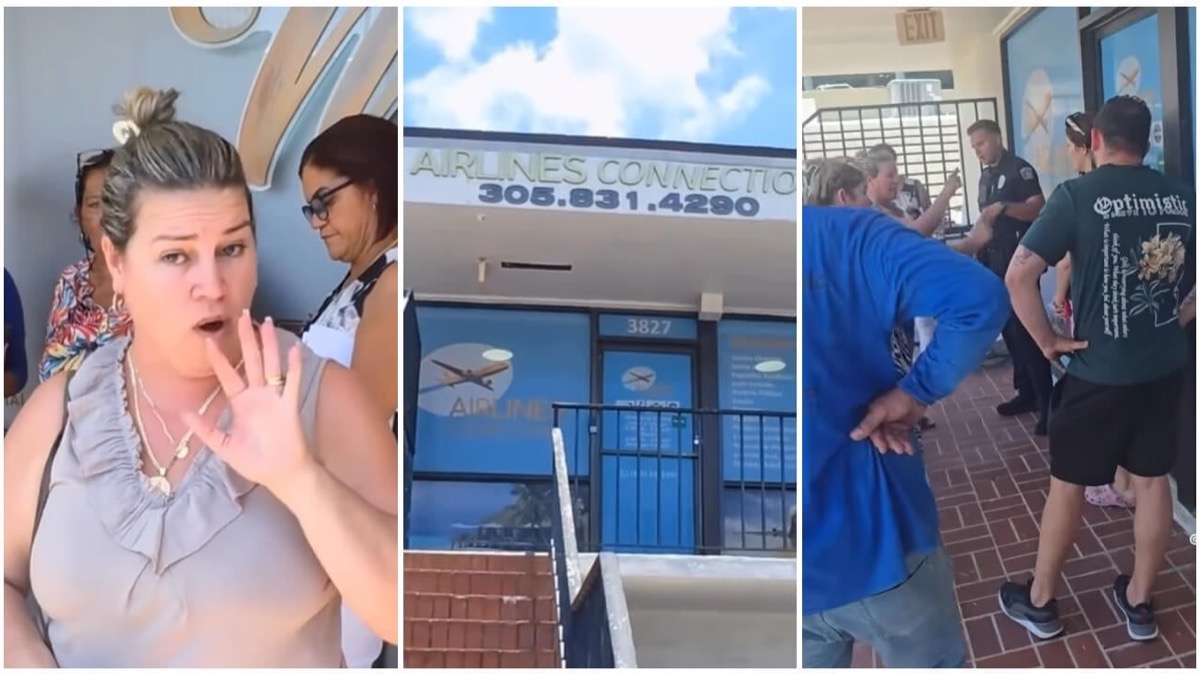
Cubans protest in Miami against Airlines Connections for alleged scam: they demand up to $20,000 in packages to Punta Cana
- World
Trump declares the ceasefire with Iran over, orders new attacks in Hormuz and demands cutting trade with Spain in NATO

- Culture
Harry Potter on HBO: complete guide to the series (not yet released and already renewed for T2), dates, cast and controversies

- Culture
DUK App: Aly Sánchez launches her habits app "one day at a time" with a 63-day program
- Culture
I'm Edgy and Edgy Labs: From Nebraska's Walmart to a beef tallow cream brand that sells across the US.

- Culture
The Evening of the Year VI: all the winners, fights and performances of the Ibai night in Seville

- World
The FBI is investigating the AFA for alleged fraud and money laundering: about $300 million in sponsorships and operations in the US.

- World
El Cangrejo: profile of Raúl Guillermo Rodríguez Castro, Raúl Castro's grandson between GAESA, leaked luxuries and the first interview of 2026