Argentina is still alive in the World Cup 2026, but football is no longer the only thing being discussed. The albiceleste beat Switzerland 3-1 in extra time on Friday, July 11 in Kansas City and will face England in the semifinals on Wednesday the 15th, but the hours after the game have turned the refereeing—and not just the goals by Julián Álvarez and Lautaro Martínez— into a trending topic global. At least nine viral threads that the user pointed out to us are circulating on X: from Lionel Messi's confrontation with the Portuguese referee João Pinheiro to accusations that FIFA "protects" the defending champion. Separating verified facts from memes requires patience; here goes the map.
Video: summary Argentina 3-1 Switzerland (quarterfinals)
Summary of the quarterfinal with the goals, the expulsion of Embolo and the decisive extra time. Source: YouTube — FOX Sports (July 11, 2026)
The game, in a sentence
FIFA and Sky Sports agree on the script: Alexis Mac Allister put Argentina ahead with a header after a corner from Messi (10'), Dan Ndoye would equalize (67'), and in extra time a shot by Álvarez (112') plus Lautaro's shot at 120+1' sealed the pass. What cools the official story is that Switzerland played almost 50 minutes with one less after the expulsion of Breel Embolo in the 72nd minute with the score 1-1.
1. Embolo and the VAR of “mistaken identity”
The most cited play—also in the post by ABC.es en The VAR requested a review under the mistaken identity protocol introduced in this World Cup. After seeing the images, the referee withdrew the yellow card from Paredes and showed the second yellow card to Embolo for simulation. Al Jazeera remembers that it was the first expulsion by this mechanism in the Cup; LA NACIÓN points out a similar precedent in the USA–Paraguay.
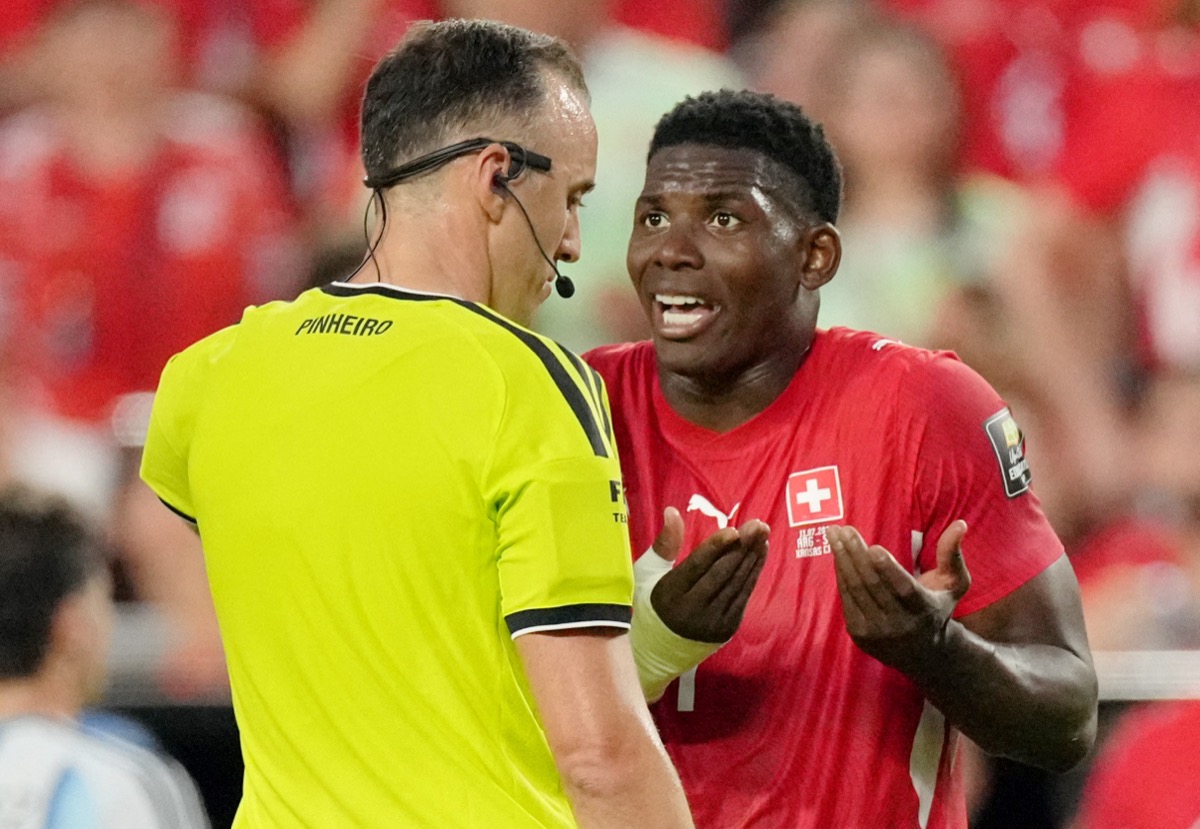
Was it correct? The majority Anglo-Saxon press (Sky, Al Jazeera) considers it in line with the regulations. Switzerland does not think the same: coach Murat Yakin described the rule as “unacceptable” and “destructive” (ABC Australia), and defender Manuel Akanji told ABC: «It's difficult when the referee is also against you. "He had never played such an unequal game, in which everything was in his favor."
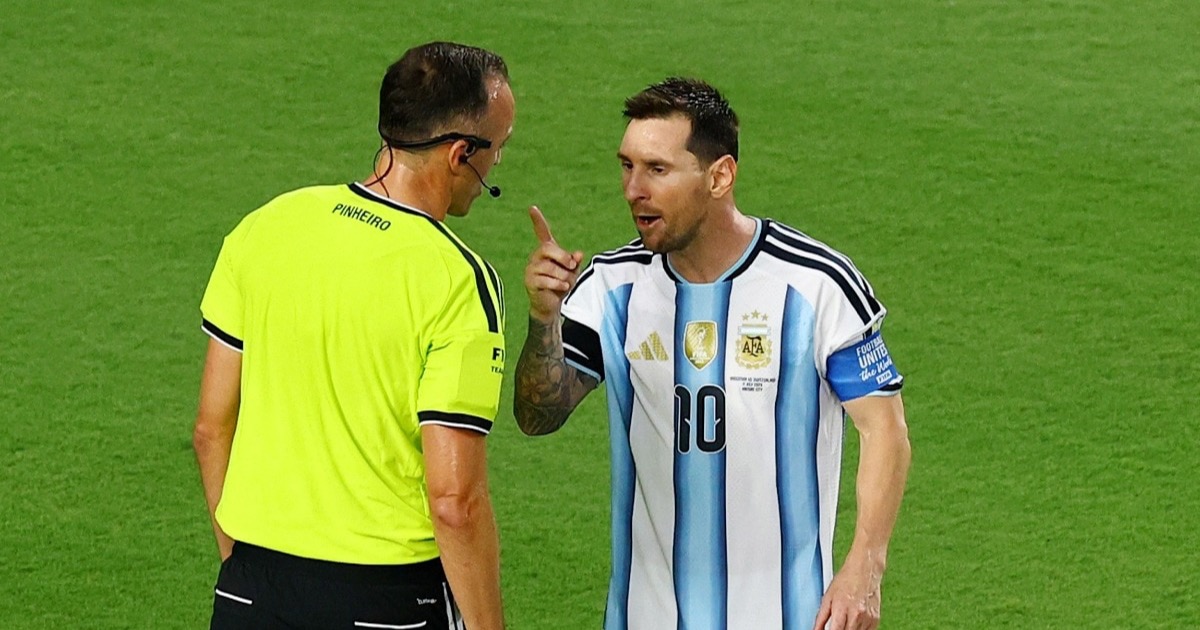
2. Messi points out to the referee: "Talk to me with respect"
The clip that QioHub spread with millions of views shows Messi in the barrier of a Swiss free kick, pointing his finger at Pinheiro. According to lip reading collected by Goal.com and media such as India Today, the Argentine captain would have said: «Talk to me well. Don't disrespect me. Speak to me well; "I spoke well to you." Pinheiro did not show a card.
In Arabic, the QioHub post adds the accusation that Messi was "exempt from punishment" despite an alleged regulation that would require expulsion. This does not coincide with article 27 that generated controversy with Folarin Balogun in this same tournament: article 27 suspends the execution of a sanction already imposed, it does not prevent a warning in the scoresheet. There was simply no warning here. Commentators debate whether another player would have received yellow for dissent (Law 12 IFAB); Messi, for now, will play the semifinal without a published sanction.
3. Messi's foul and Embolo's red card: two opposite readings
Pamphlets viralized the same sequence from the opposite angle: Messi would commit a "sudden" foul and, by simulating it, would obtain a dangerous free kick; In a linked thread, Switzerland would be left with 10 for a supposed "dive." The narrative fits with the official decision—Embolo expelled for faking—but the post suggests a double standard in favor of the 10. beIN SPORTS and FIFA describe the review as an identity correction, not as an award to Messi. The debate on networks mixes two different incidents into a single story of "corruption."
4. Lautaro: should he have seen the red when celebrating in the stands?
After the final 3-1, arielipillo remembers that Lautaro Martínez was already wearing yellow (min. 98') and jumped over the billboard to celebrate with the stands. IFAB Law 12 allows celebrating, but provides for a warning if the player "climbs perimeter fences and/or approaches the public in a way that causes security problems." Khel Now and several analysts maintain that another yellow card would have been consistent and would have cost them the semifinal against England. Pinheiro did not show it; The AFA has not received a disciplinary communication as of the closing of this note.
5. The penalty that Pinheiro did not call
The Footy Feed published a clip in which two Argentines – according to the post – knock down a Swiss man in the area without the VAR intervening. It is network material, without a consulted referee or published FIFA report. We include it because it is part of the viral corpus that anticipates "the level of corruption on Wednesday" (semifinal vs England), but there is no independent confirmation that the play should have been a penalty. In previous tournaments, similar incidents have remained a matter of interpretation.
6. "Argentina is the only team without VAR against it": viral, unofficial fact
The tweet from Infiltrado Blanco states that, of 48 teams, only Argentina would not have suffered adverse VAR interventions throughout the tournament. The message exceeds half a million impressions and fits the narrative of favoritism, but FIFA has not published an audited breakdown by team that confirms it. Until there is an official record or a verifiable match-by-match count, it should be treated as a network hypothesis, not as an organization's statistics.
7. Egypt, deleted videos and the echo of the second round
The controversy did not originate in Kansas City. In the round of 16, Argentina eliminated Egypt 3-2 in extra time (July 7, Atlanta) in another hot match. Madridismo Real denounces that FIFA "continues to suspend" videos that show alleged injustices in that match. It is an accusation that is difficult to contrast in real time – platforms remove content due to copyright in addition to complaints – but it explains why previous rivals join the Swiss chorus of “everything is going in their favor.”
8. Argentina's path: without top 10 or champions
SomosAnalistas highlights a structural fact in the table: Argentina would be the first team to reach the semifinals without facing any team from the top 10 FIFA or another world champion in this edition. According to the MARGENEZ bracket, their route was: Algeria (groups), Austria, Jordan, Cape Verde (sixteenths), Egypt (eighths) and Switzerland (fourths). It is a sporting fact of the draw and the results, not proof of conspiracy; France, England and Brazil fell on other sides of the table.
9. FIFA-AFA corruption: the background thread in X
Days before the fourth, arielipillo summarized a segment by journalist Román Molina on investigations into the AFA (money laundering, commercial rights in Miami, Guacci case in categories youth females). The thread exceeds 400,000 views and fuels the climate of mistrust, although it is not causally linked to Pinheiro's decisions in Kansas City. It serves as context for why any whistle in favor of Argentina is read today under the magnifying glass of previous financial scandals.
What does the other band say?
Lionel Scaloni, quoted by LA NACIÓN, acknowledged that "luck was on our side because they expelled one of them." It is not a denial of the arbitration debate; It is the pragmatic reading of the champion bench. On the Swiss side, Remo Freuler asked FIFA for a formal explanation of the VAR. On the neutral side, several media outlets consider Embolo's red to be regulatory but the mistaken identity rule "not very football-like"—exactly the nuance that Yakin calls "unacceptable."
Semifinal against England: the definitive test
On Wednesday, July 15 in Atlanta, Argentina and England will compete for a place in the final at MetLife Stadium (July 19). It will be the first meeting of the tournament between two teams usually located at the elite of the FIFA ranking and with the pedigree of world champions. If refereeing once again dominates the conversation, FIFA will have to respond with more than technical statements: the credibility of the tournament is at stake as much as the ball.
Most read
What readers are engaging with right now.
- Culture
Goose, the gay app that competes with Grindr, reaches the top 4 of Lifestyle in the App Store

- World
Cubans protest in Miami against Airlines Connections for alleged scam: they demand up to $20,000 in packages to Punta Cana

- World
Trump declares the ceasefire with Iran over, orders new attacks in Hormuz and demands cutting trade with Spain in NATO
- Culture
Harry Potter on HBO: complete guide to the series (not yet released and already renewed for T2), dates, cast and controversies

- Culture
DUK App: Aly Sánchez launches her habits app "one day at a time" with a 63-day program
- Culture
I'm Edgy and Edgy Labs: From Nebraska's Walmart to a beef tallow cream brand that sells across the US.

- Culture
The Evening of the Year VI: all the winners, fights and performances of the Ibai night in Seville

- World
The FBI is investigating the AFA for alleged fraud and money laundering: about $300 million in sponsorships and operations in the US.
- World
El Cangrejo: profile of Raúl Guillermo Rodríguez Castro, Raúl Castro's grandson between GAESA, leaked luxuries and the first interview of 2026