If from the age of 45 you start to move your cell phone away to read a message or look for reading glasses in every restaurant, you are not alone: presbyopia affects about 128 million adults in the United States alone and about 1.8 billion in the world. Until recently, the solution was almost always glasses. In July 2025, the FDA approved VIZZ (aceclidine ophthalmic 1.44%), from LENZ Therapeutics: the first and, for now, the only drop based on aceclidine for recover near vision for up to 10 hours with a single daily dose. In June 2026, the product is already marketed in the US, with a national campaign starring Sarah Jessica Parker. This guide includes official prices, how to obtain it, what to expect from the treatment and an honest balance of advantages and limitations compared to other approved drops.
Video: “A Good Day” spot by VIZZ with Sarah Jessica Parker
“Make it VIZZable” campaign (January 2026): Sarah Jessica Parker, a real user of the product, shows how VIZZ allows you to read labels, screens and scripts without reading glasses. Source: YouTube · LENZ Therapeutics — PR Newswire
What is VIZZ and what problem does it address?
VIZZ is a prescription eye drop indicated for adults with age-blurred near vision (presbyopia). It does not correct myopia, astigmatism or cataracts: it acts on the ability to focus on nearby objects, the first symptom that usually appears in the fourth decade of life.
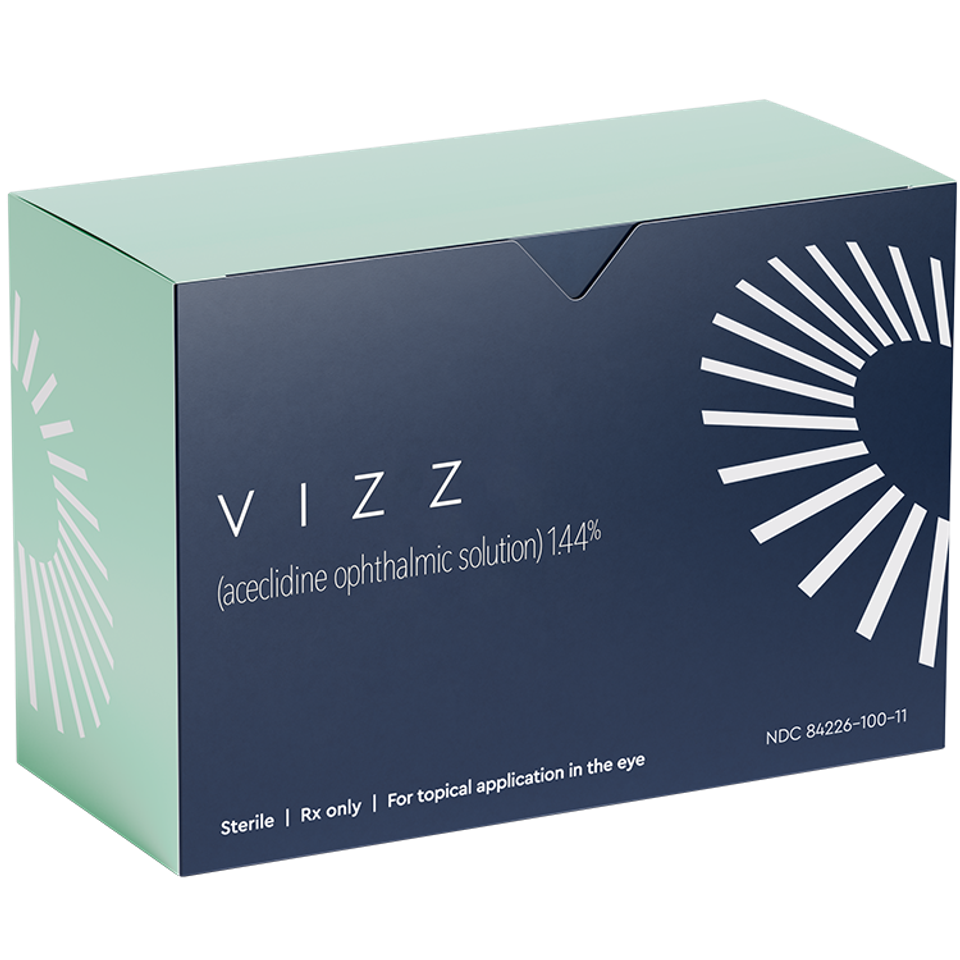
The packaging contains single-dose vials without preservatives. Two drops are applied to each eye each day, two minutes apart, according to LENZ prescribing information. Contact lenses must be removed before instillation and may be reinserted after 10 minutes.
How it works: the pinhole effect without changing the graduation
Aceclidine is a pupil-selective muscarinic agonist: it contracts the iris sphincter muscle and reduces the pupil diameter below 2 mm, generating a pinhole effect that expands the depth of field. In practice, small text comes back into focus without the eye adopting a permanent myopic shift — a key difference from how some formulations of pilocarpine work.
LENZ emphasizes that VIZZ minimally stimulates the ciliary muscle, which should result in less accommodative spasm than with high-dose pilocarpine drops. The phase 3 trials CLARITY 1, CLARITY 2 and CLARITY 3—with more than 680 participants and 30,000 days of treatment—showed improvement in near vision in about 30 minutes and lasting up to 10 hours in the pivotal studies.

Is it available now? Where to buy it in 2026
Yes. Following approval in July 2025, LENZ began sample distribution to ophthalmologists and optometrists in September 2025, consumer shipments in October and broad availability – including retail pharmacies – towards mid-Q4 2025. In January 2026 the company confirmed commercial launch with initial net revenue and announced international distribution agreements (for example, with Lunatus in the Middle East).
The typical flow rate for a patient in the US is:
- Consult with an eye care professional (ECP) to evaluate if you are a candidate.
- VIZZ prescription if you meet clinical criteria.
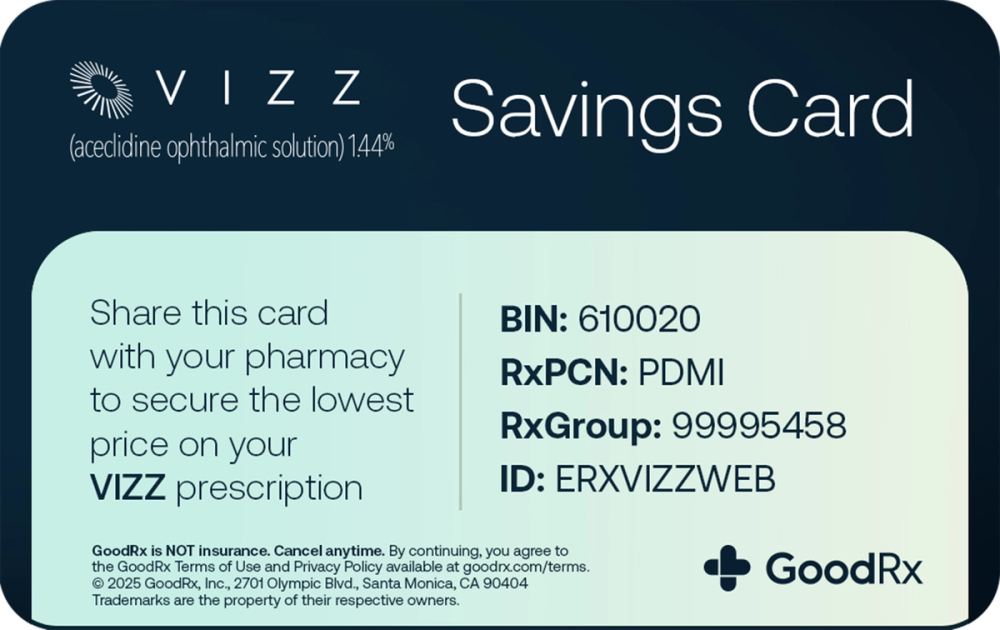
- Purchase at the VIZZ ePharmacy, participating pharmacies, or with savings cards (e.g. GoodRx) depending on insurance coverage.
On the official website, the search engine Find A Doctor locates professionals who prescribe the product. Outside the United States —including Spain, Mexico, Colombia or Argentina— VIZZ does not yet have commercial approval; There are only license agreements in the deployment phase in some regions.
Official price: how much VIZZ costs
LENZ set a direct-to-consumer list price through its ePharmacy:
- $79 per month — one-month supply (25 single-dose vials).
- $198 for three months — equivalent to $66/month (75 vials).
In local pharmacies the price may vary depending on health insurance, co-pays and discounts. The Access & VIZZ Pricing details prescription delivery to the ePharmacy and savings options. For context: drugstore reading glasses cost between $15 and $50; VIZZ competes on comfort and aesthetics, not on price compared to basic glasses.
Pro effects: why many patients choose it
- Category-leading duration: up to 10 hours with a single daily dose — longer than Vuity (~6 hours) or Qlosi (~8 hours with two doses).
- High response rate in trials: In CLARITY 2, around 71% of participants gained three lines or more in near visual acuity at 30 minutes and 3 hours (which drops to ~40% at 10 hours).
- Different mechanism: “pupil-selective” aceclidine with minimal ciliary stimulation; LENZ positions it against high concentration pilocarpine.
- Preservative-free in single-dose vials — advantage for sensitive ocular surface.
- Freedom from reading glasses in everyday tasks: cell phone, menus, supermarket labels, makeup.
- Relatively quick onset: effect in about 30 minutes, useful for planning the work morning.
- Acceptable safety profile in trials: no serious drug-related adverse events in more than 30,000 days of exposure in CLARITY.
Converse effects and risks: what you should know
No drop for presbyopia is a “miracle without trade-offs”. VIZZ trials and labeling document common adverse effects:
- Irritation at the instillation point (~20%).
- Temporary dim or dark vision (~16%) — severely constricted pupil reduces light entry; It can affect driving at night or in poorly lit environments.
- Headache (~13%).
- Conjunctival or ocular redness (7–8 %).
Most are mild, transient and resolve on their own, according to LENZ. But obscured vision is the most discussed counterpoint of all miotic drops: by forcing a sub-2 mm pupil, you gain close focus at the cost of luminosity. Independent clinical reviewers point out that VIZZ can produce a more sensation of darkening than alternatives to low pilocarpine (Qlosi), precisely because of the narrower pupil that explains its effectiveness.
Other general limitations of the therapeutic group:
- Requires a prescription and prior examination — miotics carry a theoretical (very low) risk of retinal detachment in predisposed patients.
- Does not replace glasses in all scenarios — distance vision, significant astigmatism or advanced presbyopia may still require additional correction.
- Recurring monthly cost compared to glasses that last for years.
- Variable individual response: not everyone gains three lines of acuity; At 10 h, efficacy drops significantly in the CLARITY 2 data.
- US only for now for commercial use; In the rest of the world it remains distant news.
Video: clinical researcher Dr. Marc Bloomenstein on VIZZ
Marc Bloomenstein, OD, was involved in the VIZZ trials and described the FDA approval as a “paradigm shift” in options for presbyopia. Source: VIZZ — YouTube (@vizz_rx)
VIZZ vs. Vuity, Qlosi and Yuvezzi
Since 2021 the FDA has approved four drops for presbyopia. They are not interchangeable: they differ in active ingredient, duration, tolerability and ideal patient profile.
| Product | Active ingredient | FDA approval | Approximate duration | Key Notes |
|---|---|---|---|---|
| Vuity (AbbVie) | Pilocarpine 1.25% | Oct 2021 | ~6 hours | First on the market; more headache and dark vision; AbbVie reduced commercial investment |
| Qlosi (Orasis) | Pilocarpine 0.4% | Oct 2023 | ~8 h (2 doses/day) | Better tolerability; conservative option to test the category |
| VIZZ (LENZ) | Aceclidine 1.44% | Jul 2025 | ~10 h (1 dose/day) | Greater efficacy in trials; narrower pupil; dim vision more frequent |
| Yuvezzi (Tenpoint) | Carbachol + brimonidine | Jan 2026 | ~8–10 h | Combination to modulate redness; just on the market |
In clinical practice, many optometrists recommend Qlosi as a first trial for its mild profile, reserve VIZZ for highly motivated patients who prioritize duration and accept possible darkening effects, and consider Yuvezzi when redness is a central concern. There are no head-to-head clinical trials among all options; The choice depends on ocular anatomy, lifestyle and tolerance to side effects.
“Make it VIZZable” campaign and media visibility
In January 2026 LENZ launched the national “Make it VIZZable” campaign with Sarah Jessica Parker as ambassador and actual user of the product. The ads — on YouTube, Instagram, TikTok, Hulu and Paramount — show Parker in New York reading messages, labels and scripts without glasses. It is the first major celebrity marketing venture in the category and reflects LENZ's confidence in a market that Vuity failed to fully exploit.
Does it make sense to you?
VIZZ fits if you live in the US, have diagnosed presbyopia, want to reduce your reliance on reading glasses during the day, and are okay with a monthly cost of ~$79 and possible minutes of darker vision. It probably won't fit if you drive a lot at night, have very advanced presbyopia, are looking for the cheapest option, or live outside the US market.
The final decision does not correspond to an article or an advertisement with Sarah Jessica Parker: it requires ophthalmological examination, examination of the fundus of the eye and an honest conversation about expectations. VIZZ does not rejuvenate the lens or eliminate presbyopia permanently; each morning the dose opens a window of glasses-free hours. For millions of people, that is already enough to “stay in the moment” — the brand's motto. For others, $20 glasses will still be the best investment.
Editorial note: This article is informative and is not a substitute for medical advice. VIZZ is a prescription medication; Always consult your ophthalmologist or optometrist before starting any treatment.
Most read
What readers are engaging with right now.
- Culture
Goose, the gay app that competes with Grindr, reaches the top 4 of Lifestyle in the App Store

- World
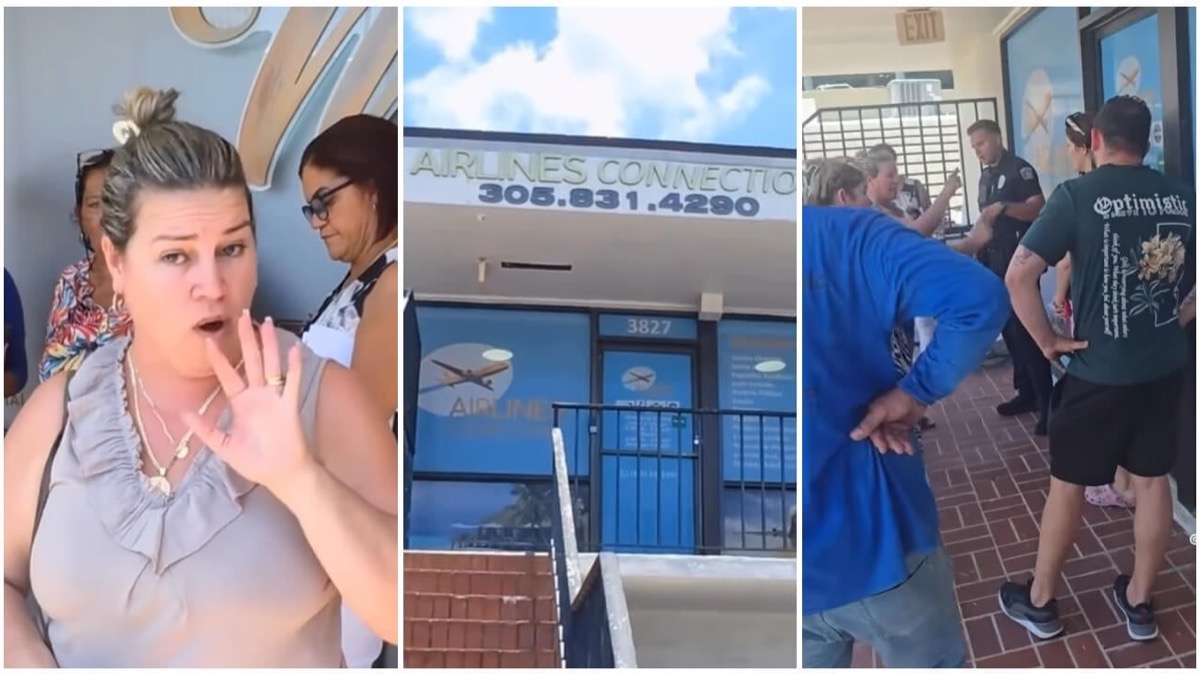
Cubans protest in Miami against Airlines Connections for alleged scam: they demand up to $20,000 in packages to Punta Cana
- World
Trump declares the ceasefire with Iran over, orders new attacks in Hormuz and demands cutting trade with Spain in NATO

- Culture
Harry Potter on HBO: complete guide to the series (not yet released and already renewed for T2), dates, cast and controversies

- Culture
DUK App: Aly Sánchez launches her habits app "one day at a time" with a 63-day program
- Culture
I'm Edgy and Edgy Labs: From Nebraska's Walmart to a beef tallow cream brand that sells across the US.

- Culture
The Evening of the Year VI: all the winners, fights and performances of the Ibai night in Seville

- World
The FBI is investigating the AFA for alleged fraud and money laundering: about $300 million in sponsorships and operations in the US.
- World
El Cangrejo: profile of Raúl Guillermo Rodríguez Castro, Raúl Castro's grandson between GAESA, leaked luxuries and the first interview of 2026