Supervision is Roboflow's open source Python library for building computer vision applications in production. According to the official documentation, it offers a unified Detections object, converters for dozens of inference backends, and ready-made utilities for annotating, tracking, filtering, and evaluating models — “We write your reusable computer vision tools.”
What Supervision solves
Working with computer vision involves repeating tasks: parsing output from different models, drawing boxes and masks, persisting IDs between frames, or counting objects that cross a line. Supervision packages that into coherent APIs around the Detections type.
- Annotation: bounding boxes, masks and labels in images and video.
- Tracking: tracking of objects with persistent IDs frame by frame.
- Zones and lines: count and filter detections within polygons or when crossing a Line Zone.
- Datasets: load and convert between YOLO, COCO and Pascal VOC formats.
- Metrics: evaluate models with mAP, precision, recall, F1 and confusion matrices.
Supported integrations
The strong point of Supervision is the conversion layer: the same annotation and post-processing flow serves after inferring with:
- Ultralytics (YOLOv8/v11, etc.)
- Roboflow Inference
- Transformers (Hugging Face)
- SAM (Segment Anything)
- Detectron2, MMDetection, YOLO-NAS, PaddleDet
- NCNN, Azure AI Vision and VLMs parsers
That reduces “glue” code when you change models or mix detection with segmentation.
Featured Tools
The documentation organizes recipes and API reference into specific modules:
- Line Zone and Polygon Zone: counting and spatial filtering.
- Inference Slicer: detect small objects by dividing the image into tiles.
- Detection Smoother: smooth noisy predictions in video.
- Annotators: visual rendering of detections and keypoints.
- Trackers: integration with multi-object tracking pipelines.
There are step-by-step tutorials (detect and annotate, save detections, video tracking, model benchmarks) and cookbooks on the docs website.
Installation
Requires Python ≥ 3.9. Recommended installation:
pip install supervision
Also available via poetry, uv, rye or conda install -c conda-forge supervision. For development: clone github.com/roboflow/supervision and install in editable with pip install -e ..
Roboflow ecosystem
Supervision complements the Roboflow stack (labeling, training, deployment with Inference). The library is the “reusable open source” side for teams that already deploy models on edge, server or notebooks — without tying you to a single detection framework.
In summary
What is it? MIT Python library for post-inference CV. For what? Annotate, track, count in zones, convert datasets and measure mAP. How to get started? pip install supervision and the documentation.
Most read
What readers are engaging with right now.
- Culture
Goose, the gay app that competes with Grindr, reaches the top 4 of Lifestyle in the App Store
- World
Cubans protest in Miami against Airlines Connections for alleged scam: they demand up to $20,000 in packages to Punta Cana

- World
Trump declares the ceasefire with Iran over, orders new attacks in Hormuz and demands cutting trade with Spain in NATO

- Culture
Harry Potter on HBO: complete guide to the series (not yet released and already renewed for T2), dates, cast and controversies

- Culture
DUK App: Aly Sánchez launches her habits app "one day at a time" with a 63-day program
- Culture
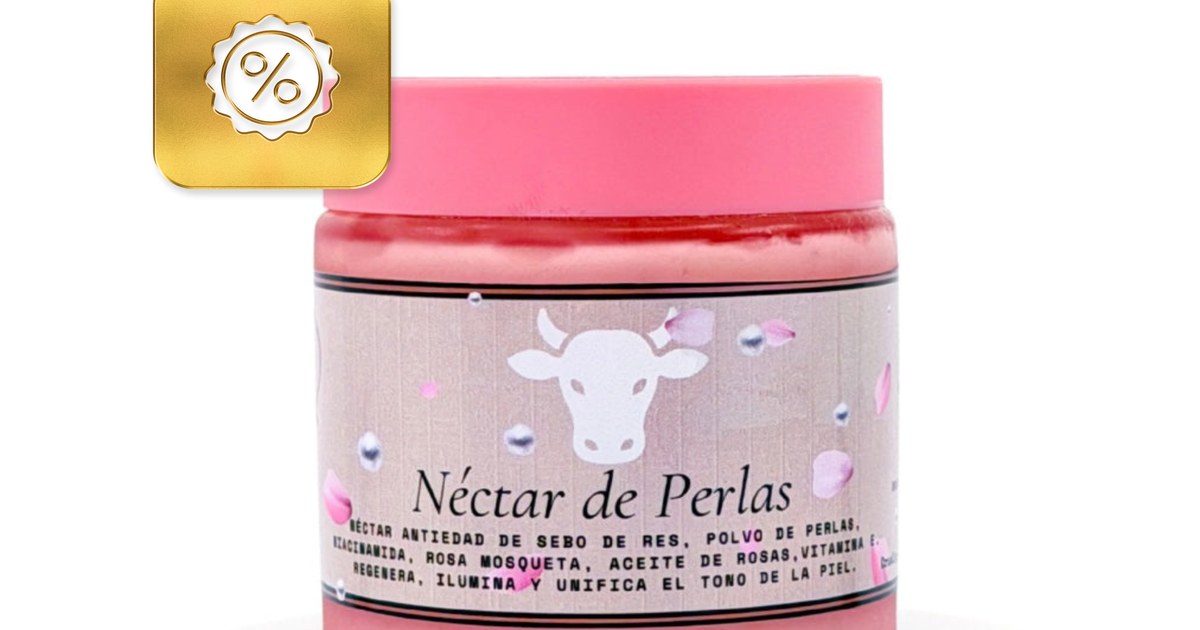
I'm Edgy and Edgy Labs: From Nebraska's Walmart to a beef tallow cream brand that sells across the US.
- Culture
The Evening of the Year VI: all the winners, fights and performances of the Ibai night in Seville

- World
The FBI is investigating the AFA for alleged fraud and money laundering: about $300 million in sponsorships and operations in the US.

- World
El Cangrejo: profile of Raúl Guillermo Rodríguez Castro, Raúl Castro's grandson between GAESA, leaked luxuries and the first interview of 2026