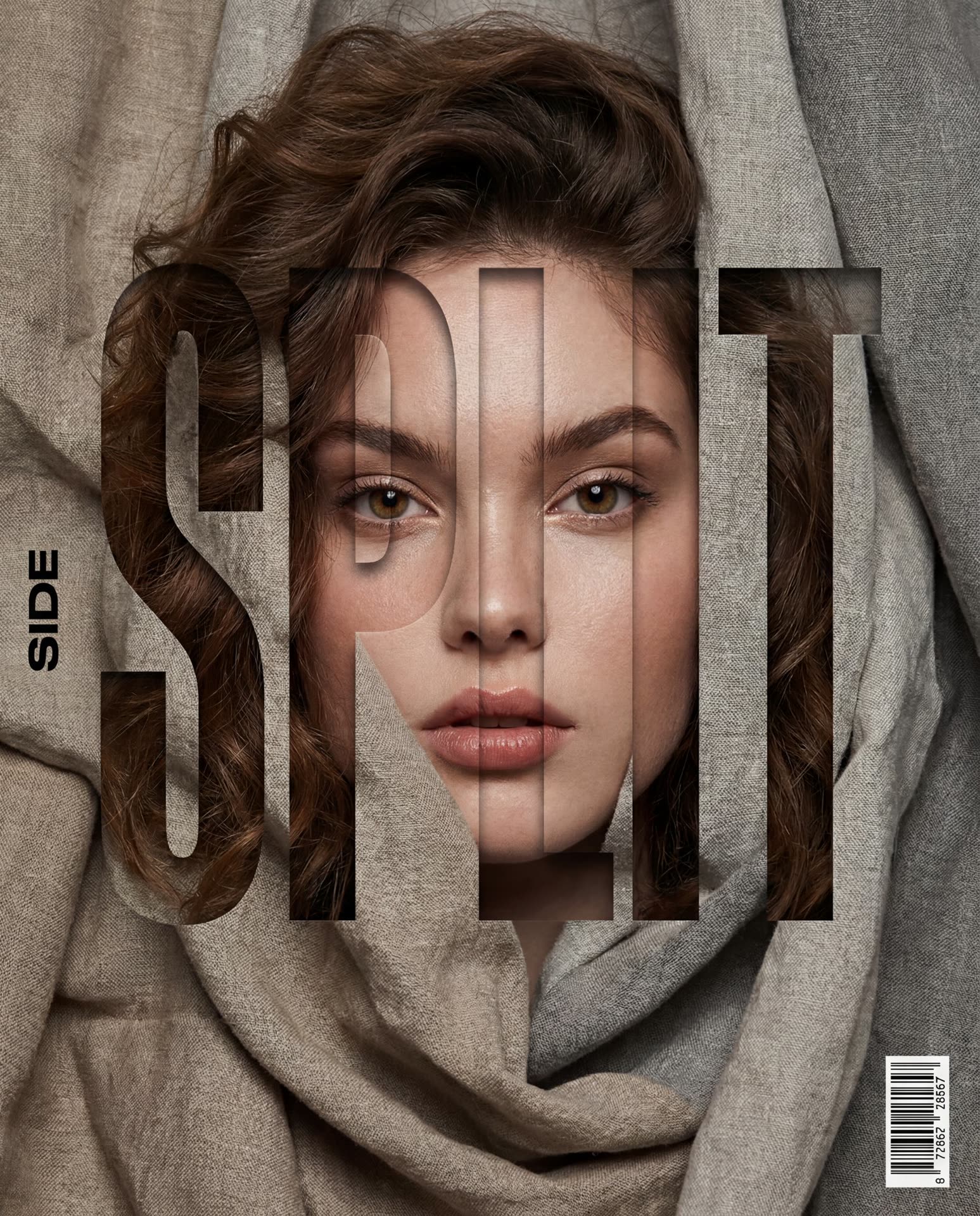
On June 24, Anissa (@SimplyAnnisa) posted on X a prompt for GPT Image 2 on ChatGPT aimed at editorial beauty posters. The idea: a vertical portrait with the face framed behind crumpled fabric, while a giant condensed typeface runs through the fabric spelling out a word in stacked syllables—with eyes, nose, and lips visible between the gaps in the letters—plus a vertical side word, a barcode block, and a muted fashion magazine palette.
AI Prompt · How to do it
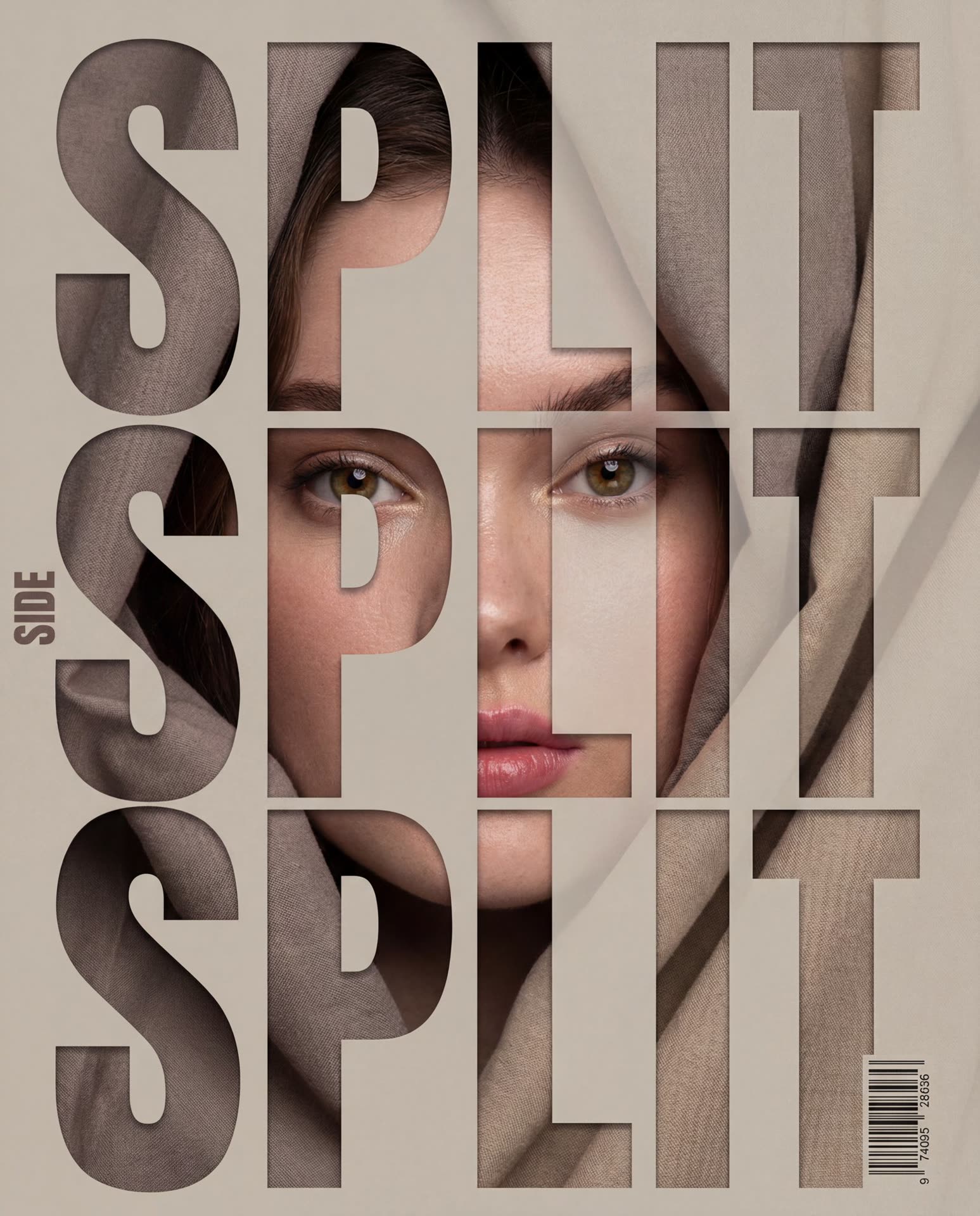
Second result of the same prompt with different variables. @SimplyAnnisa
Steps
- Open chatgpt.com with GPT Image 2.
- Replaces the six prompt variables (character, hair, cloth, split word, side word and palette).
- Paste the entire prompt; ask for 4:5 format if it does not respect it.
- The thread includes four examples with different combinations.
Prompt to copy
Vertical editorial poster portrait of [CHARACTER] with [HAIR], face tightly framed behind crumpled [FABRIC], oversized bold condensed sans-serif typography cut through the fabric spelling "[SPLIT]" in stacked syllables across the whole image, eyes, nose and lips visible through the letter openings, small vertical side word "[SIDE]", tiny barcode block near the lower right, high-fashion beauty lighting, realistic skin texture, soft shadows in the folds, muted [PALETTE], clean magazine-cover composition, sharp typography hierarchy, premium print finish, no extra words, no messy layout, no cartoon style, no 3D render, ar 4:5
Text in English according to the original publication. Anissa credits the creation to GPT Image 2 via @TopviewAIhq.
What makes this prompt special
It combines editorial beauty photography with typography as a sculptural element: the word does not superimpose the portrait, but rather runs through it as if the fabric were cut following the letters. The visual trick—eyes, nose, and lips peeking out of the typographic openings—requires precision in the prompt; Without that phrase, models often place the text on top of the face or distort the features.
The final restrictions (no extra words, no messy layout, no cartoon style, no 3D render) point to a printed magazine cover finish, not a digital collage or 3D render. The barcode block and the side word [SIDE] reinforce the aesthetics of packaging or limited edition.
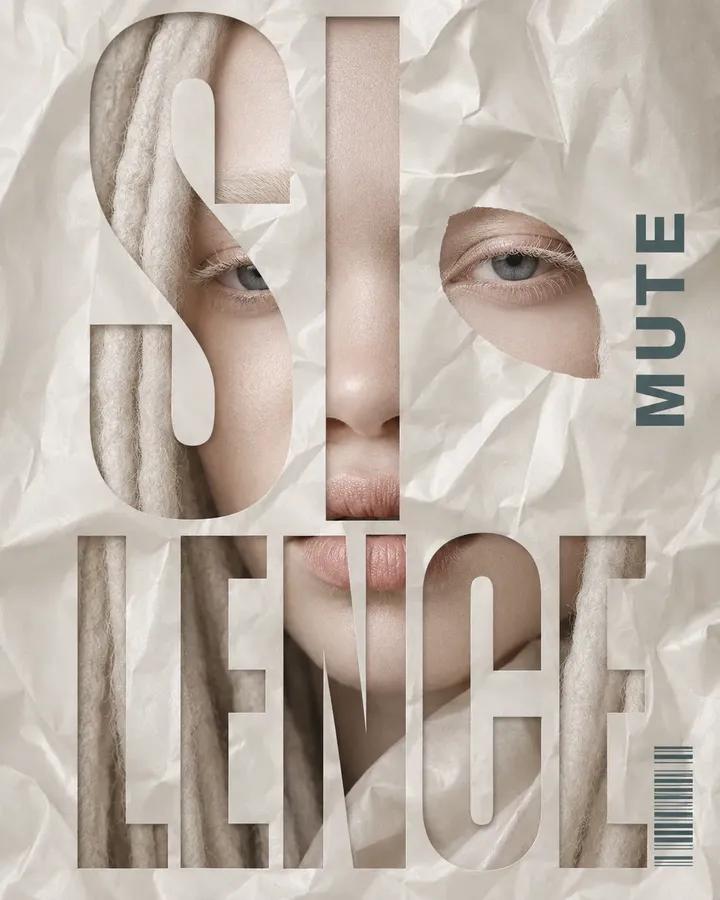
How to fill variables
Try [CHARACTER] with specific descriptions (young woman with freckles, androgynous model with sharp cheekbones). In [HAIR], specify texture and color (slicked-back dark wet hair, loose copper curls). [FABRIC] can be ivory silk, crinkled organza or translucent mesh. Split [SPLIT] into syllables that fit the layout (BEAU-TY, VOG-UE, ELLE). [SIDE] is usually a short vertical word (ISSUE, NO.07, PARIS). In [PALETTE], name muted tones (dusty rose and charcoal, sage green and cream).
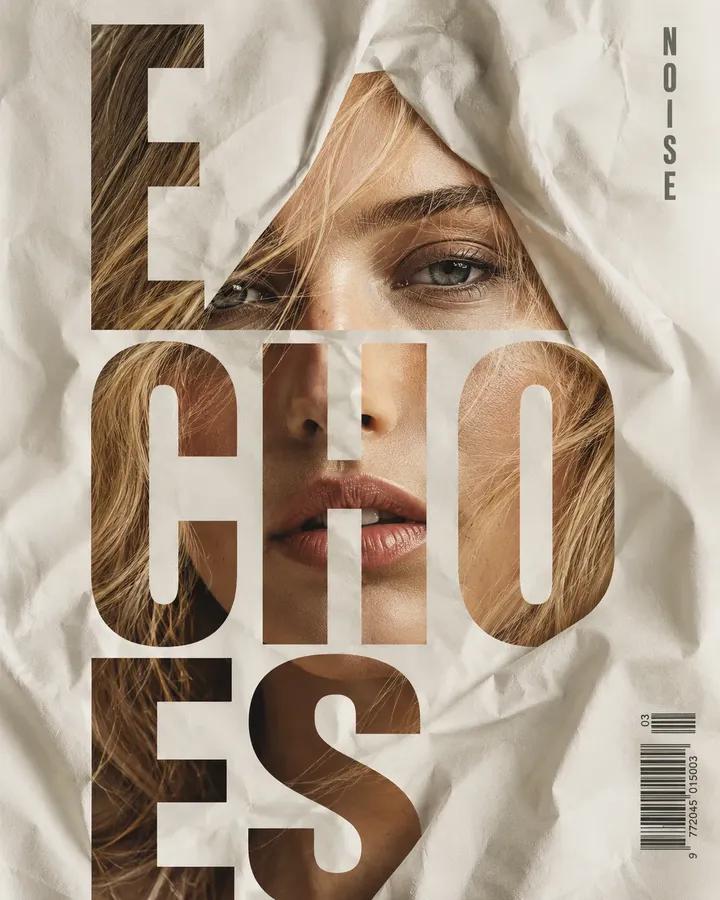
Anissa had already made other GPT Image 2 prompts viral in June — such as transport pass and portrait with gradient in Nano Banana 2—; This piece aims at the beauty editorial poster niche. The thread exceeded 2,400 views in a few hours.
Before publishing
AI-generated barcodes are decorative and non-functional. Respect image rights if you use references from real people. Review OpenAI's policies for generated content.
Most read
What readers are engaging with right now.
- Culture
Goose, the gay app that competes with Grindr, reaches the top 4 of Lifestyle in the App Store

- World
Cubans protest in Miami against Airlines Connections for alleged scam: they demand up to $20,000 in packages to Punta Cana
- World
Trump declares the ceasefire with Iran over, orders new attacks in Hormuz and demands cutting trade with Spain in NATO
- Culture
Harry Potter on HBO: complete guide to the series (not yet released and already renewed for T2), dates, cast and controversies
- Culture
DUK App: Aly Sánchez launches her habits app "one day at a time" with a 63-day program
- Culture
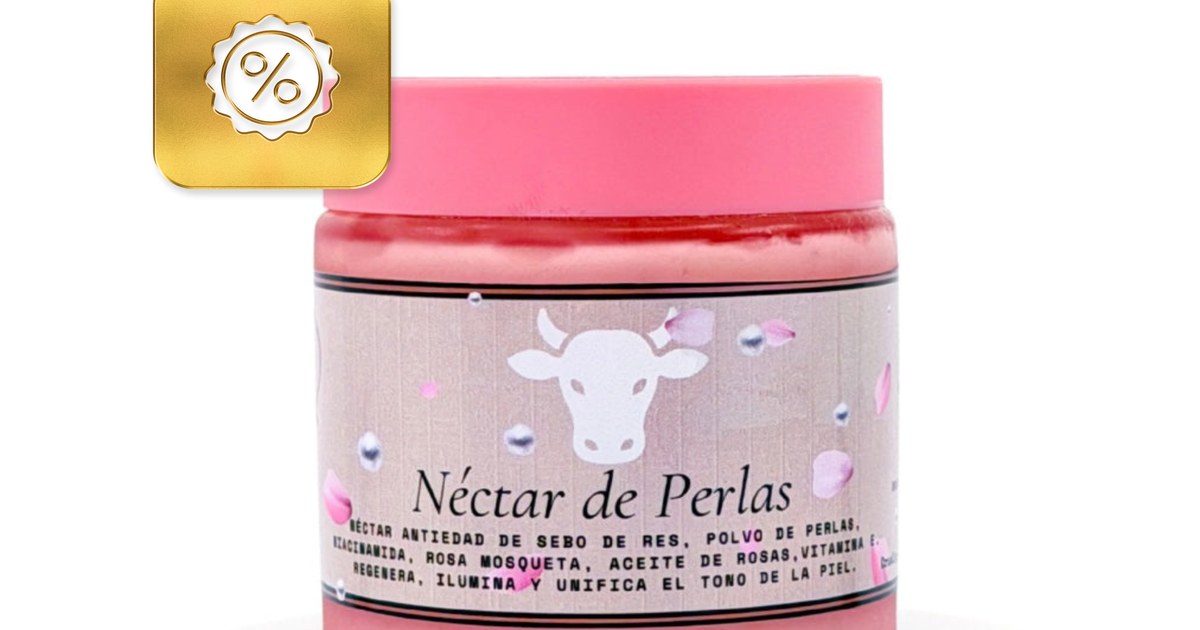
I'm Edgy and Edgy Labs: From Nebraska's Walmart to a beef tallow cream brand that sells across the US.
- Culture
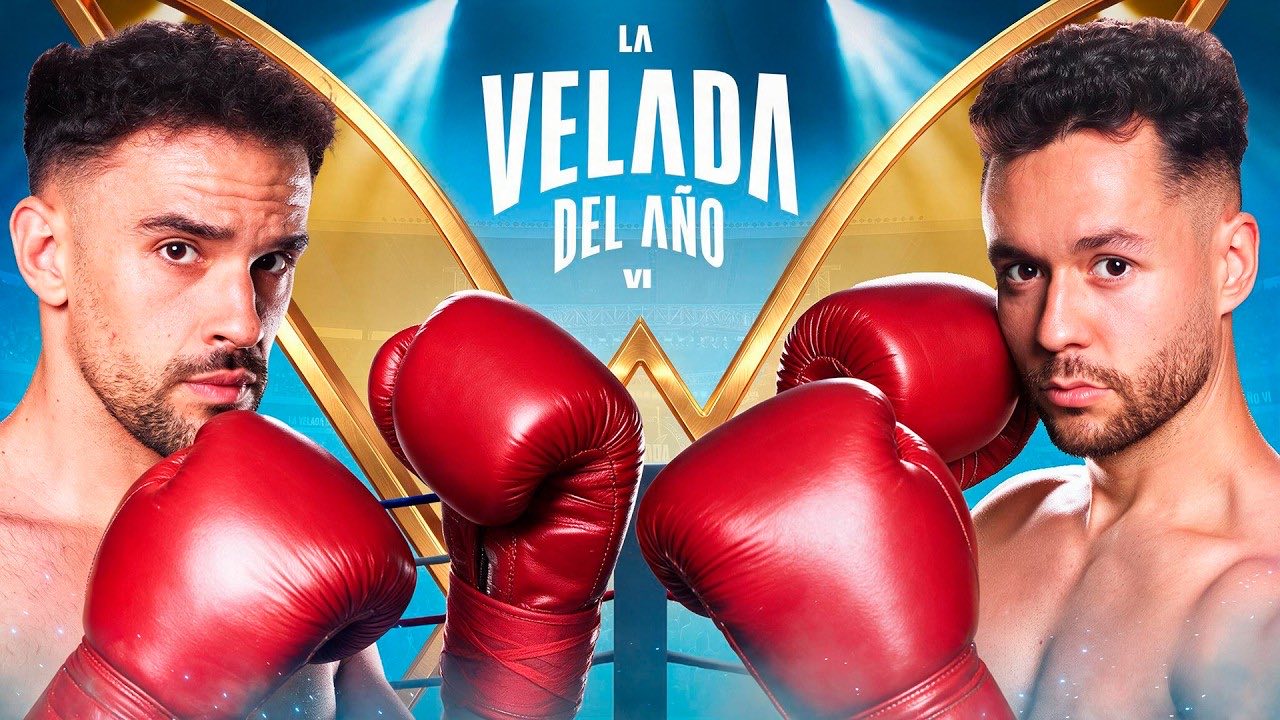
The Evening of the Year VI: all the winners, fights and performances of the Ibai night in Seville
- World
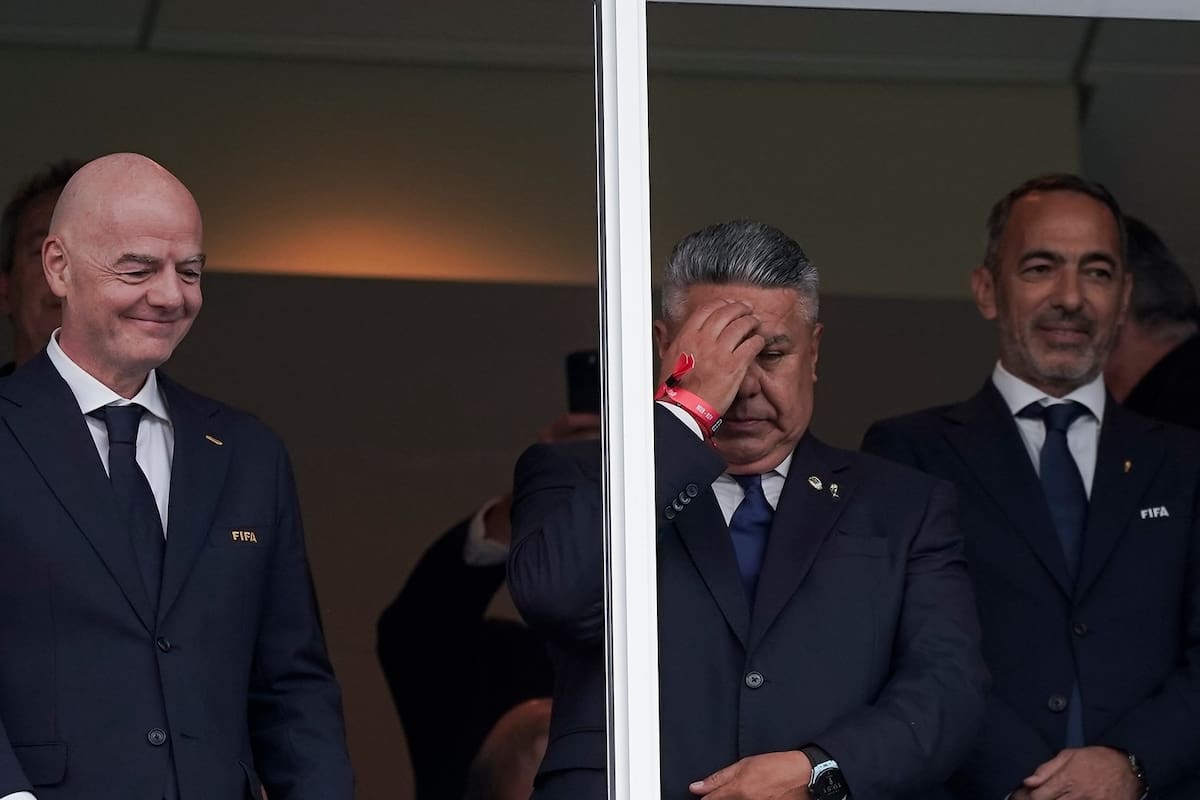
The FBI is investigating the AFA for alleged fraud and money laundering: about $300 million in sponsorships and operations in the US.
- World
El Cangrejo: profile of Raúl Guillermo Rodríguez Castro, Raúl Castro's grandson between GAESA, leaked luxuries and the first interview of 2026