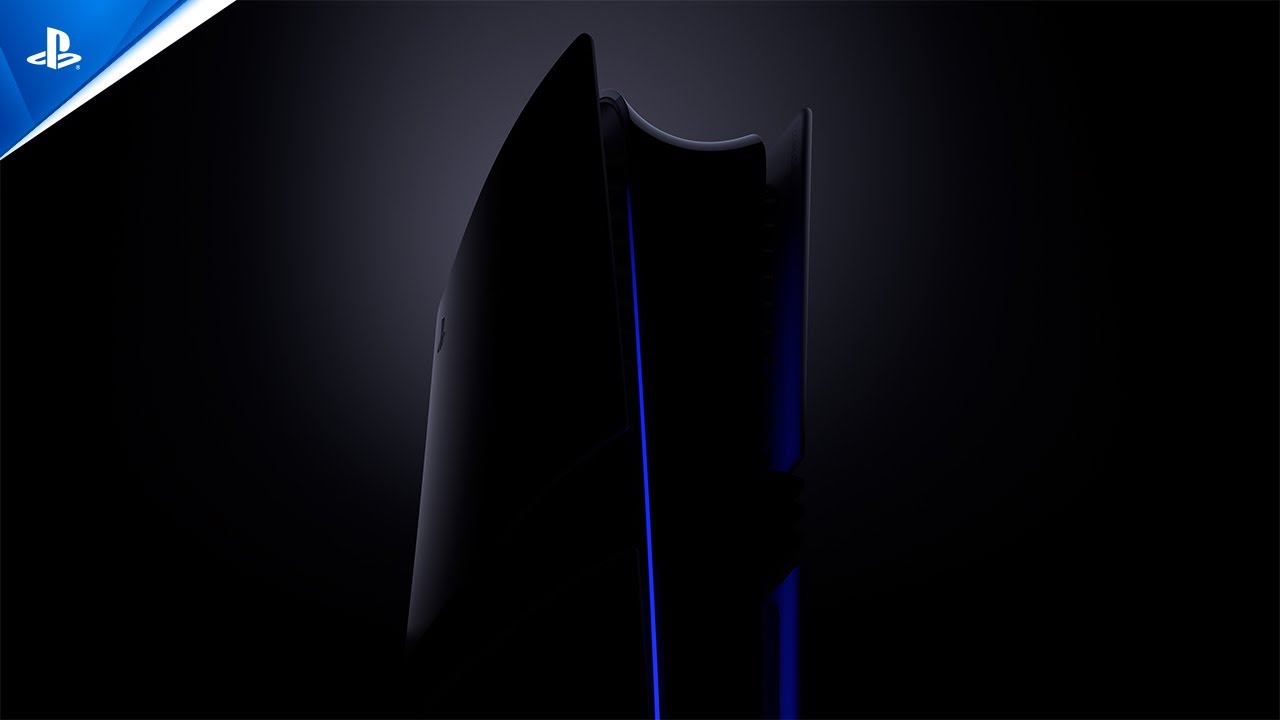
The PlayStation 5 family is experiencing its most contradictory moment. Sony has just raised prices for the second time in less than a year — the Pro already costs $899 in the United States — while leaks and analyst reports suggest that the PlayStation 6 will not arrive before 2028, possibly 2029, a victim of the memory crisis driven by AI data centers. In the midst of this storm, millions of players are wondering the same thing: which PS5 model is best, if the Pro is worth almost $900, if a gaming PC is a better investment or if it is worth waiting for the next generation? This investigation crosses sales data, official files, Sony statements and hardware leaks to respond rigorously.
PS5, Slim and Pro: what each one is today
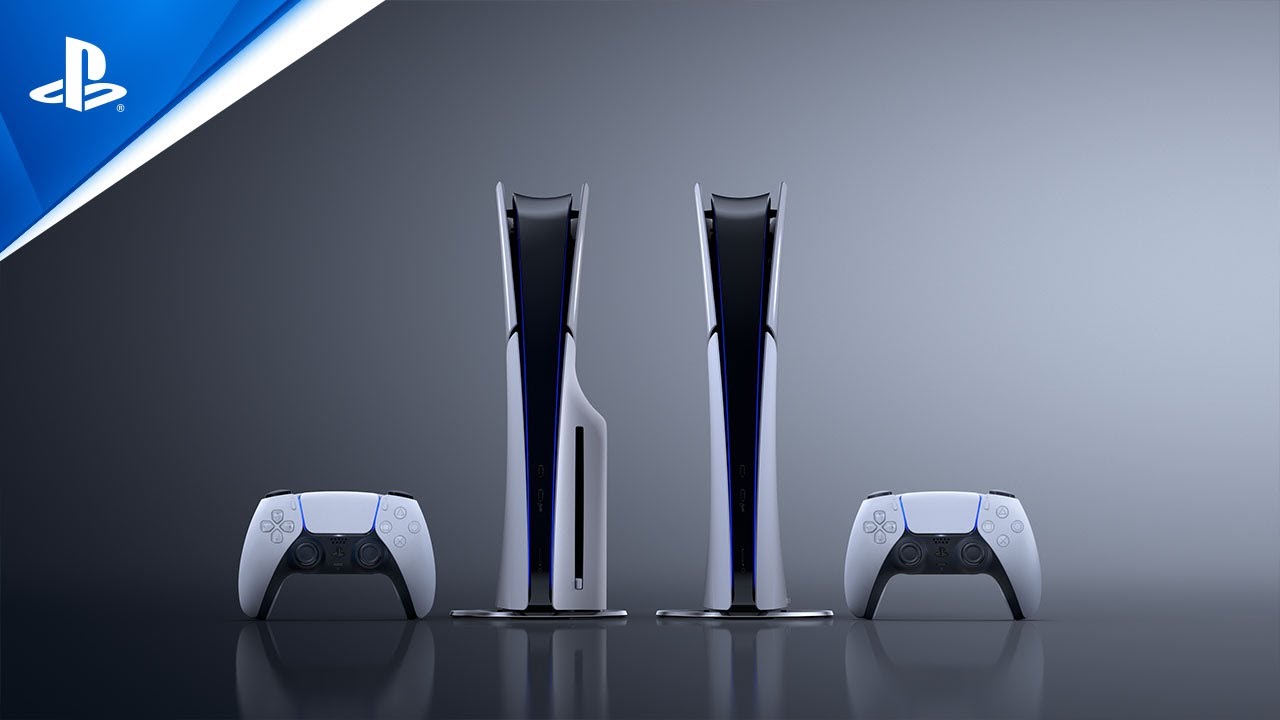
In practice, when you talk about "buying a PS5" in 2026, you almost always mean the PS5 Slim. Sony replaced the original 2020 chassis with this more compact model at the end of 2023. The Slim is available in a version with a disc drive and in a digital edition; They share the same custom AMD SoC (8-core Zen 2 CPU, 36-CU RDNA 2 GPU, ~10.28 TFLOPS), 16GB GDDR6, and 1TB SSD.
The PS5 Pro, launched in November 2024, is not a new generation: it is a mid-cycle refresher. It increases the GPU to 60 CUs (~18 TFLOPS), doubles the ray tracing power, adds PSSR (PlayStation Spectral Super Resolution) for AI upscaling, includes a 2TB SSD, and Wi-Fi 7. The CPU is essentially the same as the Slim, a crucial detail that limits how much CPU-bound performance can improve. It does not come with a disc reader as standard (sold separately for about $80).
The original "fat" PS5 is no longer manufactured; the current market is Slim + Pro. Same game library in all three; Only some titles offer “PS5 Pro Enhanced” mode with better resolution, ray tracing or more stable framerate.
Video: official presentation of the PS5 Slim
Sony announced the Slim in October 2023: 30% less volume, 1TB SSD and modular disk drive in the digital edition. Source: PlayStation — YouTube
Which one sells more? The numbers speak clearly
The PS5 Slim overwhelmingly dominates in volume. According to Circana data shared by analyst Mat Piscatella, the PS5 Pro represented approximately 13% of PS5 hardware sales in the United States during 2025 — a figure almost identical to the historical share of the PS4 Pro in the same market (~13% of total PS4 sales).
Estimates from Ampere Analysis, Niko Partners and IDC converge on a global Pro installed base of 4 to 7 million units compared to about 65-70 million PS5 consoles in total by the end of 2025. That is to say: the Pro is a successful premium product in its niche, but more than 85% of buyers choose the Slim or the Digital.
Another revealing fact from Piscatella: 49% of PS5s sold in the US in 2025 did not include a disc reader, a sign that the digital edition is gaining ground. The PlayStation Portal, for its part, reached a 7% attach rate on PS5 hardware in the US (~2 million units), fueling rumors of a native handheld in the next generation.
Sony cited “continued pressures on the global economic landscape” and rising memory and storage costs — driven by demand for AI — as reasons. It is the second increase in less than twelve months and a worrying precedent: an almost six-year-old console more expensive than at its launch, something unprecedented in decades of the industry.
PS5 Slim vs Pro: honest technical comparison
The consensus of Digital Foundry, MKBHD and specialized media coincides: the Pro offers the best image quality possible on a PlayStation console, but the Slim delivers "70% of the experience for 60% of the price" (adjusted before increases). The Pro shines on large 4K TVs, games with Enhanced mode, and players sensitive to aliasing and ray tracing; the Slim is still excellent at 1080p/1440p and upscaled 4K.
- GPU: Slim ~10.28 TFLOPS · Pro ~18 TFLOPS (+45% approx.)
- Ray tracing: Pro with double the RT performance
- Upscaling: Only Pro has PSSR (v2.0 arrived in March 2026)
- Storage: Slim 1 TB · Pro 2 TB
- CPU: Virtually identical in both
- Wi-Fi: Slim Wi-Fi 6 · Pro Wi-Fi 7
- Disc reader: Slim includes it (disc version) · Pro requires accessory
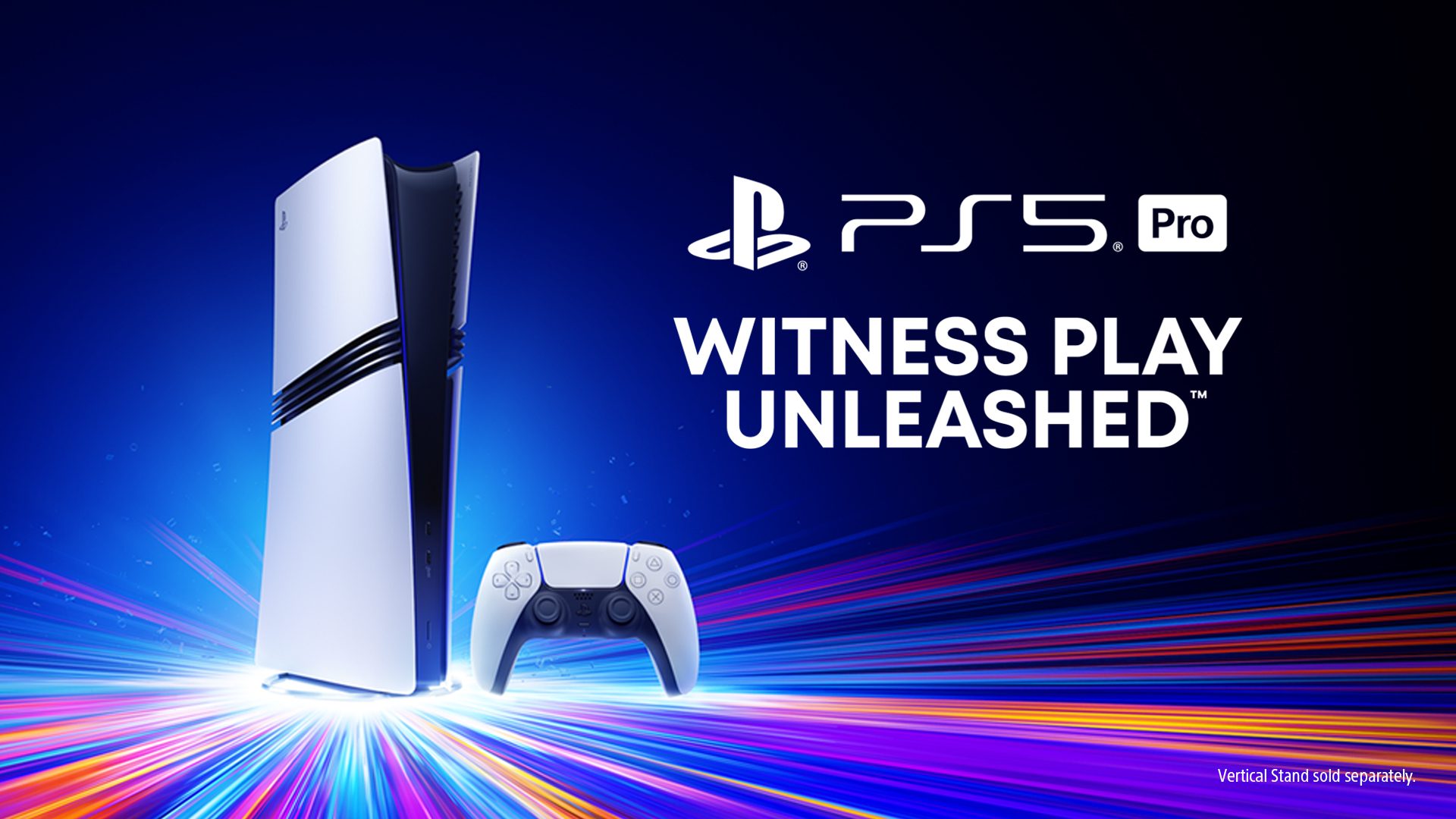
Buying the Pro as a "cheap bridge to the PS6" is a bad strategy: it is hardware from the same generation, not a generational leap. It will not guarantee exclusive 60 fps in cross-gen games; CPU bottleneck persists.
Is it worth buying a PS5 Pro now?
Yes, if you fit this profile: you have a quality 4K/120 Hz TV, you value sharp images and ray tracing, you don't have a current PS5, and you want the best PlayStation experience for the next 2-3 years before the PS6. At $899 it is expensive, but analysts confirm that its adoption replicates the curve of the PS4 Pro: stable premium niche, not commercial failure.
Video: Mark Cerny explains the technology of the PS5 Pro
Official 37-minute technical seminar: Expanded RDNA 2.x GPU, advanced ray tracing, PSSR and the collaboration with AMD (Project Amethyst) that anticipates the PS6. Source: PlayStation — YouTube
No, yes: your current PS5 is enough for you; $900 is a lot of money and you don't want to spend it twice in a few years; you don't notice a difference on a 1080p monitor; or you prioritize price — in that case, the Slim Digital at $599 is still the cheapest entry point to the generation.
The time window matters. With the PS6 estimated for late 2028 or 2029, a Pro purchased today would have about 2.5-3 years of useful life as a top of the range before being relegated. If you can wait without playing, saving towards the PS6 may make more sense; If you want to play now—GTA VI, Sony exclusives, multiplayer—waiting 2-3 years is a lot of wasted time.
PS5 Pro vs PC gaming: which one wins in 2026?
With the Pro at $899, the PC comparison has become more interesting. To match the real performance of the Pro in 4K/60 with ray tracing in optimized games - RTX 4070/5070 territory - you need a PC worth $1,000 to $1,500 in new components, according to Digital Foundry and Yahoo Tech analysis. That's not counting a monitor, keyboard, mouse, and Windows license.
The Pro wins in: total initial ownership price, plug-and-play, PS4/PS5 library, DualSense included, without worrying about drivers or compatibility.
The PC wins in: cheaper games (Steam sales), partial upgrades, modding, Game Pass on PC, productivity, and long-term flexibility. If you already have a tower with a decent GPU, upgrading just the graphics card is usually more profitable than buying a Pro.
MARGENEZ Verdict: For those who just want to play without complications, the Pro at $899 remains the most affordable way to get into 4K with RT in 2026. For those who value customization and long-term savings on software, the PC is still king — but not for $899; You need a larger budget or prior hardware.
PlayStation 6: what Sony confirms and what are rumors
Sony has not officially announced the PS6. What it has said publicly:
- Hideaki Nishino (CEO of SIE): there is "huge interest" in the next generation strategy, but without details.
- Mark Cerny: works on future hardware with a "multi-year" horizon; announced expanded collaboration with AMD (Project Amethyst) for graphical ML and PSSR 2.0.
- Lin Tao (CFO): The PS5 is “middle of the road” and Sony plans to extend its life cycle beyond the conventional seven years.
- Sony acknowledged in its fiscal report that PS5 adoption fell in Q4 2025 and that demand for AI in data centers may disrupt PS6 plans.
Release date: 2027 to 2029
The seven-year cycle (PS4 2013 → PS5 2020) aimed at the end of 2027. That window has moved. Bloomberg (February 2026), Embracer Group in its annual report, Digital Trends and analysts such as David Gibson (MST International) now place the premiere in the end of 2028 or 2029, due to the DDR/GDDR and HBM memory crisis that makes the components more expensive.
Shuhei Yoshida, former president of SIE, commented without internal information that 2028 "seems right to him." KeplerL2 and Moore's Law Is Dead maintain leaks that point to manufacturing in 2027 and launch the following year. Nothing confirmed.
PS6 leaked specifications (Project Orion)
The following figures come from leaks from Moore's Law Is Dead, KeplerL2 and Insider Gaming, partially corroborated between sources. Treat them as reported rumors, not official specs.
The three-product strategy: Lite, Orion and Canis
Recent leaks describe an ecosystem, not a single box:
- PS6 Lite: less powerful version, estimated price 350-500 dollars.
- PS6 standard / Pro (Orion): flagship, $699-999 depending on configuration and memory crisis.
- Project Canis (handheld): native portable console —not streaming like the Portal—, Switch 2 style dockable, ~$400-$500. Leaks: 6 Zen 6c cores, 16 GB LPDDR5X, 16-CU RDNA 5 GPU, PS4/PS5 compatibility, microSD reader. In docked mode, performance close to a PS5 according to MLID.
Sony could repeat the Slim's detachable disc drive strategy to keep the sticker price low. The Portal sold 27 million units in the US alone, reinforcing that Sony is exploring hardware beyond the living room.
Video: Project Amethyst — the future of PlayStation with AMD
Mark Cerny and Jack Huynh (AMD) present Neural Arrays, Radiance Cores and Universal Compression: simulation technologies that could arrive with the PS6 (Project Orion). Source: PlayStation — YouTube
Estimated price of the PS6: the threat of "RAMmageddon"
Moore's Law Is Dead leaked a $749 price target for Orion in April 2026, although market reality pushes estimates higher. With the Pro now at $899, the psychological ceiling for premium consoles has moved. Digital Trends and Wccftech put the range at $600-$900 for the standard model, with the Pro/flagship approaching $1,000 if the GDDR7 shortage persists.
KeplerL2 suggested that Sony could reduce RAM from 30 GB to 24 GB to control costs. Embracer and Bloomberg warn that a premature launch in 2027 would be economically suicidal: manufacturing millions of consoles with GDDR7 competing against AI giants would make each unit more expensive.
Wait for the PS6 or buy now?
Buy PS5 Slim now if: you don't have a current generation console, you want to play now, your budget doesn't reach $900, or you settle for excellent 1080p/4K upscaled.
Buy PS5 Pro now if: you want the best of this generation, you have a quality 4K screen, and you accept that in 2-3 years there will be something better.
Wait for the PS6 if: your current PS5 works well, you can go 2-3 years without new essential exclusives, and you prefer a real generational leap (Zen 6, RDNA 5, 32 GB RAM) rather than an intermediate refresh.
Consider PC if: you want flexibility, already have components, or primarily play cross-platform with keyboard and mouse.
“The PS5 has only just begun” — but prices rise, the PS6 recedes, and the memory crisis redefines the rules. The best buy is not the most powerful: it is the one that matches how much you are going to play, on what screen and how long you plan to wait.
The PS5 Slim continues to be the queen of sales for a simple reason: same catalog, lower price. The Pro shows that the premium market exists, but it does not dominate it. And the PS6, when it arrives - probably with Orion, Canis and perhaps a Lite - promises the biggest technical leap since 2020, as long as Sony first resolves the memory war that is making even the console you already have in the store more expensive.
Most read
What readers are engaging with right now.
- Culture
Goose, the gay app that competes with Grindr, reaches the top 4 of Lifestyle in the App Store

- World
Cubans protest in Miami against Airlines Connections for alleged scam: they demand up to $20,000 in packages to Punta Cana

- World
Trump declares the ceasefire with Iran over, orders new attacks in Hormuz and demands cutting trade with Spain in NATO

- Culture
Harry Potter on HBO: complete guide to the series (not yet released and already renewed for T2), dates, cast and controversies

- Culture
DUK App: Aly Sánchez launches her habits app "one day at a time" with a 63-day program

- Culture
I'm Edgy and Edgy Labs: From Nebraska's Walmart to a beef tallow cream brand that sells across the US.

- Culture
The Evening of the Year VI: all the winners, fights and performances of the Ibai night in Seville

- World
The FBI is investigating the AFA for alleged fraud and money laundering: about $300 million in sponsorships and operations in the US.
- World
El Cangrejo: profile of Raúl Guillermo Rodríguez Castro, Raúl Castro's grandson between GAESA, leaked luxuries and the first interview of 2026