
Celia Cruz —“La Guarachera de Cuba”, “La Reina de la Salsa”— is the voice that turned exile into an anthem and the stage into a carnival. Born in Santos Suárez, she first sang with La Sonora Matancera for fifteen years; He left Cuba in 1960 and never returned, but he brought son, guaracha and rumba to the entire American continent. With Johnny Pacheco and the Fania All Stars he redefined salsa in New York; With the cry of Azúcar! he turned each concert into a collective party. Her instrument—contralto with a warm timbre, stadium projection and improvised soneo that seemed infinite—continues to be a reference for every Latin singer. This profile, the eighteenth of Voices that make magic, reviews what makes their technique unique and why on YouTube their official videos exceed one hundred and sixty million views.
Video: La Negra Has Tumbao — official video clip
Theme from La Negra Hace Tumbao (2001), produced by Sergio George: more than 168.4 million views on CeliaCruzVEVO — the most viewed video on its official channel and winner of the Latin Grammy for Best Music Video, according to Wikipedia. In the chorus you hear Cruz's deep, bright timbre, Afro-Cuban phrasing and the stage energy that kept her on stage until she was 77 years old. Source: CeliaCruzVEVO
Voice: alto with soneo and stadium projection
Celia Cruz is classified as contralto: a medium-low register voice with enough weight to compete with brass, percussion and full choirs without a studio microphone—although in her studio recordings the intimacy of the bolero was also in her repertoire. The Canadian Encyclopedia and the Wikipedia highlight their ability to improvise (soneo) on the montuno: phrases that lengthen, play with rhythm and turn each song into dialogue with the audience.
Technically, Cruz mastered the rhythmic articulation of Caribbean Spanish—consonants that mark the key, open vowels that cut the air—and a diction that made each verse intelligible even in stadiums. She was not a singer with extreme highs like Mariah Carey or a lyrical belt like Céline Dion; His magic was in the groove, the vocal endurance on endless tours and the performative joy that the Smithsonian included among the most important voices in Latin music of the 20th century.
Compared to Luis Miguel, another Latin voice of reference in the series, Cruz represents the Afro-Caribbean roots of the continent —son, salsa and guaracha compared to bolero and Mexican mariachi—. His legacy spans generations: from La Sonora Matancera to La Vida Es Un Carnaval, the song that in 1998 returned him to the global charts decades after his debut.
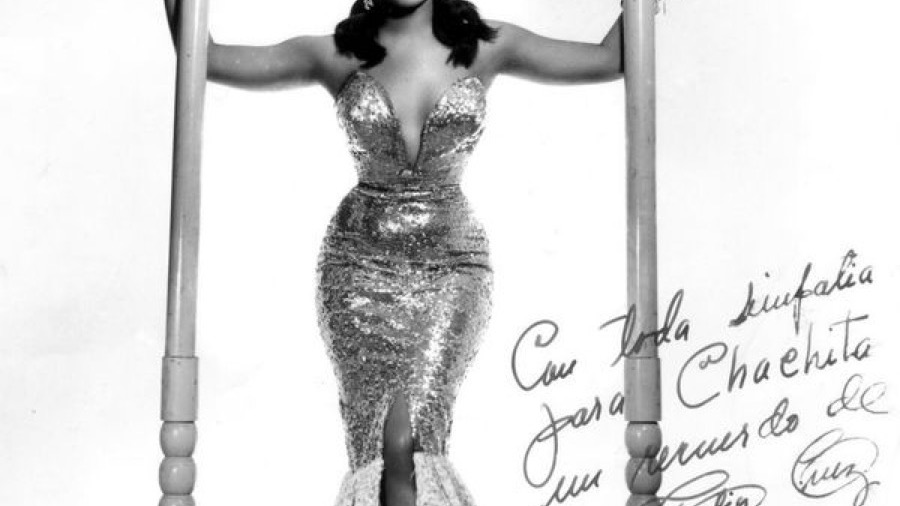
From La Sonora Matancera to Fania and ¡Azúcar!
Cruz won the amateur contest La Hora del Té on Cuban radio and in 1950 he joined La Sonora Matancera, where he remained for fifteen years as lead vocalist. After the Cuban Revolution, he went into exile with the orchestra: first Mexico, then the United States. In 1962 she married Pedro Knight, a trumpeter from Sonora; In New York he collaborated with Tito Puente and, in 1974, with Johnny Pacheco on the Fania label, the epicenter of New York salsa.
Video: Laugh and Cry — official video clip
Theme from La Negra Hace Tumbao (2001): more than 76.4 million views on CeliaCruzVEVO —second most viewed video on its official channel. Version of a Cuban son classic with contemporary arrangements: here you hear Cruz's low register, festive phrasing and the ability to turn nostalgia and mourning into celebration—the same alchemy of La Vida Es Un Carnaval. Source: CeliaCruzVEVO
The cry Sugar!—born at a concert in which a waiter asked him how he drank his coffee—became a personal signature since the 1970s. Cruz won three Grammys and four Latin Grammys; In 1994 he received the United States National Medal of Arts. Life is a Carnival (1998) became an anthem of resilience; He died in 2003 in New Jersey and rests in Woodlawn Cemetery in the Bronx, where his fans continue to leave sugar on his grave.
Repertoire that best shows your voice
- La Negra Hace Tumbao — 2001 hit; video clip above (~168.4M on VEVO).
- Laugh and Llora — they are renewed Cuban; video above (~76.4M on VEVO).
- Life Is A Carnival — anthem of resilience; one of his most streamed songs.
- Quimbara — with the Fania All Stars; live sound reference.
- Bemba Colorá — Afro-Cuban guaracha; energy and racial pride in the performance.
- Guantanamera — version with La Sonora Matancera; bridge between Cuba and exile.
Why it fits into Voices That Make Magic
Celia Cruz represents the voice that does not need circus highs to be unforgettable: just groove, charisma and a sugar scream that still resonates at every carnival. She doesn't share a repertoire with Adele or a technique with Mariah Carey, but she shares with the entire series the premise of the hub: listening today, because the voice has an expiration date—and Celia's, although she no longer sings live, continues to fill stadiums every time someone presses play.
Series: This article is part of Voices that make magic. Listen: CeliaCruzVEVO and catalog on digital platforms via Sony Music Latin.
In summary
Voice? Warm contralto, stadium projection, infinite sound. Technique? Afro-Cuban rhythmic phrasing, improvisation and stage charisma. YouTube? La Negra Hace Tumbao (~168.4 M) and Rie y Llora (~76.4 M on VEVO). Why does it matter? Queen of salsa, voice of the Cuban exile and Latin American heritage. Next step? More profiles in Voices that make magic.
Most read
What readers are engaging with right now.
- Culture
Goose, the gay app that competes with Grindr, reaches the top 4 of Lifestyle in the App Store

- World
Cubans protest in Miami against Airlines Connections for alleged scam: they demand up to $20,000 in packages to Punta Cana

- Culture
Harry Potter on HBO: complete guide to the series (not yet released and already renewed for T2), dates, cast and controversies

- World
Trump declares the ceasefire with Iran over, orders new attacks in Hormuz and demands cutting trade with Spain in NATO

- Culture
DUK App: Aly Sánchez launches her habits app "one day at a time" with a 63-day program

- Culture
I'm Edgy and Edgy Labs: From Nebraska's Walmart to a beef tallow cream brand that sells across the US.

- World
El Cangrejo: profile of Raúl Guillermo Rodríguez Castro, Raúl Castro's grandson between GAESA, leaked luxuries and the first interview of 2026

- World
Cuban regime terrorist Ramiro Valdés Menéndez dies

- World
Supreme Court, June 23, 2026: analysis of Tuesday's 5 rulings (and what each one implies)