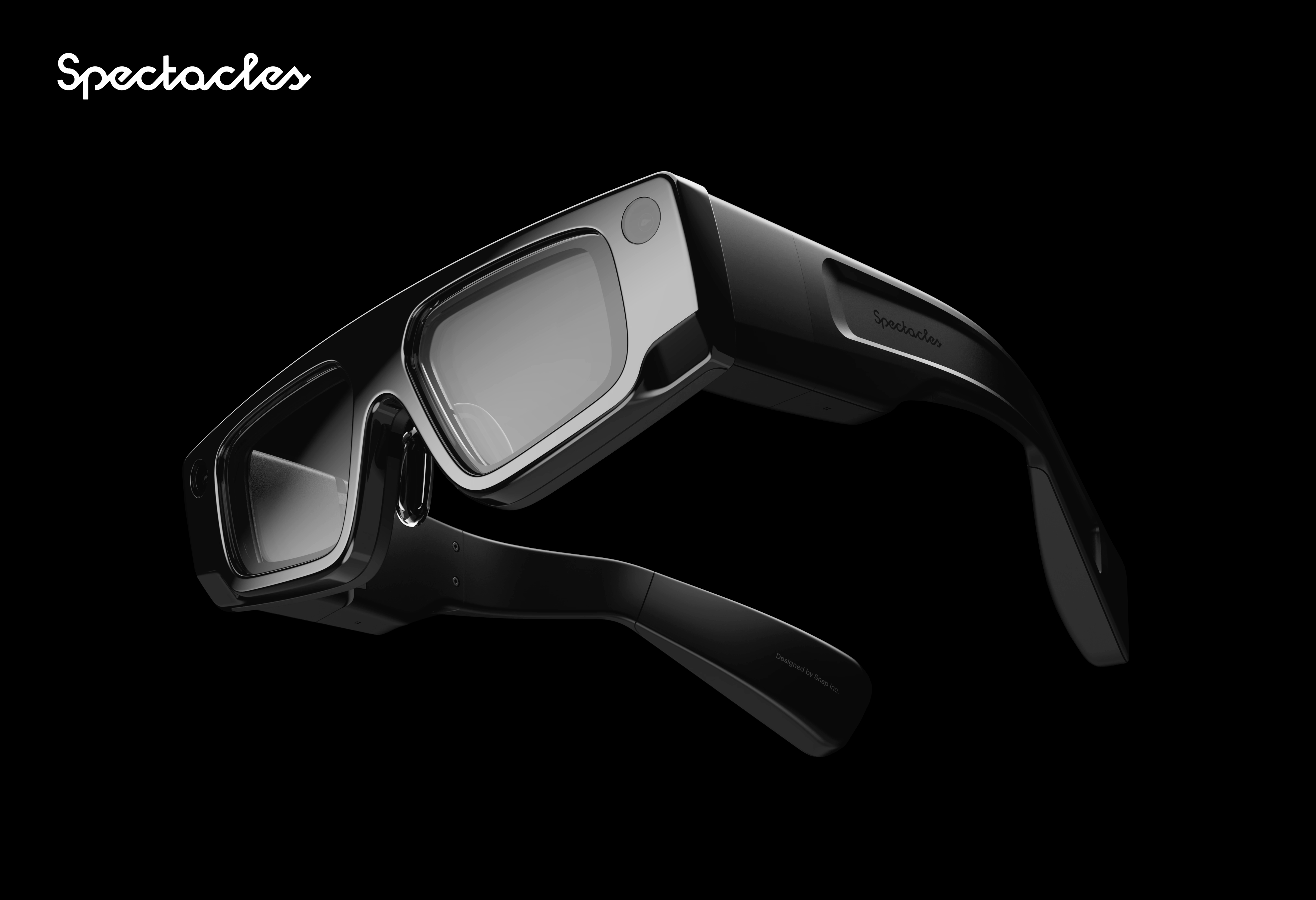
Almost ten years after the commercial failure of the $130 Spectacles, Evan Spiegel returned to the stage of the Augmented World Expo 2026 with a radically different product: SPECS, fully autonomous augmented reality glasses—no phone, no puck, no cable—designed to bring computing “to the real world” instead of to an opaque screen. Snap opened pre-orders on June 16 for $2,195 ($200 refundable deposit) with shipping expected this fall in the US, UK, and France. The $SNAP stock fell 10% in the session, according to analysts cited in X, but the announcement marks Snap's most serious bet on a post-smartphone future.
Video: official presentation of SPECS (@Snap)
Snap introduced SPECS as AR glasses with AI assistant, work tools, entertainment and shared experiences anchored in physical space. Source: @Snap — X
What are SPECS and why do they matter
Unlike Meta Ray-Bans—mainly camera + audio with AI in the cloud—or opaque helmets like the Apple Vision Pro, SPECS integrates all the computing into the frame itself with semi-transparent lenses. Spiegel summed it up on CNBC: «Almost 20 years after the iPhone, people are ready to think about the computing in another way. The goal is not to replicate a floating mobile, but to anchor virtual objects to the environment with occlusion, spatial anchors and hand tracking – what the VR community calls “real AR” in front of screens glued to the view.
Video: SPECS design and hardware (@3DVR3)
Mr.VR shows the SPECS mount, see-through lenses, embedded computing and the leap from glasses that only float a flat screen. Source: @3DVR3 — X
Price, reservation and markets
At $2,195, SPECS costs more than 15 times the original 2016 Spectacles and six times the base price of the Meta Ray-Ban (~$350), but is still $1,300 below the Apple Vision Pro ($3,499). TechCrunch points out that Snap is targeting enthusiasts, developers and studios first—a niche with deep pockets—not the mass consumer. Spiegel admitted to Reuters that the rising cost of memory chips has had an impact and that he will look for cheaper versions in the future.
Technical specifications
Video: AR use cases and experience (@3DVR3)
Demonstrating productivity, entertainment and shared experiences with spatial anchoring in SPECS. Source: @3DVR3 — X
“Real AR” versus floating screens
Japanese analyst @3DVR3 (Mr.VR) summarizes the key difference: glasses like XREAL or Even G2 project a flat screen that follows your head; SPECS tries to fix objects to space, hide them behind real furniture and generate the feeling that "they are there." It is the first consumer-oriented AR glasses with that level of spatial anchoring according to their analysis — the developer Spectacles were never accessible to the general public.
Evan Spiegel in public: the NathieVR demo
Virtual reality creator @NathieVR posted one of the first clips of Spiegel teaching SPECS to the audience offstage — more than 7 million views on X. The video circulates without narration but shows the Direct interaction with assistants and Lenses in a real environment.
Video: Spiegel shows SPECS to the public (NathieVR)
Evan Spiegel showed SPECS in hand during AWE 2026; The NathieVR clip was one of the most viewed of the presentation. Source: @NathieVR — X
Video: technical analysis by Mr.VR (@3DVR3)
Mr.VR breaks down occlusion, space anchors, dual Snapdragon, 132g, Snap OS, price $2,195, and why SPECS is aiming for “real AR” vs. XREAL-like floating displays. Source: @3DVR3 — X
Complete keynote and CNBC interview

Video: complete keynote AWE 2026 — Making Computing More Human
~34 minute official keynote in which Spiegel details vision, SPECS demos and the Lens ecosystem. Source: Snap — YouTube · @Snap
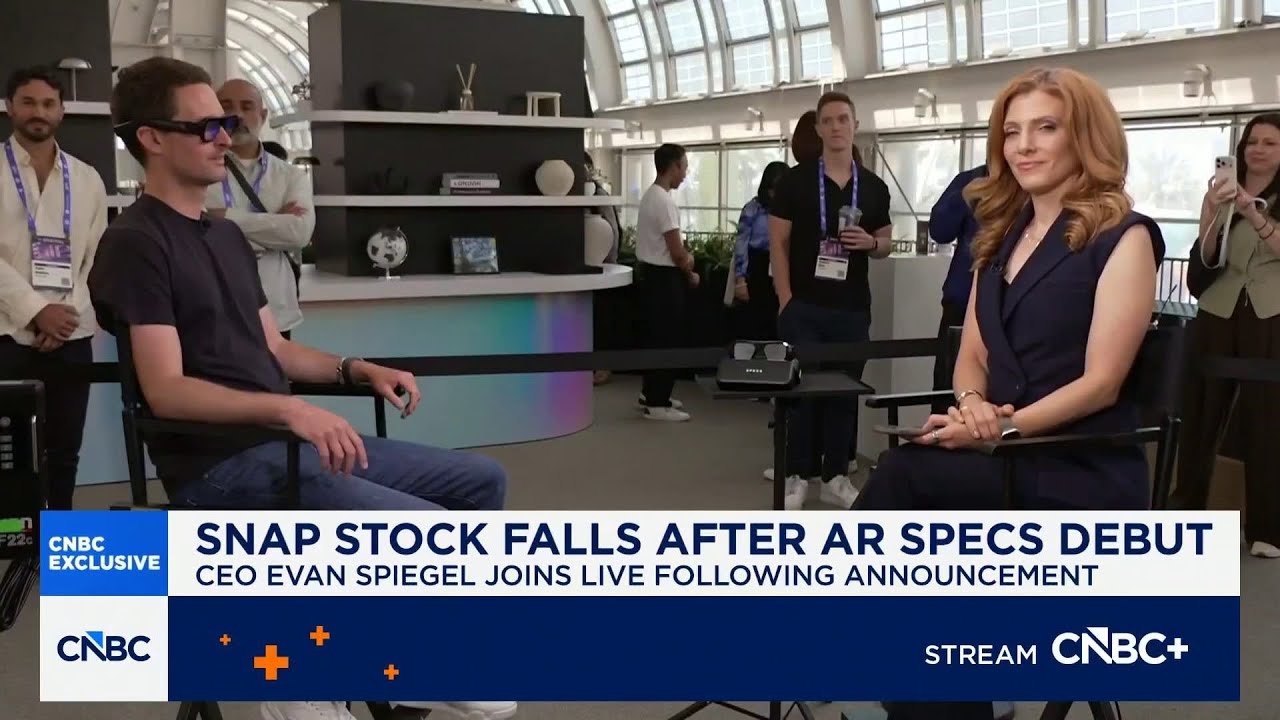
Video: Evan Spiegel on CNBC
Spiegel explains the post-smartphone bet: "Specs represent a way of using computing together in shared experiences in the real world." Source: CNBC
Comparison: SPECS vs Meta Ray-Ban vs Vision Pro
SPECS occupies an intermediate space: more capable and autonomous than Meta, more wearable and social than Vision Pro. The risk is the same as in 2016: advanced hardware with a price that limits mass adoption. Spiegel insists that this time the software (Snap OS, Lenses, embedded AI) and supply chain are ready; The market, for now, responded with stock market skepticism.

In summary
What is SPECS? Snap's first consumer AR glasses: self-contained, see-through, $2,195. When is it coming? Fall 2026 in the US, UK and France. What's different? Double Snapdragon, 51° FOV, 7 ms latency, real spatial tethering and Snap OS. Is it worth booking? Only if you are looking for top-of-the-line AR and agree to be an early adopter at a premium price; for the rest, wait for cheaper revisions that Spiegel already anticipates. Accounts and links: @Snap, @evanspiegel, specs.com.
Most read
What readers are engaging with right now.
- Culture
Goose, the gay app that competes with Grindr, reaches the top 4 of Lifestyle in the App Store

- World
Cubans protest in Miami against Airlines Connections for alleged scam: they demand up to $20,000 in packages to Punta Cana

- World
Trump declares the ceasefire with Iran over, orders new attacks in Hormuz and demands cutting trade with Spain in NATO

- Culture
Harry Potter on HBO: complete guide to the series (not yet released and already renewed for T2), dates, cast and controversies

- Culture
DUK App: Aly Sánchez launches her habits app "one day at a time" with a 63-day program

- Culture
I'm Edgy and Edgy Labs: From Nebraska's Walmart to a beef tallow cream brand that sells across the US.

- Culture
The Evening of the Year VI: all the winners, fights and performances of the Ibai night in Seville

- World
The FBI is investigating the AFA for alleged fraud and money laundering: about $300 million in sponsorships and operations in the US.

- World
El Cangrejo: profile of Raúl Guillermo Rodríguez Castro, Raúl Castro's grandson between GAESA, leaked luxuries and the first interview of 2026